Strokes are common in humans, but did you know dogs are sometimes susceptible too? Integrative veterinarian Dr. Julie Buzby shares dog stroke symptoms to watch for and dog stroke treatments that can help your senior friend recover after a stroke occurs.

One afternoon you return home to find your senior pup stumbling around the house acting dizzy. He falls over, can’t get up, and now his eyes are moving back and forth erratically. You watch with alarm as your mind races.
“Maybe it’s a stroke—is it even possible for a dog to have a stroke?” you ask yourself. Regardless, you recognize your beloved dog is facing an emergency, and you know you need to get to the vet as quickly as possible.
Could it be vestibular disease and not a stroke?
Before we start talking about true strokes (i.e. disrupted blood flow to the brain), I want to briefly address one condition that often gets confused for a stroke by concerned dog parents—old dog vestibular disease. This condition occurs when there is a problem with the vestibular system, and it happens much more frequently than strokes in dogs.
The vestibular system includes the brain, cranial nerves, and inner ear, and helps create a picture of how the body is oriented in space. It indicates which way is up and if the body is moving or holding still.
Signs of vestibular disease

When the vestibular system malfunctions, a dog may experience:
- Loss of balance and poor coordination
- Head tilt or abnormal body position
- Rapid eye movement (nystagmus)
If you have ever experienced a dizzying episode of vertigo, you probably have a pretty good idea how a dog with vestibular disease may feel. Although the signs are alarming, the good news with this condition is that many dogs recover well and continue to have a great quality of life.
You can learn more about vestibular disease (which is not the topic for the rest of this article) in my article, Old Dog Vestibular Disease: A True Story About Doggie Vertigo. Also, if your veterinarian diagnoses your dog with vestibular disease, these 10 tips and exercises for dogs with vestibular disease may prove useful for the recovery period.
What is a stroke?
As mentioned earlier, a true stroke occurs when blood flow to the brain is disrupted. Normally, arteries carry oxygenated blood to the brain. This blood also carries glucose, a type of sugar that is necessary to keep brain cells healthy. You can think of glucose as being “brain food.” In short, the brain must have blood, and its life-sustaining components, to function correctly.
Types of strokes
There are two things that will affect blood flow to the brain and cause a stroke—a physical obstruction of a blood vessel or a leaking blood vessel. Strokes are named based on which of these situations occurred.
- Ischemic stroke: A blood clot, also known as a thrombus, can lodge in a vessel and effectively block blood flow. Fatty deposits or even air in a blood vessel can also cause an obstruction.
- Hemorrhagic stroke: A leaking blood vessel in the brain can be caused by traumatic injuries or diseases like cancer that increase the ability of blood to move through the blood vessel walls. Decreases in the number of platelets or problems with blood clotting also make bleeding more likely to occur.
Can dogs have strokes?
Strokes are actually pretty rare in dogs. In fact, when I went to vet school, we were taught that strokes didn’t happen in animals. Now we know they do happen occasionally, sometimes for an unknown reason, and other times because the dog has an underlying condition that increases the stroke risk.
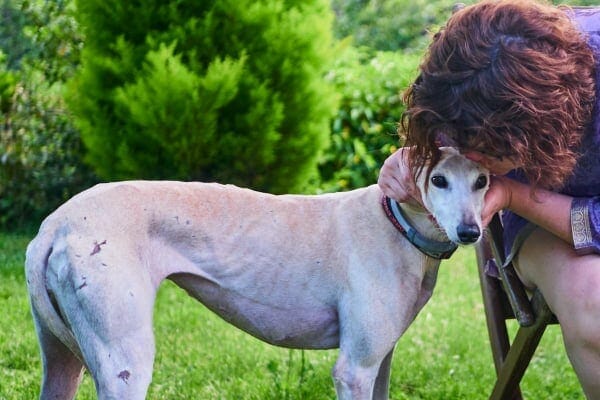
Greyhounds and Cavalier King Charles Spaniels may have an increased risk of having a stroke. Strokes also occur more commonly in young adult or senior dogs.
What are dog stroke symptoms?
People who suffer from a stroke may start to slur their words, seem confused, become dizzy and off balance, or experience numbness or weakness in the arms, legs, or face. However, since our dogs can’t explain in words what they are feeling, we have to rely on our observations.
Dog stroke symptoms will mostly be determined by the length of time the brain’s blood supply was cut off and the part of the brain that was affected. If you suspect that your canine companion is having a stroke, look for the following signs:
- Head tilt to one side
- Circling
- Abnormal eye movements or eye position
- Sudden loss of balance
- Unequal pupil size
- Sudden blindness
- Abnormal gait
- Uncoordinated movements
- Falling over
- Abnormal mental state
These signs indicate something may be wrong with your dog’s neurological system but are not necessarily specific to strokes. Toxin ingestion or other neurologic conditions such as seizures and vestibular disease can also have similar signs. All of these conditions are medical emergencies so if your dog is showing these signs, contact your veterinarian immediately.
What are the possible causes of strokes in dogs?
It is important to determine the underlying cause of a stroke in order to know if a dog’s stroke treatment will be effective. The list of possible causes is long, so we will just highlight a few of them.
Hypertension (high blood pressure)
High blood pressure, or hypertension in dogs causes blood vessels to become very narrow and stiff over time. In these circumstances, it’s easier for blood clots to form, creating a physical vessel obstruction.
Because hypertension is one of the most common causes of strokes in dogs, I want to spend a bit more time discussing the diseases that could cause your dog’s blood pressure to increase:
- Cushing’s disease in dogs — This endocrine disorder involves the excessive release of cortisol from the adrenal glands. Hypertension occurs in some cases when blood vessels can’t dilate to reduce blood pressure and the hormone system that regulates blood pressure (renin-angiotensin-aldosterone system or RAAS) becomes activated.
- Heart disease — A diseased heart cannot pump enough blood to the body to meet its needs, so oxygen-depleted tissues will send signals to the heart to work harder. Blood vessels tend to constrict in an effort to improve blood pressure, and in patients with heart failure, the RAAS system kicks in, leading to hypertension.
- Kidney disease — The kidneys play a significant role in blood pressure regulation through the RAAS system, so kidney disease is often accompanied by hypertension. Kidney disease can also increase the leakiness of blood vessels or speed up the process of thickening or hardening of the blood vessels (arteriosclerosis), both of which could also lead to a stroke.
Increased or abnormal blood clotting
Some conditions make the blood more likely to clot abnormally. These clots can then lodge in a vessel and cause a stroke. Conditions leading to a hypercoagulable state (increased blood clotting) include:
- Immune mediated hemolytic anemia (A condition where the body attacks its own red blood cells.)
- Cushing’s disease in dogs
- Cancer (neoplasia)
- Protein-losing nephropathy (Kidney disease involving protein loss in the urine.)
- Sepsis (Organ or tissue damage that occurs due to the body’s abnormal response to infection.)
- Heartworm disease in dogs
Increased likelihood of bleeding
These conditions make a dog more likely to suffer from a hemorrhagic stroke by increasing the chances that bleeding will occur:
- Tick-borne diseases in dogs such as Anaplasmosis or Ehrlichiosis
- Von Willebrand factor deficiency or other clotting factor abnormalities
- Diseases leading to reduced platelet numbers
- Cancer (neoplasia) or noncancerous masses
- Some bacterial infections
- Trauma such as a head injury

How is a stroke diagnosed?
Conditions that cause strokes can have serious consequences without medical attention. That’s why it’s so important to seek help for your dog as soon as stroke symptoms are noticed. Your vet will perform comprehensive physical and neurologic exams and discuss your dog’s history and clinical signs with you. Then your vet might suggest dog lab tests like blood work, urine testing, and X-rays to gather more information.
While your vet may suspect a stroke based on your dog’s signs and diagnostics, advanced imaging (MRI or CT) is the best way to find a blood clot or signs of bleeding in the brain to definitively diagnose a stroke. These are typically performed at specialty clinics and university veterinary hospitals.
What does dog stroke treatment involve?
Depending on the underlying cause of the stroke and the severity of your dog’s signs, the vet might consider these treatments:
- Oxygen therapy or intravenous fluids to help optimize circulation and oxygen delivery to the brain.
- Medications to control seizures or decrease intracranial pressure.
- Treatments that target the underlying cause such high blood pressure or heart disease.
- Observation, monitoring, and supportive care.
You may have heard of using “clot buster” medications for human stroke patients, but they haven’t been thoroughly studied in veterinary medicine yet. To date, urokinase has shown some success in cats. However, streptokinase—a similar thrombolytic (clot busting) medication—caused very serious side effects including bleeding and even death.
How do I care for my dog who had a stroke?
The severity of your dog’s stroke and the underlying cause will dictate some of the at-home recommendations your veterinarian will make. In general, these measures may be helpful:
- Ensure your dog can easily reach the bowls to eat or drink.
- Provide soft bedding or a comfortable bed to rest on.
- Reposition your dog every four to six hours to prevent pressure sores.
- Change bedding as soon as it becomes soiled with urine or feces.
- Follow any other instructions given by your veterinarian and keep your vet informed about how your dog is doing.

Stroke prevention
Since it is known that some conditions may predispose dogs to strokes, dog parents may wonder if there is anything that can be done to decrease a dog’s stroke risk.
Medications like clopidogrel (Plavix®) are sometimes useful because they make the platelets less sticky. This decreases the risk that platelets will form a clot somewhere they shouldn’t and lead to a stroke. Amlodipine, a medication used to treat high blood pressure, may also decrease the risk of blood clots.
Likewise, angiotensin-converting-enzyme inhibitors (or ACE inhibitors) like enalapril , which block portions of the RAAS system, can reduce blood pressure in heart disease, decreasing the stroke risk.
Prognosis for strokes in dogs
The good news is that most dogs who suffer a stroke will be able to resume their normal lives again. However, there are some cases where a severe stroke leads to long-term mobility difficulties or even behavioral changes. For these dogs, physical therapy can help them learn how to walk again. Additionally, a veterinary behavior specialist may also be able to give you exercises that can help to “re-train” your dog’s brain.
It can be worrisome to see your dog stumble around acting abnormally, and you be wondering if a stroke is to blame. Don’t panic. Instead, contact your veterinarian right away! With prompt diagnosis and treatment, chance are good your dog could make a full recovery.

Has your dog suffered from a stroke?
Please comment below. We can all benefit from each other’s experiences.


We just had to put my dog down. He was 14 years old. Very healthy. This morning he seemed confused. He there up and collapsed. We went to the er immediately and rhe vet told me to put him down. He went blind and his platelets were low. I was so confused since he was running yesterday. I felt pressured to put him down. Did I do the right thing? The vet told me he was getting worse but I am reading dogs with strokes can get worse before they get better.
Dear Diana,
I am sorry for the sudden and tragic loss of your beloved pup. From what you describe, I definitely think you made the most loving choice by offering your boy a peaceful passing and sparing him from unnecessary suffering. His symptoms don’t sound like a typical stroke to me and would have had me worried about other life-threatening things like hemangiosarcoma. I understand how hard it can be to find peace with saying goodbye, especially when things happened so quickly and you are left with more questions than answers. Praying for healing for your heart and brighter days ahead. May his memory stay with you always.
Sorry to hear this. What a shock this must have been…just out of the blue and all of a sudden. I believe you did what was thought to be right in the best interest of your pet. I am glad he did not suffer long. There’s no worse pain then to see them suffer.
We took our 6 1/2 yr old greyhound, Edel, to a dog park for a run around last night. About 20 minutes into the session, she came over to us, yelping and lifting her front left paw. We thought it was cramp, gave it a rub and she went off playing again. When we were leaving, she came to me and tended to ‘lean’ against me even though she could still walk.
When we went to get her out of the car at home, she couldn’t move at all. She tried initially to use her front legs to get up, with no movement in the back legs. My husband carried her to the house and I rang the out of hours vet. Once there, I was told it was probably a vertebrae/disc injury at her neck which had paralysed her – and then offered euthanasia. I refused this, and took her home, drugged up with painkillers and anti inflammatory meds, but alive.
Today she’s been at our regular vets, had blood tests and xrays, and they’ve all come back normal. She has a strong heart and pulse to her legs. They didn’t find any spinal damage, and now suspect a stroke.
At the moment she’s home with us, unable to walk or stand. Her eyes have been moving rapidly from side to side and she keeps dribbling. She hasn’t been able to urinate for over 24 hours now – and we’ve been advised to take her outside every few hours to let her do this (but at the moment this has been without success). She’s had a little water from a syringe and has had a small amount of food (chicken, dog treat biscuits). She’s still aware of her surroundings and everyone she knows, and has tried a couple of times to get up using her front legs, but they keep crumpling under her.
To get an MRI scan is so expensive and the full cost isn’t covered by her insurance. After speaking to the vet, he seems to think the best course of action is to care for her at home and see how the next few days pan out.
This has been such a stressful 24 hours. Where do we go from here? What do you advise we could do for her and what are her chances of recovery? Any help or advice would be greatly appreciated.
Dear Maria,
My heart aches for you as you try to find a way to help your beloved pup. I can only imagine how worried and stressed you must be. It is ok to give her a few days to see if she will start to improve, but it sounds like you may be facing some difficult choices about her quality of life. It concerns me that she isn’t urinating. Whether it’s because her bladder cannot release the urine and is slowly filling to capacity (a medical emergency) or due to dehydration, either way her condition is critical. I strongly recommend you contact your vet and make them aware of the situation. Edel may need to be hospitalized so they can give her IV fluids and ensure her bladder is emptying properly. If medical treatment is not successful, saying goodbye might be the most loving option. I am so sorry you are in this situation and wish there was an easy solution. Wishing you strength and comfort as you navigate this emotional path and praying for a positive outcome for your sweet girl.
Hi,
Last week my 13 year old jack Russell became unwell and couldn’t walk properly, rolling when trying to pick her up, drooling. Took her to the vets straight away and they told us she had had a head trauma. They gave her anti inflammatory and anti sickness with vivitonin to give to the dog twice a day. Vets called us yesterday and are now saying it was a stroke not a head trauma. My question is will this be a constant need for this medication now and what are the chances of this happening again?
Hi Andrea,
I am so sorry your senior pup is struggling with these severe symptoms. From what you describe, a stroke is very possible, but I would also talk to your vet about vestibular disease. Here is a link to another article with more information: Vestibular Disease in Dogs: Doggy Vertigo
There is no way to know if she will improve or if this is how life will be from now on. Most dogs do show some improvement with time, and I hope your girl is one of the lucky ones. Praying for healing and wishing your sweet pup all the best.
Yes my dog hasn’t been able to come off it.
Our Olive dog suffered astroke early on New Year’s Day 2025. Olive is a 12 + year old mixed breed (mainly wolf hound and terrier, but lots of others as well). This is her third medical emergency of late 2024 following a pinched spinal chord and a diagnosis of kidney failure.
Due to our location and the January 1 holiday, it was 24 hours before Olive got to see her vet. She was given an anti-inflammatory injection and then sent home to see how she progresses.
5 days on from the stroke, she rests for all but two short outside pee breaks. She has a slight head tilt and noticable mobility issues, tho she can walk with assistance.
We’re letting her rest whilst we decide on long term next steps. Missus and I are retired with no major commitments so fortunately we can tend to her as needed. But, time does wear us down without proper breaks.
We’ll go back to the vet in another week and seek advice at that time. We have postponed some treatments for her failing kidneys in order to focus on stroke recovery. We’ll also see if we can get back to some of those treatments.
for now tho, she has life in her eyes and altho we must spoon feed her she does seem to be keen on having some food. Funny weird part is that the only food she has willing ate was a small bit of Stove Top Stuffing we had at New Year’s supper. Odd that.
Take care all and embrace the journey, for our four leggers deserve all that we can give them.
Dear John,
I am sorry Olive has been through so much over the past few months. I am glad you are able to focus on her care but please make sure you are taking care of yourself as well! From what you describe, a stroke is definitly a possibility, but I am also very suspicious this may be vestibular disease. Here is a link to another article with more information: Vestibular Disease in Dogs: Doggy Vertigo
The good news is vestibular disease normally resolves on its own with time and patience. How is Olive doing today? Hoping she has improved and is on the road to recovery. Feel free to leave an update if you have a chance. Wishing you all brighter days ahead.
Our 9 year old black lab/collie mix had a stroke last week, his vet put him on blood thinners, amyloid pine and gabapentin. He’s started trying to act like his old self. I’m just wondering in the blood thinners and BP medication are normal to use together for this? He is a very active boy and still acts like a puppy so the blood thinners are worrisome to me.
Hi Vanessa,
I am sorry your boy has been through so much over the past few days. You are correct that blood thinners can have potential negative side effects, but in some cases the benefits outweigh the risks. If your vet is concerned about another stroke or your pup is at risk of another blood clot forming, then the blood thinner may be necessary (at least for a while). Please make sure your vet is aware of your concerns. They can help put together a treatment plan that is best for your boy but is something that you are comfortable with as well. Wishing you both all the best and keep up the good work!
Hello – I have a 16 year old female shih tzu who recently battled a splenic stromal sarcoma. Her spleen was removed and she went thru chemo which she finished in Dec. Since then, there have been no signs of spread – in fact she was better than before – digging in her bed, running around in the house. All was going really well until a week ago we noticed she stared circling to the right, looking to her right (not a head tilt but more of a head turn to the right), wobbly on her feet. No irregular eye movements. I took her to the vet right away and they diagnosed her with vestibular disease. They put her on an antibiotic (enrofloxacin) for possible middle ear infection and cerenia for nausea from dizziness. It’s been a week and her symptoms have worsened. She’s very imbalanced and lethargic. But she’s eating and drinking. She’s urinating but hasn’t had a bowel movement in two days. I’ve been all over the internet and brain tumor and stroke have come up. Wondering if you think this sounds anything like a stroke – even though they are rare? She wants to do her normal things like dig in her bed, etc but is just so lethargic. Could the meds be making her worse? Is there any hope for recovery?
Hi Shannon,
I am so sorry your senior girl is dealing with these severe neurologic symptoms. It is hard to make specific conclusions without examining her myself. I can say that what you describe doesn’t exactly fit with a stroke or vestibular disease. This has me quite puzzled! It may be time to ask for a referral to a veterinary neurologist. They will have more experience navigating complicated cases and might have ideas about testing or treatment that isn’t widely available in general practice. I am hopeful you can find a way to restore your sweet girl’s quality of life. There is always hope! Praying for healing and feel free to leave an update if you have a chance.
My 16 YO Shih Tzu has possibly suffered a stroke. He recently went to get checked for urinating frequently which caused him to pop a squat around the house. He received a Convenia injection to help with any possible UTIs and some Dermamaxx pills for his arthritis. However the day after around evening time, he was “stuck” in a corner yelping and Inpresume he was having trouble get to the door to go outside (He is blind in one eye and has cataract in the other) However he started to get worse at night. He awoke at 11 PM and started yelping and dragging his body around, mainly in circles. His back left leg seems completely paralyzed. We presumed it may be side effects to the Convenia. We have not yet went to get his MRI/CT done yet as we went to Emergency vet yesterday. But his symptoms are spot on with a stroke: circling, loss of direction, he is also sticking his little tongue out and his mouth seems locked. We are currently caring for him the best we can until we can get him to a neurologist this upcoming Thursday. Can my pup recover? He hasnt been taking any water or food within the past 24-36 hours
Dear Ally and Billy,
I am so sorry for this tragic sequence of events that have led to the rapid decline of your dog’s health. I can only imagine the worry and stress you must be feeling. Without knowing exactly what caused these severe symptoms it is hard to make predictions about prognosis. How did the appointment go with the neurologist? Were you able to get the MRI or CT done? Hoping you were able to get some answers and that your boy is on the road to recovery. Praying all is well. Feel free to leave an update if you have a chance.
We have a 14 year old blind and deaf boston terrier. He has always been able to get around as long as we don’t move the furniture even can go in and out the dog door. Last night after going to bed, I heard him fall against the wall, throw up then have problems breathing. He then attempted to stand and walk and kept collapsing. He could no longer figure out where he is constantly running into walls and getting caught in chair legs and plugged in wires, or trapped walking in circles outside not knowing how to come in and won’t lay down. Do you think he had a stroke?
Hi Teresa,
What you describe definitely has me concerned. Without examining your senior guy myself, it is hard to make specific conclusions. But I do think this needs to be addressed right away. While these issues could be signs of dementia/cognitive dysfunction, it is worrisome that they started so quickly and with no warning. This could be an emergency situation for your pup. Please reach out to your vet as soon as possible. Hoping all is well and has returned to normal. Feel free to leave an update if you have a chance.
please help as I’m beyond helpless with my little dog. our local vet said my 11yr old pomeranian had a brain tumor gave him a steroid and sent him home after a $400 after hrs visit at our vet. We returned home our dog cried and suffered til the next morning circling whimpering crying and yelping in pain discomfort I don’t even know we just held him and stayed with him til morning by morning he hadn’t stopped crying that night was the worst. we rushed him to the animal hospital and they determined he had a stroke they kept him 24 hours and their advice was nurse him at home no medication no change of diet. It has now been 5 days at home my dog is still suffering circling losing his urine I have given him baby aspirin and some doggie tramodol trying to just help him rest the rest lasts about an hour and he’s back up just lost In the same circle. he has only had one or two bowel movements in a five day period today his bm was like the worst more of a bloody slime. he can and will eat but he can’t on his own I’m only able to feed him hot dogs from one side and he struggles to get them but scarfs them down
I am afraid my dog is dying in front of me or worse he is suffering and won’t let go cause he would never leave me I’ve read everything I can and it says it can take weeks or months and I’ve spent the last week with him 24/7 it’s got me mentally feeling like I’ll stroke out soon with my poor little best friend. I know you would have to see my dog for any diagnosis but I pray to God you can give me a solid answer as if you would suggest I do the humane thing and put Him to rest or suffer with him the next few weeks . please help my dog cheech
Dear Ashley,
My heart aches for you as you face this tragic situation with Cheech. You are doing all you can, and it is clear you need more support. Your pup is suffering and something needs to change right away. Please contact your vet and make sure they are aware of all these new issues and symptoms. There may not be anything that can be done and sometimes saying goodbye is the most loving option. But you have to find out what the options are. If there are medications that can be tried, then you will have the choice of moving forward with treatment or euthanasia. Either way, we have to make sure your sweet boy is not suffering. Cheech is so lucky to have you advocating for him and loving on him during this difficult time. I am praying for clarity and strength. Hoping you can get the answers you need to make the best decision for you and your pup. Bless you both. ♥
Laika, our rescue compadre, is about 9 years old. She’s an Africanus mix. She’d recently been diagnosed with Arthritis in her hips and front legs, and we had settled the treatment with GCS Joint Care which seemed to help. Then I noticed that her lip was sagging on the one side. I thought she might have been stung it bitten by something, but later I noticed she wasn’t blinking one eye, and her ear was at an abnormal angle. Off to the vet who thought she may have experienced head trauma, which indeed she had. My wife hadn’t noticed that Laika had poked her head in the car, and closed the door against it. Not a gentle closer, but not a great slam either – could that have been the cause? I thought maybe a stroke. Anyway, the vet prescribed Prednisone 5mg. but we didn’t notice any improvement. by the end of the course. The course ended about the same time we ran out of the joint care powder which we could not immediately restock. A few days later, Laika could not get up from her bed. This was really surprising since she had responded extremely well to the medication, so much so that we could take her for short walks. Now, literally, 3 days her last dose, she could hardly walk! The joint care in stock again we administered a double dose, like at the start, and she immediately responded. However, I noticed that her head was now angled to the same side as her eye, lip and ear affliction, and she lost her balance while walking, even walking into things. She also wants to regularly shake her head, which she can’t do, as she loses her balance as soon as she starts. Laika’s two afflictions have been a bit confusing to us. Had she started losing her balance when we thought it was her hips and find knees giving in? WE’d appreciate your opinion.
Hi Carsten,
I am so sorry Laika is having so many issues at once and seems to be struggling. Without examining your girl myself, I can’t make definitive conclusions, but I am almost certain that the car door incident is to blame for the changes to her face, ear, and eye. This sounds like she has damaged her facial nerve on that side. If the nerve gets severely inflamed or injured, it can also cause the pupils in the eyes to become two different sizes. This is also called Horner’s syndrome. You can read more about it here (look closely at the symptom list and potential causes as your girl fits many of these!): Horner’s Syndrome in Dogs: Causes, Symptoms, and Treatment
Some of Laika’s weakness and trouble walking may be due to a flare in her arthritis since stopping the joint supplement. The supplement may have been doing more to keep her comfortable than you realized. No matter what the cause, it would be good to make sure your vet is aware of these ongoing issues. Hoping these worrisome symptoms will resolve and praying your girl can make a full recovery.