Strokes are common in humans, but did you know dogs are sometimes susceptible too? Integrative veterinarian Dr. Julie Buzby shares dog stroke symptoms to watch for and dog stroke treatments that can help your senior friend recover after a stroke occurs.

One afternoon you return home to find your senior pup stumbling around the house acting dizzy. He falls over, can’t get up, and now his eyes are moving back and forth erratically. You watch with alarm as your mind races.
“Maybe it’s a stroke—is it even possible for a dog to have a stroke?” you ask yourself. Regardless, you recognize your beloved dog is facing an emergency, and you know you need to get to the vet as quickly as possible.
Could it be vestibular disease and not a stroke?
Before we start talking about true strokes (i.e. disrupted blood flow to the brain), I want to briefly address one condition that often gets confused for a stroke by concerned dog parents—old dog vestibular disease. This condition occurs when there is a problem with the vestibular system, and it happens much more frequently than strokes in dogs.
The vestibular system includes the brain, cranial nerves, and inner ear, and helps create a picture of how the body is oriented in space. It indicates which way is up and if the body is moving or holding still.
Signs of vestibular disease

When the vestibular system malfunctions, a dog may experience:
- Loss of balance and poor coordination
- Head tilt or abnormal body position
- Rapid eye movement (nystagmus)
If you have ever experienced a dizzying episode of vertigo, you probably have a pretty good idea how a dog with vestibular disease may feel. Although the signs are alarming, the good news with this condition is that many dogs recover well and continue to have a great quality of life.
You can learn more about vestibular disease (which is not the topic for the rest of this article) in my article, Old Dog Vestibular Disease: A True Story About Doggie Vertigo. Also, if your veterinarian diagnoses your dog with vestibular disease, these 10 tips and exercises for dogs with vestibular disease may prove useful for the recovery period.
What is a stroke?
As mentioned earlier, a true stroke occurs when blood flow to the brain is disrupted. Normally, arteries carry oxygenated blood to the brain. This blood also carries glucose, a type of sugar that is necessary to keep brain cells healthy. You can think of glucose as being “brain food.” In short, the brain must have blood, and its life-sustaining components, to function correctly.
Types of strokes
There are two things that will affect blood flow to the brain and cause a stroke—a physical obstruction of a blood vessel or a leaking blood vessel. Strokes are named based on which of these situations occurred.
- Ischemic stroke: A blood clot, also known as a thrombus, can lodge in a vessel and effectively block blood flow. Fatty deposits or even air in a blood vessel can also cause an obstruction.
- Hemorrhagic stroke: A leaking blood vessel in the brain can be caused by traumatic injuries or diseases like cancer that increase the ability of blood to move through the blood vessel walls. Decreases in the number of platelets or problems with blood clotting also make bleeding more likely to occur.
Can dogs have strokes?
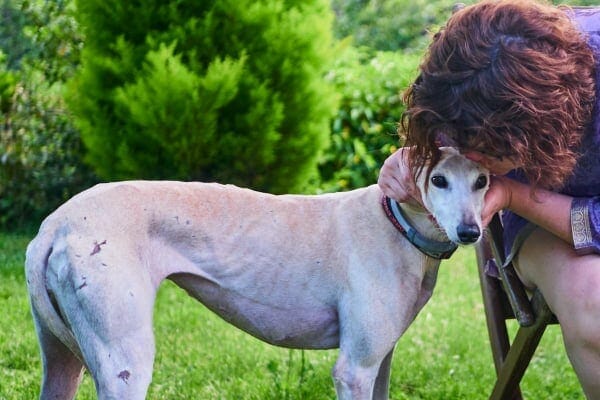
Strokes are actually pretty rare in dogs. In fact, when I went to vet school, we were taught that strokes didn’t happen in animals. Now we know they do happen occasionally, sometimes for an unknown reason, and other times because the dog has an underlying condition that increases the stroke risk.
Greyhounds and Cavalier King Charles Spaniels may have an increased risk of having a stroke. Strokes also occur more commonly in young adult or senior dogs.
What are dog stroke symptoms?
People who suffer from a stroke may start to slur their words, seem confused, become dizzy and off balance, or experience numbness or weakness in the arms, legs, or face. However, since our dogs can’t explain in words what they are feeling, we have to rely on our observations.
Dog stroke symptoms will mostly be determined by the length of time the brain’s blood supply was cut off and the part of the brain that was affected. If you suspect that your canine companion is having a stroke, look for the following signs:
- Head tilt to one side
- Circling
- Abnormal eye movements or eye position
- Sudden loss of balance
- Unequal pupil size
- Sudden blindness
- Abnormal gait
- Uncoordinated movements
- Falling over
- Abnormal mental state
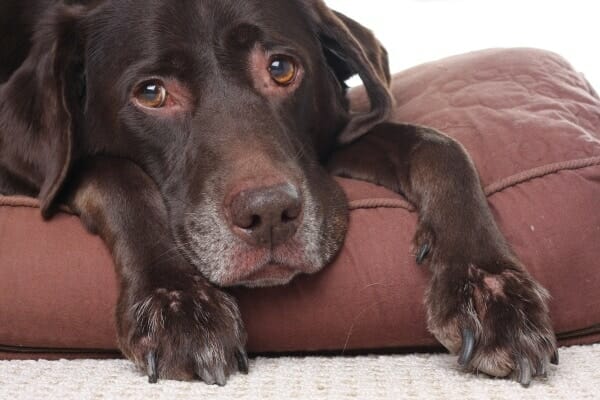
These signs indicate something may be wrong with your dog’s neurological system but are not necessarily specific to strokes. Toxin ingestion or other neurologic conditions such as seizures and vestibular disease can also have similar signs. All of these conditions are medical emergencies so if your dog is showing these signs, contact your veterinarian immediately.
What are the possible causes of strokes in dogs?
It is important to determine the underlying cause of a stroke in order to know if a dog’s stroke treatment will be effective. The list of possible causes is long, so we will just highlight a few of them.
Hypertension (high blood pressure)
High blood pressure, or hypertension in dogs causes blood vessels to become very narrow and stiff over time. In these circumstances, it’s easier for blood clots to form, creating a physical vessel obstruction.
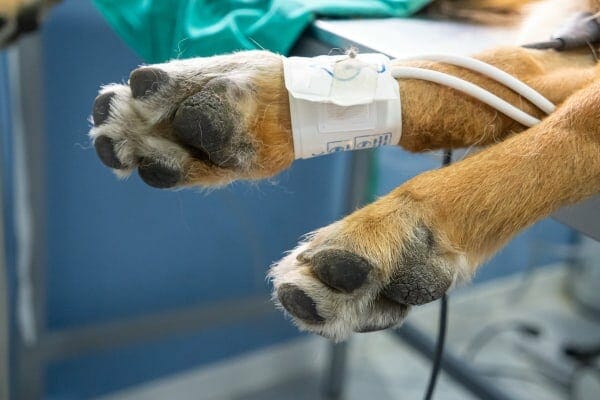
Because hypertension is one of the most common causes of strokes in dogs, I want to spend a bit more time discussing the diseases that could cause your dog’s blood pressure to increase:
- Cushing’s disease in dogs — This endocrine disorder involves the excessive release of cortisol from the adrenal glands. Hypertension occurs in some cases when blood vessels can’t dilate to reduce blood pressure and the hormone system that regulates blood pressure (renin-angiotensin-aldosterone system or RAAS) becomes activated.
- Heart disease — A diseased heart cannot pump enough blood to the body to meet its needs, so oxygen-depleted tissues will send signals to the heart to work harder. Blood vessels tend to constrict in an effort to improve blood pressure, and in patients with heart failure, the RAAS system kicks in, leading to hypertension.
- Kidney disease — The kidneys play a significant role in blood pressure regulation through the RAAS system, so kidney disease is often accompanied by hypertension. Kidney disease can also increase the leakiness of blood vessels or speed up the process of thickening or hardening of the blood vessels (arteriosclerosis), both of which could also lead to a stroke.
Increased or abnormal blood clotting
Some conditions make the blood more likely to clot abnormally. These clots can then lodge in a vessel and cause a stroke. Conditions leading to a hypercoagulable state (increased blood clotting) include:
- Immune mediated hemolytic anemia (A condition where the body attacks its own red blood cells.)
- Cushing’s disease in dogs
- Cancer (neoplasia)
- Protein-losing nephropathy (Kidney disease involving protein loss in the urine.)
- Sepsis (Organ or tissue damage that occurs due to the body’s abnormal response to infection.)
- Heartworm disease in dogs
Increased likelihood of bleeding
These conditions make a dog more likely to suffer from a hemorrhagic stroke by increasing the chances that bleeding will occur:
- Tick-borne diseases in dogs such as Anaplasmosis or Ehrlichiosis
- Von Willebrand factor deficiency or other clotting factor abnormalities
- Diseases leading to reduced platelet numbers
- Cancer (neoplasia) or noncancerous masses
- Some bacterial infections
- Trauma such as a head injury
How is a stroke diagnosed?
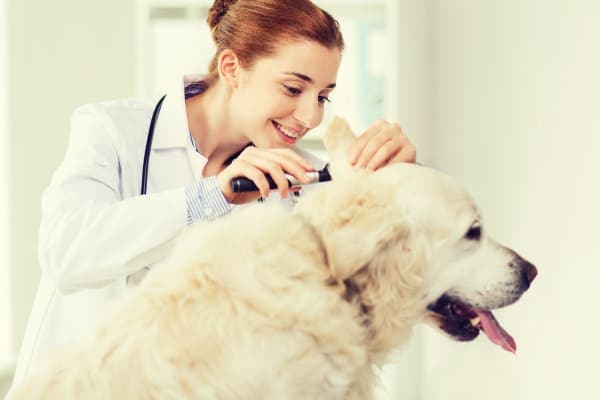
Conditions that cause strokes can have serious consequences without medical attention. That’s why it’s so important to seek help for your dog as soon as stroke symptoms are noticed. Your vet will perform comprehensive physical and neurologic exams and discuss your dog’s history and clinical signs with you. Then your vet might suggest dog lab tests like blood work, urine testing, and X-rays to gather more information.
While your vet may suspect a stroke based on your dog’s signs and diagnostics, advanced imaging (MRI or CT) is the best way to find a blood clot or signs of bleeding in the brain to definitively diagnose a stroke. These are typically performed at specialty clinics and university veterinary hospitals.
What does dog stroke treatment involve?
Depending on the underlying cause of the stroke and the severity of your dog’s signs, the vet might consider these treatments:
- Oxygen therapy or intravenous fluids to help optimize circulation and oxygen delivery to the brain.
- Medications to control seizures or decrease intracranial pressure.
- Treatments that target the underlying cause such high blood pressure or heart disease.
- Observation, monitoring, and supportive care.
You may have heard of using “clot buster” medications for human stroke patients, but they haven’t been thoroughly studied in veterinary medicine yet. To date, urokinase has shown some success in cats. However, streptokinase—a similar thrombolytic (clot busting) medication—caused very serious side effects including bleeding and even death.
How do I care for my dog who had a stroke?
The severity of your dog’s stroke and the underlying cause will dictate some of the at-home recommendations your veterinarian will make. In general, these measures may be helpful:
- Ensure your dog can easily reach the bowls to eat or drink.
- Provide soft bedding or a comfortable bed to rest on.
- Reposition your dog every four to six hours to prevent pressure sores.
- Change bedding as soon as it becomes soiled with urine or feces.
- Follow any other instructions given by your veterinarian and keep your vet informed about how your dog is doing.
Stroke prevention
Since it is known that some conditions may predispose dogs to strokes, dog parents may wonder if there is anything that can be done to decrease a dog’s stroke risk.
Medications like clopidogrel (Plavix®) are sometimes useful because they make the platelets less sticky. This decreases the risk that platelets will form a clot somewhere they shouldn’t and lead to a stroke. Amlodipine, a medication used to treat high blood pressure, may also decrease the risk of blood clots.
Likewise, angiotensin-converting-enzyme inhibitors (or ACE inhibitors) like enalapril , which block portions of the RAAS system, can reduce blood pressure in heart disease, decreasing the stroke risk.
Prognosis for strokes in dogs
The good news is that most dogs who suffer a stroke will be able to resume their normal lives again. However, there are some cases where a severe stroke leads to long-term mobility difficulties or even behavioral changes. For these dogs, physical therapy can help them learn how to walk again. Additionally, a veterinary behavior specialist may also be able to give you exercises that can help to “re-train” your dog’s brain.
It can be worrisome to see your dog stumble around acting abnormally, and you be wondering if a stroke is to blame. Don’t panic. Instead, contact your veterinarian right away! With prompt diagnosis and treatment, chance are good your dog could make a full recovery.

Has your dog suffered from a stroke?
Please comment below. We can all benefit from each other’s experiences.


My 17-19 yo Chihuahua (a rescue dog) had routine blood work in April which showed a very high white cell count. A test for leukemia came back negative, as did X-rays for tumor detection, and it was then thought perhaps to be a raging infection of unknown location. Course after course of antibiotics over the next 7 months didn’t lower the white cell count. Then, just 3 weeks ago a noticeable bump protruded on his forehead. Because of the bone displacement from the bump, X-rays final detected a tumor nodule in his frontal skull. It likely had been there for several months before the first low cell count was discovered. After the diagnosis 3 week ago, the bump quickly grew larger. He died only 9 days after the first signs of the bump from what his vet believed likely to be from a hemorrhagic stroke. The tumor’s sudden rapid growth likely puctured a blood vessel in his frontal brain. Mercifully it was a very fast, painless and peaceful death, lying on the carpet at home with me only 20 feet away to immediately come to his side and find him deceased.
Dear Rick,
My heart aches for you with the tragic loss of your senior guy. It sounds like you did everything you could to get answers and I wish things could have been different. Thank you for sharing your story with us. May your sweet boy’s memory be a blessing in your life and stay with you always.
Hi i been reading all you guys stories loosing your pets and i feel so sorry for that but all the stories i did not see any having a stock at a young age. My Dog was 5 and out of no where and i did not now dogs had strocks.. She was really energetic and never saw anything going wrong even that day she was good all day till 8pm we took a ride in the pickup around the block seen her back legs where dragging i ask whats wrong and she kept walking to get in the pickup she did jump inside but again she stopt half way and it worried me after we went for our normal drive and she seemed ok then i tought she probable hit her leg or legs some where and they was hearting. Not it came back i open pickup door but she slowly came of sliding her self off instead of jumping like she did. Was walking behind her to see if i could see why her legs was dragging and i did not see anything just her back seen her back cramping up. Like i said i had no idea a dog could have a strock or i would of taken her to the Vet but i dident and i have to live with that. That i would still have my best friend if i would had more nolidge of my pet but no i dident any ways i was saying she went down stairs soiding down she started loosing more movement towards her uper body this started at 8 by 9 we both was laying down in her favrite sofa and i dident want to mover her so i thought she be ok with some rest was healthy or so i thought but still i guess i fell asleep i woke up at 12 at night she could not move at all by then and all i did was maker feel comfortable i had no money for the vet and vet refuse to see her with out no money up front and by 8 in the morning she gave her two last breaths and was gone my life felt gone with her and feel so guilty that i could of saved her life if i new or done more then just lay with her. How fast does a stock get or how long do they have to be good on my poor baby there was plenty of time but i will have to live with it and its eating me with guilt of not done all to save her i miss her so much.
Dear Hugo,
I am so sorry for the tragic loss of your girl. You are correct that strokes are not common in young dogs. From what you describe, I do not think your dog was experiencing a stroke. Of course, without examining her and running some tests there would have been no way to know for sure. I don’t think you will ever know the exact cause of her death, but please don’t let guilt and grief weigh you down. It is clear your girl was well loved, and I am certain she lived a happy life. Try to focus on the good times you shared and let her memory bring you joy. Wishing you comfort and peace. Bless you. ♥
My beautiful rescue boy aged approx 13 had a stroke 3 months ago. I woke up to find him not lying beside my side of the bed and found him slumped over some clothing in a funny position unable to wake him
up. Eventually I woke him
up and his right eye was mainly shut and looked really bloody and the other darting from side to side . Hes blind in the right eye now and I suspect he’s got limited vision in the left eye now. I think he has mini strokes he gets confused through the blindness and his legs are not as stable as they once were . His right eye weeps constantly. He’s just struggled to get upright off laminate flooring and looks a little dazed . Despite all this once he’s outside he’s like a different dog ! Tails up and happy as Larry! We do have to be careful as he bumps into things though . He’s also not very good with stairs now hesitates and has lost footing. Breaking my heart seeing him like this . I carry him if I have too I know if he could he would carry me ❤️ please give your dogs sardines , mackrel or salmon a few times a week just a little for the omega 3 for the brain wish I’d known about this before . I love my boy I call him my gift x
Hi Denise,
So sorry to hear that your beautiful boy had a stroke a few months ago and is still dealing with some of the effects. Based on what you are saying, I suspect that he could really benefit from ToeGrips to help him get traction on the laminate and the stairs. If he is scuffing or dragging his feet, you may need to glue the ToeGrips on to keep them from getting pulled off, but they really do work wonders for many dogs! I’ll attach some links below so you can learn more.
Although he is struggling, which would be heartbreaking to watch, it is great that he can still enjoy himself outside (perhaps in part due to he better traction outside). I hope that he holds steady for awhile yet and you can continue to treasure your time together.
Here are the links:
1) Dr. Buzby’s ToeGrips® dog nail grips
2) ToeGrips instructions
My nearly 14year old Springer spaniel has just had a second stoke. The first one was 5 weeks ago and very worrying but she got over it and was totally back to normal.
Now she has had another one this time much worse. She cannot stand at all. The vet has given her 2 injections a steroid and an anti sickness one.
If she doesn’t improve in the next day or so ……we will have to decide what to do.
It’s so sad.
Dear Mary,
I am so sorry your senior girl was not doing well, and you were facing a very difficult decision. Hoping she was able to recover, and things are ok today. Feel free to leave an update if you have a chance. Best wishes to you and yours.
Hi my name is Linda and I have a senior German shepherd and I believe he had some kind of heat stroke or heat exhaustion because he was panting a lot so we read that it is normal for a dog to pant when they are hot because they don’t sweat like us to be able to cool down. So we just brought him inside to try to cool him down in the ac and a fan. but he kept breathing fast, then I pour some cool water on his body to try to cool him down, it seemed to work and he wasn’t panting or breathing fast anymore. We kept giving him cool water and he still was eating some things we gave him, but not his usual wet dog food he used to eat. We noticed that he was just laying down all the time and wouldn’t get up anymore. So we decided to take him to the vet we had to help him get up and slowly walk to the car. The vet said that he needed to do tests on him and that it would cost 1100.00. I couldn’t afford all that money so I just asked if I can get some antibiotics to see if that helps, I asked the the girl helping me that doesn’t my dog need fluids? and she said the vet didn’t prescribed it, so I thought that’s weird my dog was just laying down looking exhausted and that he should of gave him fluids, but they didn’t. So they charged me almost 300, for the visit and they gave him a shot of antibiotics and sent us home with antibiotic pills. They said to give him antibiotics twice a day . So we brought him home, we are giving him water and food with his antibiotic pill. it’s been almost 3 days and he is still just laying down and when we call him to go outside so he can do the bathroom he trys to get up but then just lays down again, like he has no strength to get up and walk. I’m not sure what is wrong with him, I believe the hot days it’s been here has something to do with this, Do you think he will start to walk again after we finish giving g him his medicine. Does it take awhile to recover from heat exhaustion or heat stroke, not sure if he even had a stroke. I just hope there is nothing wrong with his muscles and that’s why he can’t get up. The vet said that he had a high fever over 104. But he has no more fever now but he still looks weak, but he still eats and drinks lots of water. now we noticed that he is peeing where he is lying down, I am guessing cause he can’t get up to go outside. On cool nights we have to drag him outside and we wet him so he will stay cool. he is just lying down all the time. Do you think he will recover on his own ?
Dear Linda,
I am sorry you are facing this difficult situation with your Shepherd. Unfortunately, without examining him myself, I can’t make specific conclusions or recommendations. It is true that dogs pant to help keep themselves cool, but panting can also be a sign of pain or stress. Fluids are not needed in every situation. If your boy was not dehydrated or in shock, it is likely fluids would have offered no benefit and been a poor use of your money. The symptoms you describe could be from MANY different conditions or disease processes. The only way to narrow down the cause, and determine if treatment is possible, would be to allow your vet to run some tests. How is your senior guy feeling today? Hoping things have improved and praying for a positive outcome.
Hello,
My 15-year-old dog was unsteady on his legs, losing his balance but not falling, and tilting his head this morning. I’m worried he had a stroke. My mom doesn’t want to take him to a vet, just watch him and have him euthanized if he is not better in the next few days. She says we can’t afford the tests and there is nothing the vet can do for strokes anyway. She also said they might seize him from us because he has bad teeth, which I think is unlikely. A few months ago, our 12 year old dog had 4 10-second seizures over 6 weeks. We assumed if we took him to the vet they would say there is nothing to do and you must put him down so we avoided making an appt; only to panic after the 4th one and have a vet put him down at home hours later (we thought any second he might have another seizure and die suffering). We are all still devastated and guilt-ridden as it seems if we had taken him in, most vets would not have recommended euthanasia after 4 short seizures, we could have tried meds and had more time with him – possibly years? I realize that our 15 year old dog is in a different scenario, and there does seem to be less you can do about strokes, but I do not want to be in this position again, of putting our beloved dog down without at least trying the vet first. Sorry for rambling, but is anything the vet can do and would you recommend taking him? Thank you.
Hi Felix,
I am so sorry for all the traumatic events your family has experienced. While I can’t make specific conclusions without examining your dog myself, I can say that I think a trip to the vet would be a good idea. True strokes in dogs are very rare. I am suspicious that what you are describing may be vestibular disease instead. If that is the case, it should not be life threatening and usually completely resolves (or mostly resolves) with time. Your vet can let you know if they also suspect vestibular disease and may prescribe some simple medications to help decrease the symptoms while you wait for time to work its magic. I will attach links to other articles with more information on this topic. I hope you can find the answers you need to make the best decisions for everyone involved. Don’t give up hope and keep up the good work!
1. Vestibular Disease in Dogs: Doggy Vertigo
2. 10 Tips and Exercises for Dogs with Vestibular Disease
3. How to Feed A Dog With Vestibular Disease: A Comprehensive Guide
Hi Dr. Buzby! My 15yo dog had a mini stroke two days ago. He was very agitated and had pretty much all the symptons you’ve described, plus vomiting a lot. Also he lost the right inner ear because of an infection from a couple of years ago, which I believe was one of the causes.
We have been living abroad for six months and didn’t exactly knew how to deal with the situation since the veterinarian system here is different (and much more expensive) than in our home country, so we’ve decided to wait until morning to take any decision. The next day he was just lethargic, with horizontal nystagmus and with no bladder control. We took him to the vet and she said that his health is perfect and he will recover, but he had to stay the night since he was dehydrated.
Now he’s at home, the nystagmus is gone, and he was able to stand to pee (instead of peeing himself). He also doesn’t seem to be in pain, just confused. Sometimes he follows us around and look happy and present; sometimes he just stares at nothing and starts to walk in circles. I know these are all from the stroke and probably dementia, but it’s just heartbreaking. 🙁
Dear Mariana,
I am so sorry you had to go through this stressful situation with your senior guy. What a blessing the vet did not find any other abnormalities and your pup is now recovering at home. It is hard to watch a beloved pup deal with the effects of dementia. Here is a link to another article with more information on that condition: Canine Cognitive Dysfunction in Dogs: Signs, Symptoms, Solutions
My heart goes out to you as you navigate the unknown path ahead. Thank you for sharing your experience with us. I pray your sweet boy has continued to make progress and will make a full recovery. Wishing you both nothing but the best. Bless you. ♥
Hi my English Springer Spaniel was 13 when he had his first stroke. Symptoms were head tilt, loss of control in back legs, falling over, rapid eye movement.
Not sure what type of stroke it was but took him to the vets straight away. He was given medication and rest and recovered in about 3-4 weeks. Sadly he had another one later that year about 7 months after and recovered well. . Then a final one 6 months after that where sadly he didn’t recover and we said goodbye to our beloved Sammy.
The final one – he just stared and didn’t move (whilst standing). We had to physically lie him down in his bed – he couldn’t move himself. It was very distressing to watch. He lasted 2 nights until we called the vet and they said he was ready to say goodbye. : (
Hi Kerry,
I am so sorry for the loss of your Spaniel. I know he is dearly missed. What a blessing he did not have to suffer long, and you were able to offer him peace from his struggles. Thank you for sharing your experience with us. I hope with time you will be comforted knowing your sweet boy lived a happy life with those who loved him most. May his memory live on and be a source of joy to you each and every day.
hi my staffie died xmas aftanoon he was rite as rain in morning his back legs went at 2,30 then hea did manage to jump up setee he put himself away in bathroom his breathing went shallower in past 15 minutes of dying at 4pm in my arms , i was going to take him vets but too late a month before he weed the bed lay in it and was not himself all that day he was great next day so xmas day i thought he was just having a bad day and be ok later well he just went down hill rapidly in them last 30 mins as you could imagine i was heartbroken and still struggling with missing my best m8 he was only 8 active loving funny and one in a billion im wondering whether he had a stroke or poisen from his morning walk and never dreamt he was gonna die that day it was so sad i wish i had the money 4 a ortopsy but i dont it huants me as to what happened on what was a great day till it turned into a very sad one , i wonder if you couls posibly throw any light on what happened usual walk place did not seem to eat anything off floor had his meat im gutted rip my bute chico
Hi Col,
My heart goes out to you. What a heartbreaking thing to have happen, and on Christmas no less. As you said, without a necropsy, it is hard to say for sure what happened, but conditions like a ruptured splenic mass or sudden heart problems could both potentially have cause what you described. Unfortunately, a variety of other conditions could have also been the culprit.
While I can’t say why he died, I can say that it sounds like he had an amazing life with you. You had no way of knowing that he was going to die suddenly that day, and chances are good that there was nothing you could have done to prevent it. He had a great last day and was with the person he loved most when he died.
I hope that in time you are able to find some peace and comfort. Thinking about you as you grieve the loss of your one-in-a-billion dog. ❤️
We are pretty sure our 12 year old lab had a mini stroke a few days ago late on a Friday night. It took us the weekend to definitely notice something was wrong. She saw the vet the following Monday. He affirmed it was a vascular event—either a mini stroke or geriatric vestibular syndrome. He gave her some Trazodone for anxiety. She is eating fine and not having accidents inside. She doesn’t have a head tilt or crazy eye movements. However, she walks all around, sometimes in circles, and won’t relax unless we make her. She hasn’t barked since it happened. She won’t sit when we tell her to or even on her own—we have to force her to sit or lay (what we call settle), like her legs aren’t working. She LOVED her stuffed animals (her “babies”) but now doesn’t even seem to know they exist. Her balance isn’t great and she slips on the floor a lot. She gets herself “stuck” in corners or in weird spots. She won’t go up or down stairs really on her own. The only highlight is that she did respond to her frisbee the other night and tried to catch it. It’s only been 5 days. I am worried about if she will ever recover. When should we be seeing some progression of her recovering? Is there anything we can do to help?
Hi Alison,
I am so sorry your senior Lab is struggling with the aftereffects of a stroke. While it is true some of these symptoms may be here to stay, it is also possible your girl could make a full recovery with more time. Some dogs just need more time than others. Since we don’t know for sure what kind of vascular event your pup had, I will attach links to other articles that may offer additional information. These articles cover some of the more common diagnosed issues in senior dogs with symptoms like your own dog. You may also want to think about scheduling a consult with a neurology specialist. They may have more ideas about therapies that could help speed up the recovery process. I hope you can find the answers you need to restore your sweet girl’s quality of life. Wishing you all the best.
1. Vestibular Disease in Dogs: A True Story About Doggy Vertigo
2. 10 Tips and Exercises for Dogs with Vestibular Disease
3. Spinal Stroke in Dogs: What You Need to Know
4. GME in Dogs: Symptoms, Diagnosis, and Treatment
Haemangiosarcoma.
.My gorgeous girl of 10 has this disease and had her spleen removed last Oct 22 because of a mass on it. She has just had a stroke but seems to be recovering quite quickly. Would the stroke be due to her cancer? Would you mind explaining how? Is she likely to have another? how best to prevent please. Thankyou
Hi Anna,
I am sorry your senior girl has been through so much in the last few months. I understand your concern with the stroke that recently occurred. Without examining your dog, myself, I can’t make specific conclusions or recommendations. I would not think the stroke would be a side effect of hemangiosarcoma but cannot be sure. Your best bet is to have her evaluated by your vet. They may even recommend taking her to a specialist. Once a diagnosis is made or the cause is found, then they can give you an idea about prognosis and if it will recur. I hope all is well today and your sweet girl is living her best life. Best wishes to you both.
My dog is 17 and has recently suffered a stroke. It’s been 2 weeks and he seems to be improving, we took him to the vet and they told us we could do mri but with his age and price we chose not to.. So he has just been sleeping a lot., his balance has improved and is not circling anymore. When we take him outside he goes to the bathroom and does his business with no problem. He eats and drinks with no problem. His vision was already pretty much gone before the stroke and so now I’m sure it’s completely gone. He doesn’t seem to be in any pain. I’m just wondering your thoughts. Is he ok to live this way? The last thing I want is for him to be in pain. He seems to be improving, I’m sure his quality of life will forever be changed but I am willing to take care of him and do whatever I need to for him for the rest of his days.
Hi Crystal,
I understand your concern for your senior guy and these challenges he is facing. I am glad to hear his symptoms are improving and he is pain free. This sounds like a win in my book, and I definitely don’t think his quality of life will be diminished due to the lack of vision. Since I haven’t examined him myself, I could be wrong about his current state. As long as he seems happy, non-painful, and can perform his daily functions, I think he is ok to keep living life and bringing you joy. If you want to be sure, you can always have your vet evaluate him. Here is a link to another article that goes into more detail about quality of life: Using a Quality of Life Scale for Dogs
This article is geared more towards trying to decide when to choose euthanasia, but it has great guidelines for how to assess your pup and will probably show you are nowhere near this kind of decision. I am hopeful your sweet boy has many happy days ahead. Bless you both and best wishes!
Hello Dr, Julie Buzby,
I hope this comment reaches you in a timely manner. My little 13 year old poodle mix suffered a stroke today. His symptoms are only his legs have given out on him. He can’t walk right now. Our vet suggested to we say goodbye in the next couple days. Should we get a second opinion? He does have heart murmur that we have been treating with medications. He is still eating and drinking water, as yet to go potty though. Any advice would be helpful.
Hi Louise,
I am sorry for this tragic situation you are in with your little guy. Since I haven’t examined your dog myself, it is hard to make conclusions about his quality of life and possible prognosis. It may require seeing a neurology specialist to obtain a definitive diagnosis. Without a specific diagnosis, it is impossible to know what his chances are of making a full recovery or if there are treatment options to pursue. A second opinion is never a bad choice, especially when faced with the possibility of having to say goodbye. I am worried that your mentioned he hasn’t used the bathroom even though he has been eating and drinking. Due to the neurological dysfunction, his bladder may need to be manually expressed to prevent rupture. Make sure your vet is aware of the lack of urination/defecation as these problems alone could turn into an emergency situation. I hope you can find the answers you need to make the best decisions for you and your sweet boy. Bless you both.