Wondering how to potty train an older dog? If so, help is here! Integrative veterinarian Dr. Julie Buzby provides 10 tips that can help with housebreaking an older dog. Plus, she explains when having accidents in the house might signal the need for a trip to the vet.
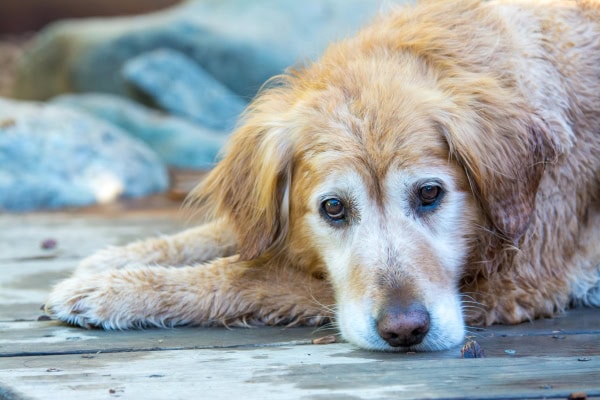
Recently, I was thinking about a client who’d come in for an appointment with her new dog, a senior Golden Retriever. She had adopted him from the shelter a few days before, and it was love at first sight.
However, the honeymoon phase came to a grinding stop at home. No matter how many times my client took him outside for potty breaks, her new dog continued to have accident after accident after accident in the house.
Everything checked out normally on his physical exam and routine bloodwork, so I told my client that I suspected this might be a situation where her sweet older dog had never been house-trained in the first place.
My client was surprised to hear this since she assumed, based on his grey-muzzled status, that he would already be potty trained. But she quickly said, “Ok then! Give me all the tips for how to potty train an older dog!” You may be in the same camp. So, let’s dive in.
Why should dog parents know how to potty train an older dog?
While we typically think of potty training as a task reserved for the parents of new puppies, adult and senior dogs sometimes need to learn about housebreaking, too.
Older dogs don’t instinctively know not to go potty in the house any more than puppies do. Unless a newly adopted dog was previously potty trained, he or she probably has little idea that house soiling isn’t okay. Plus, sometimes situations or medical conditions cause a house-trained dog to start having accidents.
Therefore, it is our responsibility to help our adult and senior dogs with potty training in a manner that is fair to them and sets them up for success.
What if my previously potty trained dog is now having accidents in the house?
Before we get to the potty-training tips, it is important to know that dogs who were previously potty trained but are now having accidents may need a trip to the vet, not just “re-potty training.” Often, the accidents happen because of an underlying condition.
The following medical problems can cause increased urine volume, abnormal sensations or pain in the bladder, difficulties keeping urine in the bladder or getting the urine out of the bladder, or other symptoms related to the urinary tract. As a result, they may lead to urinary accidents.
- Urinary tract infections in dogs
- Urinary incontinence in older dogs (which involves the dog involuntarily leaking urine, not knowingly having accidents)
- Bladder stones in dogs
- Kidney failure in dogs
- Diabetes mellitus in dogs
- Cushing’s disease in dogs
On the flip side, some conditions that affect the GI system, such as parasites, inflammatory bowel disease (IBD in dogs), pancreatitis in dogs, or food sensitivities, may lead to inappropriate defecation in the house instead.
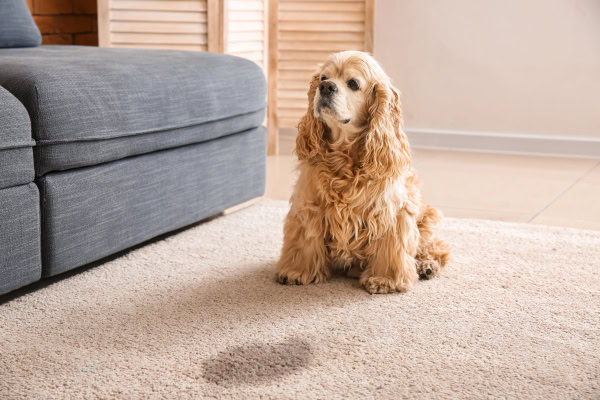
If your dog is having accidents, the first step is a vet visit
With all these conditions (and others not specifically named here), getting your dog to the veterinarian for diagnostic testing and treatment is critical. During the appointment, the vet can address or rule out medical problems. Plus, he or she can help determine if stress, new surroundings, behavioral issues, pain, medication side effects, or other factors could be contributing to the accidents.
Thankfully, once a dog receives treatment for the underlying problem, there is a good chance that he or she will return to normal elimination behaviors. This means that the process of “re-housebreaking” may potentially be unnecessary.
However, there are situations where the dog still needs a “refresher course” on potty training. And sometimes newly adopted adult or senior dogs have never been potty trained before. In that case, they need to start from square one, just as if they were a puppy.
Special considerations for dogs with canine cognitive dysfunction
There is one medical problem where dogs more frequently need to be reminded about how potty-training works—canine cognitive dysfunction (CCD). Dogs with CCD may forget previously learned rules and tricks. This can include knowing that they shouldn’t eliminate inside the house. In fact, one of the common signs of dementia in dogs is accidents in the house.
Unfortunately, unlike some of the other conditions listed above, managing dementia in dogs is not simple or straightforward. Dogs often need a combination of medications like selegiline for dogs, supplements like Dr. Buzby’s Brain Boost™ organic MCT oil for dogs, anxiety medications like trazodone for dogs or fluoxetine for dogs, mental stimulation toys and games for dogs, and environmental modifications.
When it comes to addressing accidents in the house specifically, sometimes the measures above, in combination with making the house easier to navigate (more on this in tip #10 below), are enough to get the dog back to “remembering” his or her potty training. Other times, you need to use some of the tips below to re-housetrain your senior dog.
10 tips for potty training an older dog
Whether you are working on housetraining your adult dog who has just joined the family or reminding your long-time companion how to go potty outside, there is hope. Older dogs can learn new habits! With some time, patience, and the tips below, you will (hopefully) be cleaning up fewer accidents soon.
NOTE: It is important to consult your veterinarian if you suspect your dog may have an underlying condition contributing to the loss of housebreaking. Once you get the “all clear” or you start a treatment or management program for the condition, you can shift your focus to potty training again.
1. Pick a place you want your dog to go potty
Whether you have a large yard, a small grassy area, or need to take your dog for a walk to eliminate, consistency is important. During potty training, you should always walk your dog to the same spot. Having a small area as a designated “bathroom” will help your dog quickly learn that going to that spot means it’s time to go potty.
When you walk outside for a bathroom break, go directly to this spot. Don’t let your dog wander and get distracted. You may need to take your dog outside on a leash while he or she is learning. This will help him or her stay focused.
SENIOR DOG TIP: If your dog is a senior dog, consider the distance to the “bathroom spot.” Osteoarthritis in dogs is common as dogs age and can make it hard for them to move around. If your dog is in pain and has to walk a long way to the bathroom spot, it may slow down the potty-training process. Thus, picking a spot that is close to the door and easily accessible can be particularly helpful for senior pups.
Training an older dog to use potty pads
Some dog parents may decide to train their dogs to use potty pads inside the house. This can be a good choice if you live in an apartment, have stairs that your dog can’t go down, don’t have a lot of good outside potty locations nearby, or have other reasons your senior dog can’t make it outside easily.
If you are going to use potty pads, the theory is still the same. Put them in a set location in your home and don’t move them around. Also, you will still need to walk (or carry) your dog to the potty pads so he or she can find and use them.
2. Use cue words like “go potty”
When you are at your dog’s designated bathroom spot or potty pad, use the same cue word every time to encourage him or her to eliminate. Make sure it’s clear and easy for your dog to understand (especially if your senior dog has a difficult time hearing you).
Some of the common cues I’ve heard from dog parents are “go potty” or “do your business.”
In the early stages of dog potty training, say your cue words right as your dog starts eliminating. This will help your dog associate the words with the act of going potty.
3. Reward your dog for going potty outside or on the potty pad
As soon as your dog finishes eliminating, reward him or her. If you use treats, give your dog one right away and tell him or her, “Good job.” Alternatively, you may be able to just use your voice to excitedly praise your dog. Plus, you can pet him or her to reinforce the behavior. (Treats or toys tend to be more motivating for many dogs, but you know your dog best.)
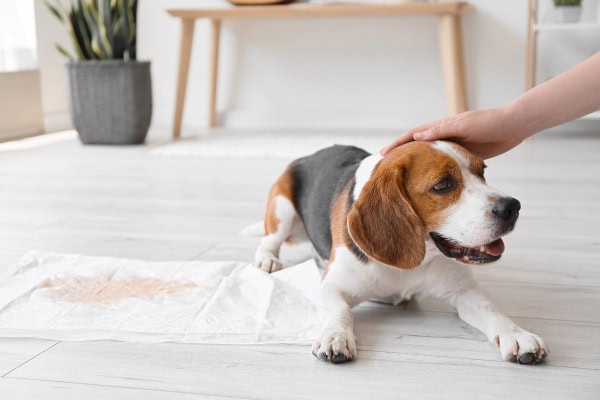
You can also reward your dog by playing with him or her or by giving your dog freedom to explore. If your dog is on a leash to go to the bathroom, you can let your dog off-leash (if safe and allowed in your location) so he or she can roam freely. Or, if you can’t let your dog off-leash, you can give your dog slack in the leash to wander around.
By taking your dog straight to the bathroom and then playing or exploring afterward, you reinforce the idea of going to the bathroom outside every time.
4. Use positive reinforcement rather than punishment
The best way to housebreak an older dog is to use positive reinforcement. This means rewarding your dog for desired behaviors and ensuring you don’t punish your dog for accidentally going to the bathroom on the floor. Rewards will go much further than punishment. This is especially true if your dog is already anxious because of dementia or being in a new environment.
It is a great idea to use positive reinforcement not only when your dog goes to the bathroom in the appropriate location, but also any time your dog shows a good behavior related to potty training. If your dog asks to go outside, reward him or her. If your dog doesn’t have an accident while you are gone, praise him or her. Make it exciting for your dog so he or she wants to learn potty training quickly.
5. Know how to handle accidents when they happen (because they will)
If you catch your dog in the act of urinating or defecating inside, calmly interrupt without scaring your dog, and guide him or her outside to finish. Reward your dog as soon as he or she is done going in the appropriate location.
Then, once you come back inside, clean up the urine or feces. Use cleaners that break down the smell and thoroughly disinfect the area. Otherwise, if a scent remains, your dog may be attracted to the spot. And you may see repeated accidents in that area.
During this process, don’t forget to take a few deep breaths and remind yourself that accidents happen. It’s part of the training process. Even the best dog will likely have at least one accident in the wrong spot.
Don’t scare or punish your dog during an accident
While some people recommend making a loud noise if you catch your dog eliminating inappropriately, it isn’t a good idea. Scaring your dog during the accident or punishing him or her afterward can make your dog even more nervous or confused. This slows down the potty-training process.
6. Create and stick to a potty trip routine
One of the best ways to avoid accidents is to establish a routine for your dog. Take your dog to the bathroom regularly and frequently. When making your schedule, I suggest:
- Taking your dog to the bathroom first thing in the morning after waking up. (If your dog does not go to the bathroom, try again 10 minutes later.)
- Going outside for a bathroom break 10-20 minutes after a meal.
- A bathroom attempt after every nap.
- Taking your dog to the bathroom immediately when you return home after being gone.
- Going potty after drinking large amounts of water.
- Taking your dog potty before bedtime every night.
Additionally, you will probably need to take your dog to the bathroom other times throughout the day. Depending on the dog and the circumstances, your dog may need potty trips more frequently in the early stages of housebreaking. Some dogs may need to go out every 30 minutes, while others can go every couple of hours.
Watching your dog’s cues can help you figure out how often to take a potty break. When in doubt, remember that it is better to go more often than not frequently enough.
7. Keep an eye out for your dog’s bathroom signals
When you are with your dog, watch for signs that your dog may need to go to the bathroom. This might look like sniffing around, acting restless, circling, or pacing. When you see the signs, calmly get your dog’s attention and take your dog immediately to his or her bathroom spot.
Alternatively, some dogs may whine or scratch at the door to go outside. If your dog does this, reward them for recognizing they need to go and for alerting you. Then take your dog outside immediately.
Sticking to a consistent bathroom schedule will help reduce the risk that you miss any signals from your dog. As you get to know your new dog, it will become easier, too.
8. Confine your dog when you can’t supervise him or her
When you are sleeping, away from home, or cannot be watching your dog for bathroom signals, it is a good idea to confine him or her to a small space. Usually, dogs are less likely to have an accident in areas that feel like a “bed” or safe space to them because they don’t want to lie in urine or feces if they can avoid it.
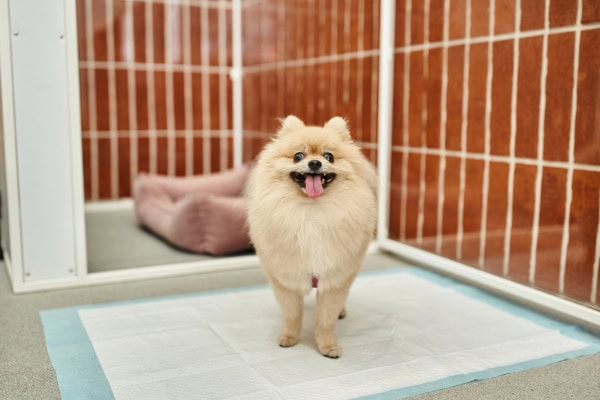
This is one of the reasons I think crate training older dogs is so important. It helps your dog see the crate as a comfy and safe place. However, if you don’t want to crate train your dog, you can also use a blockade like a baby gate to keep your dog in a smaller area.
When you return to your dog, take him or her out of the confined space. Then immediately go to the designated bathroom location and praise your dog for eliminating there.
As your dog becomes more proficient at potty training, you can expand the size of the space. Over time, your dog should adjust to holding it when left alone, even when not in a crate or small space.
9. Know when you can back off on the potty training routine
As your dog becomes more comfortable with your routine and recognizes the designated bathroom spot and cue words, you can begin to dial back the intensity a little.
It’s important to maintain consistency in location and cue words since they will always be part of your dog’s bathroom habits. But over time, you can gradually shift from treat-based rewards to more verbal praise. Or you might be able to give your dog more freedom in your home.
Remember that every dog is different, and there is no exact time frame for potty training. Some dogs may pick it up faster than others. But it will be very rewarding when you complete the journey!
10. Keep the unique needs of senior dogs in mind during the potty training process
Finally, remember that compared to puppies, adult and senior dogs may face more challenges that can hinder the potty-training process. Recognizing and taking steps to address the special needs of older dogs can go far in helping your dog be successful at housebreaking.
Lights and visual guides can help with navigation
Some senior dogs may have a difficult time seeing around the home (especially at night). Using visual guides like night lights and yellow tape on stairs can help them navigate more easily. These tools are especially beneficial for dogs who are losing their sight or those with canine cognitive dysfunction who can become disoriented at night.
Traction aids let your dog confidently walk to the door to go outside
Traction aids, like Dr. Buzby’s ToeGrips® dog nail grips, can also help older dogs move around the home. Confident mobility is important for housetraining. If your dog is scared or struggling to walk across your floors to get to the door to the bathroom spot, he or she is more likely to have repeated accidents or be delayed in potty training.
Remember that senior dogs with health problems may need more frequent potty trips
If your dog has an underlying condition that causes him or her to urinate more frequently, shorter periods between bathroom breaks may be necessary.
Pain management can go far in helping senior dogs make it outside to go potty
Dogs who have arthritis or other types of pain may have a difficult time making it outside. Consider adapting the bathroom spot so it is easier for your dog to access. Or ask your veterinarian about ways to relieve arthritis pain in dogs.
Watch older dogs closely for signs of UTIs
Some senior or adult dogs with underlying health problems may be more prone to urinary tract infections. Monitor your dog carefully for any changes in bathroom habits or other symptoms. And let your veterinarian know if you notice anything out of the ordinary or have concerns.
You can potty train your older dog!
Remember my client and her dear Golden? I’m happy to report that with some hard work and dedication, he was potty-trained. With that hurdle behind them, they are free to enjoy long walks and even longer snuggle sessions on the couch together.
Yes, potty training an older dog takes patience and a few extra considerations. But adult dogs are often so willing to learn and eager to please. With consistency, positive reinforcement, and a willingness to adapt to your dog’s needs, you can potty train your older dog!
What worked well for potty training your older dog?
Please share your tips below.