A diagnosis of liver disease in dogs (which may lead to liver failure in dogs) can leave you with many questions about what this means for your canine companion. Integrative veterinarian Dr. Julie Buzby is here to equip you with information about the causes, symptoms, diagnosis, and treatment of liver disease so you will know how to best support and care for your dog.

As a veterinarian, sometimes there is a patient who leaves pawprints on my heart forever, even if I’ve only known them briefly. Daisy was one of those dogs for me.
A beloved dog shows signs of liver disease
This senior Boxer came to the vet hospital with her very worried mom and dad because she wasn’t eating well and had been vomiting. While her sweet little stubby tail and whole back end were wiggling joyfully when I approached her, I could tell in an instant that she didn’t feel good.
As I started to love on her, I noticed something that made my heart sink. The whites of her eyes, her gums, and her skin had a yellowish tint. I knew that these were tell-tale signs of liver disease, and advanced liver disease at that.
When I finished my examination, I shared my suspicions with her parents. They agreed to start with some bloodwork to evaluate their dear dog’s liver and other organs.
Unfortunately, the bloodwork revealed that Daisy had sky-high liver values, which confirmed my fears of severe liver disease. As I broke the news to her parents and began to discuss the next steps, Daisy’s mom started crying. I will never forget Daisy lovingly looking up at her mom and tenderly licking the tears off her cheeks. It was all I could do not to start crying, too.
What is liver disease in dogs?
The term “liver disease in dogs” encompasses a variety of conditions or problems that may damage the functional cells in the liver. Should the insult destroy enough of the liver, this can lead to liver failure in dogs, a condition in which the liver can no longer function properly.
Thus, there is technically a distinction between liver disease (liver is damaged but still works) and liver failure (liver can no longer do its job). However, from a practical perspective, sometimes the terms may get used interchangeably, especially in cases of more severe liver disease.
What does the liver do?
In order to understand liver disease and liver failure in dogs, we first need to talk about the liver. This large, brownish-tan organ lives under the rib cage and has many vital roles. The liver is responsible for:
- Filtering blood to remove toxins from the body
- Synthesizing blood clotting factors
- Storing energy as glycogen
- Creating, circulating, and storing bile to aid in digestion
- Making albumin, a protein needed to help keep the fluid in the blood vessels
- Storing vitamins, minerals, and nutrients
- Metabolizing drugs
- Influencing the immune response
One of the really cool things about the liver is that it has the ability to regenerate cells that are damaged. However, even this amazing regenerative ability of the liver doesn’t always keep a dog from getting sick when the liver is damaged. And it can’t prevent a dog going into liver failure when the damage surpasses the liver’s ability to heal itself.
What are the symptoms of liver disease?
Dogs who have liver problems may show a variety of signs depending on the severity, speed of progression, and the underlying cause of the liver disease.
Symptoms of early-stage or mild liver disease
In the early stages of liver disease or with mild liver disease, a dog may be completely asymptomatic. Without seeing the indicators of liver issues on routine bloodwork, you would never know anything was amiss.
Symptoms of advancing or more severe liver disease
But as the dog progresses to the next stages of liver disease, or in the case of a more severe or rapid liver insult, you may notice clinical signs of liver disease such as:
- Vomiting and diarrhea—Your dog may experience GI upset such a nausea, vomiting, or diarrhea.
- Fever—In the case of an infectious cause of liver issues, the dog may run a fever.
- Abdominal pain—Especially in acute liver failure, a dog may adopt a hunched or praying/play bow position due to a painful abdomen.
- Increased thirst in dogs and increased urination—The dog may drink more water and need to urinate more frequently.
- A lethargic dog—Dogs with liver problems may be tired or uninterested in normal daily activities.
- Loss of appetite—Due to not feeling well, your dog may turn up his or her nose at food or only eat a small amount of treats or food.
- Weight loss—As liver disease progresses, you may notice your dog losing weight.

Head to the vet if you see symptoms of liver disease
If you notice any of these symptoms in your dog, contact your veterinarian immediately. Especially with acute-onset liver disease, the sooner the vet can start treating your dog the better. And since leptospirosis, a potential cause of liver failure, is zoonotic (i.e. transmissible to humans), getting to the vet promptly helps protect the health of your human family, as well as the health of your dog.
It is also important to be proactive about making a vet visit because these signs are not specific to liver disease. They can also can accompany other life-threatening conditions like pancreatitis in dogs or a GI obstruction.
Signs of liver failure in dogs or end-stage liver disease
Sometimes in liver disease the liver damage can be so extensive that the liver no longer has enough functional tissue to do its job. This means the dog is in liver failure. In that case, you will see symptoms that are related to the liver’s inability to perform necessary tasks in the body. Some of the signs of liver failure in dogs include:
- Jaundice (i.e. icterus)—The skin, gums, eyes, and other tissues may turn a yellowish color. This happens when excessive bile pigments build up in blood and tissues as the liver loses the ability to collect and handle bile.
- Ascites—When the liver no longer produces sufficient albumin to keep the fluid in the blood vessels, it can leak out into the abdomen. Dogs with ascites (i.e. fluid-filled abdomen) may have a pot-bellied dog appearance.
- Hepatic encephalopathy—Dogs may exhibit seizures in dogs, confusion, head-pressing, or other neurologic symptoms when toxins normally filtered out by the liver are present in the blood and reach the brain. It is important to note that hepatic encephalopathy is also a sign of a portosystemic shunt (which we will get to soon) so it doesn’t automatically mean the dog is in liver failure.
- Abnormal bleeding—Due to lack of clotting factors normally made by the liver, the dog may have bruising, dog nose bleeds, or other signs of spontaneous bleeding.
These symptoms may occur when the liver damage occurs rapidly (i.e. acute liver failure in dogs) and the liver hasn’t had time to regenerate. But they can also occur in the final stages of chronic liver disease. This is the point at which so much liver tissue has been replaced with scar tissue from ongoing liver disease that there isn’t enough functional liver tissue left.
Immediately make a vet visit if you notice symptoms of liver failure in dogs
Especially if you see any of these symptoms in your previously healthy dog, please head to the vet immediately or make an emergency vet visit. When it comes to acute liver failure, time is of the essence. As we will discuss, sometimes prompt and aggressive treatment can help reverse acute liver failure.
And even if you know your dog has chronic liver disease and you are seeing signs a dog’s liver is failing, it is important to seek veterinary attention. That way you can work together to find the best course of action for your dog.
What causes liver disease in dogs?
As part of the appointment, the vet will ask you questions about your dog’s history and symptoms. Having an idea if your dog could have gotten into anything or been exposed to any infectious diseases can help point to the cause of the liver disease. And so can knowing what sort of symptoms you are seeing and how fast they came on.
Often, your vet has to act a bit like a detective. There are many factors that can contribute to liver disease in dogs. Some toxins or conditions can cause an acute (i.e. rapid onset) form of illness. And others can lead to chronic (i.e. slowly progressive) liver disease.
Causes of acute liver disease in dogs or acute liver failure in dogs
Acute liver disease occurs when a massive amount of liver cells are damaged at once. In some cases, enough cells are rapidly damaged with no time for the liver to regenerate that the liver starts to fail. This is called acute liver failure. Acute liver disease or acute liver failure can happen for a variety of reasons including:
- Toxin ingestion—Since the liver is responsible for removing toxins from the blood, it would make sense that many toxins have the ability to damage the liver. Common substances such as xylitol toxicity in dogs, Advil toxicity in dogs, heavy metals, rodent poisons, insecticides, blue green algae toxicity in dogs, plants such as sago palm or Amanita mushrooms, or other toxins may be to blame. Additionally, some antibiotics, chemotherapeutic drugs or non-steroidal anti-inflammatory drugs, may also cause acute liver failure in dogs in some situations.
- Infections—Infectious canine hepatitis, leptospirosis, herpesvirus, fungal infections such as histoplasmosis, and other infectious agents can significantly and rapidly damage the liver.
- Trauma—Being hit by a car, suffering from heatstroke in dogs, or other emergency situations may also put a dog at risk for acute liver failure.
Causes of chronic liver disease in dogs
On the other hand, even though the liver is great at regenerating itself, chronic damage can lead to inflammation of the liver (i.e. hepatitis) and irreversible changes. This is known as chronic liver disease, and may eventually lead to liver failure in some cases. Some of the more common causes of chronic liver disease include:
- Ongoing exposure to toxins, medications, or infectious agents
- Immune-mediated diseases
- Liver cancer in dogs (cancer that originates in the liver or cancer that spreads to the liver)
- Portosystemic shunts—An acquired (i.e. happens sometime after birth) or congenital (i.e. present at birth) condition where an abnormal blood vessel (or sometimes multiple vessels) forms and allows blood coming from the GI tract to bypass the liver. As a result, this blood that would normally be filtered and detoxified by the liver is now going directly into general circulation. There, it can cause a variety of problems.
- Abnormal accumulation of minerals such as copper (i.e. copper hepatopathy) or iron in the liver
- Genetic predisposition—Chronic hepatitis (which in itself can be caused by a variety of issues on this list) is more common in Bedlington Terriers, Labrador Retrievers, Cocker Spaniels, Doberman Pinschers, Skye Terriers, Standard Poodles, Springer Spaniels, Chihuahuas, Maltese, and West Highland White Terriers.
- Cholangiohepatitis—Inflammation of the liver and biliary system, often due to infection
- Idiopathic (i.e. cause is unknown)
- Endocrine disease including diabetes in dogs or Cushing’s disease in dogs

How is liver disease in dogs diagnosed?
In addition to gathering a history to start narrowing down the list of potential causes, the veterinarian may also run a variety of tests as part of diagnosing liver disease in dogs. Some tests indicate the liver is damaged while others help pinpoint the cause of the liver disease. These tests include:
Blood chemistry
Your veterinarian may start with blood tests for dogs to look for high liver enzymes in dogs (e.g. ALT, AST, ALP, GGT). Elevated ALT or AST may indicate damage to the liver. And high ALP in dogs and high GGT tend to be associated with backup of bile flow. Of course, there are also some conditions where all four enzymes might be higher than normal.
On the other hand, it is also possible for dogs to have liver enzyme elevations that are due to conditions unrelated to liver disease. Some examples include heart disease in dogs, muscle damage, bone growth, dental disease in dogs, and other situations. Therefore, your vet will interpret changes in liver values in light of your dog’s other examination findings.
Sometimes the vet will find elevated liver enzymes on blood work when your dog is sick. But in other cases, the high liver enzymes might show up as an unexpected finding on routine wellness bloodwork. This is probably one of the best-case scenarios. It means that your vet can create a plan to manage your dog’s liver issues before your dog ever acts sick.
Bile acid testing
The vet may also recommend running a bile acid test. This can be a useful follow-up blood test for a dog with liver enzyme elevations. While liver enzyme numbers indicate liver damage or bile flow problems, they don’t provide information about liver function. However, the bile acid test can help give the vet an idea of how well the dog’s liver is working.
A bile acid test involves measuring the amount of bile acids in a dog’s bloodstream before and after a meal. Bile acids are compounds that are made by the liver and aid in digestion. They are released into circulation after a meal. And then they are filtered back out of the blood by a healthy liver. Therefore, dogs with a healthy functioning liver should have low levels of circulating bile acids before and after a meal.
But in patients with liver disorders such as portosystemic shunts or liver failure, bile acids will remain in circulation. This occurs because the liver is not functioning properly to remove and store them.
Imaging
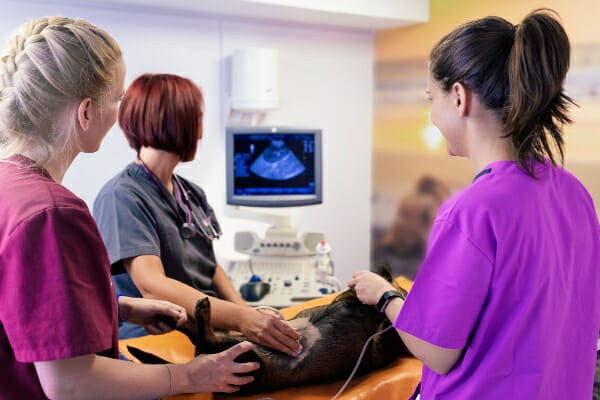
Your vet can use X-rays to look for changes in the size or shape of the liver. He or she may also recommend an abdominal ultrasound to evaluate the architecture of the liver and biliary system and screen for any cysts or tumors. Sometimes portosystemic shunts can be identified on ultrasound. However, the most reliable way to find portosystemic shunts is to use advanced imaging such as CT, MRI, or nuclear scintigraphy (i.e. injection of a radioactive isotope while images are acquired to look for abnormal blood flow).
Liver aspirate or biopsy
Having a veterinary pathologist evaluate the liver cells can help diagnose liver disease in dogs. Sometimes your vet can use a needle to obtain a small sample of liver cells under ultrasound guidance. He or she can then submit those cells for evaluation under the microscope.
However, in some cases, this method may yield inconclusive results. While more invasive, surgical removal of a larger tissue sample (i.e. a liver biopsy) can provide more definitive information about liver problems.
What is the treatment for liver disease or liver failure in dogs?
Once your vet diagnoses your dog with liver disease, he or she will discuss the treatment options. These may vary depending on the underlying cause of the dog’s liver issues.
If a toxin is to blame, your vet will take steps to prevent further absorption of the toxin. This could include inducing vomiting or performing gastric lavage (i.e. flushing out the stomach) in an attempt to remove the toxin left in the stomach. He or she may also give your dog medications to prevent further toxin absorption. Or the vet may administer an antidote to the toxin (if one exists).
If a bacterial infection like leptospirosis is causing the liver damage, your vet will start your dog on antibiotics. (As a word of caution, leptospirosis is zoonotic, which means it can spread from animals to people. Your vet will explain the precautions you should take to keep yourself and your family safe while caring for your dog.)

Additionally, certain medications and a specialized diet may help decrease the signs of a portosystemic shunt. However, this doesn’t work well in all cases.
Many dogs with a congenital portosystemic shunt require surgery to block blood flow through the abnormal vessel. The surgeon may place a band around the vessel that eventually closes the vessel completely. Alternatively, he or she may insert a metal coil into the vessel. A clot will form around the coil, obstructing blood flow through the shunt vessel.
Other causes of liver disease, however, are not so easy to treat. In those situations, the focus is primarily on supporting the liver and managing clinical signs.
Supportive care for dogs with liver disease
Dogs with significant liver disease, especially those with acute liver failure, may benefit from hospitalization, IV (i.e. intravenous) fluids, and supportive care. Your vet may also give your dog medications to address nausea, hepatic encephalopathy, clotting problems, abnormal build-up of minerals, or other liver disease symptoms.
Long term, dogs with liver disease may benefit from a specifically-formulated prescription “liver support” diet. Having the right balance of nutrients, antioxidants, vitamins, and minerals can help boost the liver’s ability to do its many jobs.
Additionally, there are a variety of liver support supplements that can be a great way to naturally manage liver issues. Some of the more common natural treatment options for liver disease in dogs include:
- S-Adenosylmethionine (SAMe)
- Silybin (milk thistle)
- Vitamin E
These supplements have anti-oxidant properties and help support liver function and health. You can find them combined together in a variety of commercially available products. For example, the popular liver supplement Denamarin® contains SAMe and Silybin.
Is liver disease in dogs preventable?
After learning about liver disease, it is understandable to wonder if there is anything you can do to prevent liver disease. Unfortunately, liver disease is not totally preventable. But there are a few things you can do to help decrease the risk of certain causes of liver disease:
- Ensure your dog is up-to-date on vaccinations for leptospirosis and infectious canine hepatitis.
- Keep toxic substances out of reach of your dog. Promptly contact your vet, the ASPCA Animal Poison Control Center, or Pet Poison Helpline if you believe your dog has ingested a toxin. (The pet toxicology services do charge a fee, but the information they provide is well worth it.)
- If your dog is showing symptoms of liver disease, make an appointment with your vet or head to the nearest veterinary emergency room. Time is of the essence, especially in cases of acute liver failure in dogs. The sooner the vet can start treatment the better.
- Consider having your vet perform routine wellness bloodwork on your dog. This may allow him or her to catch and address senior dog liver problems before your dog begins to show any symptoms.
However, in many cases, there is nothing you could have done differently to avoid liver disease. So please don’t feel guilty or blame yourself. Instead, arm yourself with information and commit to helping your dog live his or her best life moving forward.
What is the life expectancy for liver disease in dogs?
When receiving a scary diagnosis like liver disease (or liver failure), it can be helpful to have an idea of what to expect. The prognosis can vary significantly depending on the cause and severity of the liver disease, whether it was acute or chronic, and how well your dog responded to treatment.
Acute liver failure
With rapid and aggressive therapy, dogs with acute liver failure may be able to recover. This is because the liver has the ability to regenerate (i.e. replace damaged cells with new healthy ones). However, this is not always the case as sometimes the liver damage is too extensive and ends up being fatal.
Slowly-progressing liver disease in dogs
Additionally, some dogs with certain chronic liver diseases can still have a fair to good prognosis. And they can still live reasonable-length life span. Although they may need special food or medications long-term, these dogs can still make many happy memories with their parents.
End-stage liver disease or severe and rapidly progressing liver failure in dogs
Unfortunately, though, for dogs with end-stage liver failure or liver cancer, the prognosis is usually poor. As dogs enter the final stages of liver disease, they may be nauseous, painful, or lethargic. Or they may be struggling with bleeding, ascites, or hepatic encephalopathy. All of these problems can greatly decrease your dog’s quality of life. And you may end up needing to have a difficult conversation with your vet about when to euthanize your dog with liver failure.
Daisy the Boxer dog’s diagnosis: End-stage liver failure
I wish I could tell you that Daisy’s story had a happy ending. However, this sweet girl was in end-stage liver failure and there wasn’t much we could do to reverse it. After a long and emotional talk with her parents, they decided to take her home and treasure their last few days together rather than hospitalize her. I think this was the right choice.
When they brought her back a week later, they told me about the memories they made together. We had talked at the last visit about preparing for your dog’s euthanasia, and they were at peace with the decision. Daisy once again licked her mom’s tears away as we talked about how they wanted her goodbye to go. And then she peacefully passed away in her parents’ arms.
Hope for dogs with liver disease
I don’t want you to think, though, that all cases of liver disease are going to end this way. Daisy’s story touched my heart, so I wanted to share it with you. But rest assured, I have also diagnosed many dogs with liver disease who have gone on to live happily for years after the diagnosis.
So please don’t despair if your dog has liver disease. Talk to your vet and get a realistic picture of what this diagnosis means for your dog’s particular situation. There are dozens of common causes of liver changes in dogs, each with its own treatment plan and prognosis.
Has your dog been diagnosed with liver disease?
Please comment below to share his or her story.


My spayed maltese is 8 years old. She had a blood chem last august 3. Her alp was 125 and her alt was 45 that was part of her follow up after finishing her 5 month doxycycline for ehrlichia. She finished her last dose last april 30. Vet gave go signal for immunol syrup by himalaya pets and now pets fish oil because her crea was 1 pending sdma. Her platelets then were 557 and had slight microcytosis. On my own i gave her iron with b12 supplement along with the fish oil. By sept 1, she had one episode of regurgitation of the scrambled and and dried cranberries. Fast forward to sept . 20 she had a single episode of foul smelling, frothy, mucoid poop greenish brown which the vet only gave probiotics and it did not progress. Then oct. 8, she had vomiting 6 hours after eating i took her to the vet asap, cbc significant was mchc 427, rdw sd 32, mcv 53.7 but the significant in blood chem was alt 610, bile acids 50.5, alp 178. She was put on liver supplements the usual with ursodeoxycholic acid with vitamin e and a hepatic diet, the canned one low fat. Xray done thorax and abdomen okay. No ultrasound yet. No definitive diagnosis yet. Then she has soft poop again the day after the oct. 8 visit. She was put on probiotics again now she has better poop i would say a 3 based on poop chart. What do you think about this? Thanks. I am worried about the worst case scenario. Also her crea last oct. 8 was 71 umol/l normal. But i forgot to add her glucose was 9.55mmol/l during the october 8 visit . Blood was drawn about a little less than 2hrs after a meal that she vomited.
Hi Vesna,
I understand your concern for your pup and think she is lucky to have you advocating for her health and well-being. Unfortunately, without playing a personal role in her medical care, I can’t make specific conclusions or recommendations. If you are wanting more in-depth investigation or additional information, it may be good to ask about a referral to a specialist. They have lots of experience dealing with complicated cases and might have ideas about testing or treatment that is not readily available in general practice. Hoping you can find the answers you need to pursue the best course of treatment. Bless you and your sweet girl.
Be reading all the comments, I too have a 12yr old Chi, diagnosed with liver disease, I took her to the vets as she wasn’t eating that’s when they did blood work and found the liver enzymes high, she wasn’t eating that’s put on medication, wasn’t too much later her stomach was yellow but seems to have faded 4 weeks later, but I feel so bad as one day she’s all over her food the nexts days I’m trying to coax her with anything, yesterday she ate 2 chopped hotdogs today I’ve tried her normal food, hotdogs, cottage cheese, soft food, scrambled eggs with bacon and cheese and ground beef and vegetables, but she has turned her nose up at it all, noticed today she’s drinking lots of water and sleeping an awful lot, I keep checking to see if she’s breathing, is this coming to the end?
Dear Diana,
My heart aches for you as you face this difficult situation with your senior girl. From what you describe, it does sound like she may be nearing her final days. Here is a link to another article with more information: When to Euthanize A Dog With Liver Failure: A Vet’s Advice
Hoping you can continue to monitor her quality of life and spare her from unnecessary suffering. Praying for comfort and peace. ♥
Hi all, we would so appreciate your help to sort out our next steps. My adult daughter’s best friend, a 5 year old mixed breed medium size good boy, is in need of a liver biopsy – maybe? They found an elevated liver count when doing the preliminary blood work prior to a dental cleaning and treating an infected tooth. This was followed up with a Bile Acid test, and an ultrasound which showed a “bright” inflamed liver, smaller than it should be. The vet was under the impression that this is likely a chronic situation and not acute. Our boy has no symptoms and is a healthy eater of quality food. We have been told that he is in need of a liver biopsy. We’re sad, scared, but trying to stay focused. We’ve been reading up as much as and as fast as we can, and have come across stories of simple biopsy surgery that did not end well – even with good clotting tests prior. Laparoscopy seems to be used most often. As an alternative to a biopsy there is needle aspiration – which has not been mentioned as an option (possibly because it can yield less definitive results?). Regardless, along with associated blood tests, we’re looking at $6K-$8K. Despite rallying the troops, this will be an extreme financial hardship.
In talking with a surgical team member, it was mentioned that the very first step at this point is to get our sweet boy under the care of an internal medicine vet. The internist will be able to discuss possible other options to a biopsy, including trial/error medication etc.
We’re uncertain about it all. Surgeons are in the business of surgery. Would a needle aspiration not be adequate? Could we have success in treating this without the biopsy? Or would we be wasting precious, critical time? We have seen stories of those liver numbers suddenly going down without having a biopsy involved. What are your experiences?
Thank you for your time!
Hi Cynthia,
I understand your concern and think your daughter (and her pup) is very lucky to have you searching for advice on her behalf. If you are wanting to pursue further diagnostics and are looking for a definitive diagnosis, then I definitely would recommend the biopsy over the aspirate. I am really not a fan of needle aspirates when it comes to things inside the abdomen because you often get “inconclusive” results. If your boy is feeling great, showing no symptoms, and no treatment has been attempted yet, I would say that trying a liver supplement (such as Denamarin) could be a good next step. Also, even if you don’t want to move forward with surgery, you can ask for a consultation with an internal medicine specialist. Some specialists are willing to discuss cases with the primary vet over the phone and give recommendations for how to proceed. I am so sorry you are dealing with all of this and wish I could give better information. Praying for clarity and hoping your sweet boy will have many happy years ahead.