A diagnosis of liver disease in dogs (which may lead to liver failure in dogs) can leave you with many questions about what this means for your canine companion. Integrative veterinarian Dr. Julie Buzby is here to equip you with information about the causes, symptoms, diagnosis, and treatment of liver disease so you will know how to best support and care for your dog.
As a veterinarian, sometimes there is a patient who leaves pawprints on my heart forever, even if I’ve only known them briefly. Daisy was one of those dogs for me.
A beloved dog shows signs of liver disease
This senior Boxer came to the vet hospital with her very worried mom and dad because she wasn’t eating well and had been vomiting. While her sweet little stubby tail and whole back end were wiggling joyfully when I approached her, I could tell in an instant that she didn’t feel good.
As I started to love on her, I noticed something that made my heart sink. The whites of her eyes, her gums, and her skin had a yellowish tint. I knew that these were tell-tale signs of liver disease, and advanced liver disease at that.
When I finished my examination, I shared my suspicions with her parents. They agreed to start with some bloodwork to evaluate their dear dog’s liver and other organs.
Unfortunately, the bloodwork revealed that Daisy had sky-high liver values, which confirmed my fears of severe liver disease. As I broke the news to her parents and began to discuss the next steps, Daisy’s mom started crying. I will never forget Daisy lovingly looking up at her mom and tenderly licking the tears off her cheeks. It was all I could do not to start crying, too.
What is liver disease in dogs?
The term “liver disease in dogs” encompasses a variety of conditions or problems that may damage the functional cells in the liver. Should the insult destroy enough of the liver, this can lead to liver failure in dogs, a condition in which the liver can no longer function properly.
Thus, there is technically a distinction between liver disease (liver is damaged but still works) and liver failure (liver can no longer do its job). However, from a practical perspective, sometimes the terms may get used interchangeably, especially in cases of more severe liver disease.
What does the liver do?
In order to understand liver disease and liver failure in dogs, we first need to talk about the liver. This large, brownish-tan organ lives under the rib cage and has many vital roles. The liver is responsible for:
- Filtering blood to remove toxins from the body
- Synthesizing blood clotting factors
- Storing energy as glycogen
- Creating, circulating, and storing bile to aid in digestion
- Making albumin, a protein needed to help keep the fluid in the blood vessels
- Storing vitamins, minerals, and nutrients
- Metabolizing drugs
- Influencing the immune response
One of the really cool things about the liver is that it has the ability to regenerate cells that are damaged. However, even this amazing regenerative ability of the liver doesn’t always keep a dog from getting sick when the liver is damaged. And it can’t prevent a dog going into liver failure when the damage surpasses the liver’s ability to heal itself.
What are the symptoms of liver disease?
Dogs who have liver problems may show a variety of signs depending on the severity, speed of progression, and the underlying cause of the liver disease.
Symptoms of early-stage or mild liver disease
In the early stages of liver disease or with mild liver disease, a dog may be completely asymptomatic. Without seeing the indicators of liver issues on routine bloodwork, you would never know anything was amiss.
Symptoms of advancing or more severe liver disease
But as the dog progresses to the next stages of liver disease, or in the case of a more severe or rapid liver insult, you may notice clinical signs of liver disease such as:
- Vomiting and diarrhea—Your dog may experience GI upset such a nausea, vomiting, or diarrhea.
- Fever—In the case of an infectious cause of liver issues, the dog may run a fever.
- Abdominal pain—Especially in acute liver failure, a dog may adopt a hunched or praying/play bow position due to a painful abdomen.
- Increased thirst in dogs and increased urination—The dog may drink more water and need to urinate more frequently.
- A lethargic dog—Dogs with liver problems may be tired or uninterested in normal daily activities.
- Loss of appetite—Due to not feeling well, your dog may turn up his or her nose at food or only eat a small amount of treats or food.
- Weight loss—As liver disease progresses, you may notice your dog losing weight.

Head to the vet if you see symptoms of liver disease
If you notice any of these symptoms in your dog, contact your veterinarian immediately. Especially with acute-onset liver disease, the sooner the vet can start treating your dog the better. And since leptospirosis, a potential cause of liver failure, is zoonotic (i.e. transmissible to humans), getting to the vet promptly helps protect the health of your human family, as well as the health of your dog.
It is also important to be proactive about making a vet visit because these signs are not specific to liver disease. They can also can accompany other life-threatening conditions like pancreatitis in dogs or a GI obstruction.
Signs of liver failure in dogs or end-stage liver disease
Sometimes in liver disease the liver damage can be so extensive that the liver no longer has enough functional tissue to do its job. This means the dog is in liver failure. In that case, you will see symptoms that are related to the liver’s inability to perform necessary tasks in the body. Some of the signs of liver failure in dogs include:
- Jaundice (i.e. icterus)—The skin, gums, eyes, and other tissues may turn a yellowish color. This happens when excessive bile pigments build up in blood and tissues as the liver loses the ability to collect and handle bile.
- Ascites—When the liver no longer produces sufficient albumin to keep the fluid in the blood vessels, it can leak out into the abdomen. Dogs with ascites (i.e. fluid-filled abdomen) may have a pot-bellied dog appearance.
- Hepatic encephalopathy—Dogs may exhibit seizures in dogs, confusion, head-pressing, or other neurologic symptoms when toxins normally filtered out by the liver are present in the blood and reach the brain. It is important to note that hepatic encephalopathy is also a sign of a portosystemic shunt (which we will get to soon) so it doesn’t automatically mean the dog is in liver failure.
- Abnormal bleeding—Due to lack of clotting factors normally made by the liver, the dog may have bruising, dog nose bleeds, or other signs of spontaneous bleeding.
These symptoms may occur when the liver damage occurs rapidly (i.e. acute liver failure in dogs) and the liver hasn’t had time to regenerate. But they can also occur in the final stages of chronic liver disease. This is the point at which so much liver tissue has been replaced with scar tissue from ongoing liver disease that there isn’t enough functional liver tissue left.
Immediately make a vet visit if you notice symptoms of liver failure in dogs
Especially if you see any of these symptoms in your previously healthy dog, please head to the vet immediately or make an emergency vet visit. When it comes to acute liver failure, time is of the essence. As we will discuss, sometimes prompt and aggressive treatment can help reverse acute liver failure.
And even if you know your dog has chronic liver disease and you are seeing signs a dog’s liver is failing, it is important to seek veterinary attention. That way you can work together to find the best course of action for your dog.
What causes liver disease in dogs?
As part of the appointment, the vet will ask you questions about your dog’s history and symptoms. Having an idea if your dog could have gotten into anything or been exposed to any infectious diseases can help point to the cause of the liver disease. And so can knowing what sort of symptoms you are seeing and how fast they came on.
Often, your vet has to act a bit like a detective. There are many factors that can contribute to liver disease in dogs. Some toxins or conditions can cause an acute (i.e. rapid onset) form of illness. And others can lead to chronic (i.e. slowly progressive) liver disease.
Causes of acute liver disease in dogs or acute liver failure in dogs
Acute liver disease occurs when a massive amount of liver cells are damaged at once. In some cases, enough cells are rapidly damaged with no time for the liver to regenerate that the liver starts to fail. This is called acute liver failure. Acute liver disease or acute liver failure can happen for a variety of reasons including:
- Toxin ingestion—Since the liver is responsible for removing toxins from the blood, it would make sense that many toxins have the ability to damage the liver. Common substances such as xylitol toxicity in dogs, Advil toxicity in dogs, heavy metals, rodent poisons, insecticides, blue green algae toxicity in dogs, plants such as sago palm or Amanita mushrooms, or other toxins may be to blame. Additionally, some antibiotics, chemotherapeutic drugs or non-steroidal anti-inflammatory drugs, may also cause acute liver failure in dogs in some situations.
- Infections—Infectious canine hepatitis, leptospirosis, herpesvirus, fungal infections such as histoplasmosis, and other infectious agents can significantly and rapidly damage the liver.
- Trauma—Being hit by a car, suffering from heatstroke in dogs, or other emergency situations may also put a dog at risk for acute liver failure.
Causes of chronic liver disease in dogs
On the other hand, even though the liver is great at regenerating itself, chronic damage can lead to inflammation of the liver (i.e. hepatitis) and irreversible changes. This is known as chronic liver disease, and may eventually lead to liver failure in some cases. Some of the more common causes of chronic liver disease include:
- Ongoing exposure to toxins, medications, or infectious agents
- Immune-mediated diseases
- Liver cancer in dogs (cancer that originates in the liver or cancer that spreads to the liver)
- Portosystemic shunts—An acquired (i.e. happens sometime after birth) or congenital (i.e. present at birth) condition where an abnormal blood vessel (or sometimes multiple vessels) forms and allows blood coming from the GI tract to bypass the liver. As a result, this blood that would normally be filtered and detoxified by the liver is now going directly into general circulation. There, it can cause a variety of problems.
- Abnormal accumulation of minerals such as copper (i.e. copper hepatopathy) or iron in the liver
- Genetic predisposition—Chronic hepatitis (which in itself can be caused by a variety of issues on this list) is more common in Bedlington Terriers, Labrador Retrievers, Cocker Spaniels, Doberman Pinschers, Skye Terriers, Standard Poodles, Springer Spaniels, Chihuahuas, Maltese, and West Highland White Terriers.
- Cholangiohepatitis—Inflammation of the liver and biliary system, often due to infection
- Idiopathic (i.e. cause is unknown)
- Endocrine disease including diabetes in dogs or Cushing’s disease in dogs

How is liver disease in dogs diagnosed?
In addition to gathering a history to start narrowing down the list of potential causes, the veterinarian may also run a variety of tests as part of diagnosing liver disease in dogs. Some tests indicate the liver is damaged while others help pinpoint the cause of the liver disease. These tests include:
Blood chemistry
Your veterinarian may start with blood tests for dogs to look for high liver enzymes in dogs (e.g. ALT, AST, ALP, GGT). Elevated ALT or AST may indicate damage to the liver. And high ALP in dogs and high GGT tend to be associated with backup of bile flow. Of course, there are also some conditions where all four enzymes might be higher than normal.
On the other hand, it is also possible for dogs to have liver enzyme elevations that are due to conditions unrelated to liver disease. Some examples include heart disease in dogs, muscle damage, bone growth, dental disease in dogs, and other situations. Therefore, your vet will interpret changes in liver values in light of your dog’s other examination findings.
Sometimes the vet will find elevated liver enzymes on blood work when your dog is sick. But in other cases, the high liver enzymes might show up as an unexpected finding on routine wellness bloodwork. This is probably one of the best-case scenarios. It means that your vet can create a plan to manage your dog’s liver issues before your dog ever acts sick.
Bile acid testing
The vet may also recommend running a bile acid test. This can be a useful follow-up blood test for a dog with liver enzyme elevations. While liver enzyme numbers indicate liver damage or bile flow problems, they don’t provide information about liver function. However, the bile acid test can help give the vet an idea of how well the dog’s liver is working.
A bile acid test involves measuring the amount of bile acids in a dog’s bloodstream before and after a meal. Bile acids are compounds that are made by the liver and aid in digestion. They are released into circulation after a meal. And then they are filtered back out of the blood by a healthy liver. Therefore, dogs with a healthy functioning liver should have low levels of circulating bile acids before and after a meal.
But in patients with liver disorders such as portosystemic shunts or liver failure, bile acids will remain in circulation. This occurs because the liver is not functioning properly to remove and store them.
Imaging
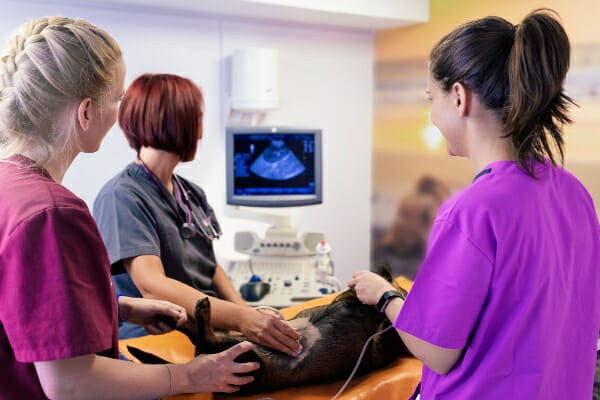
Your vet can use X-rays to look for changes in the size or shape of the liver. He or she may also recommend an abdominal ultrasound to evaluate the architecture of the liver and biliary system and screen for any cysts or tumors. Sometimes portosystemic shunts can be identified on ultrasound. However, the most reliable way to find portosystemic shunts is to use advanced imaging such as CT, MRI, or nuclear scintigraphy (i.e. injection of a radioactive isotope while images are acquired to look for abnormal blood flow).
Liver aspirate or biopsy
Having a veterinary pathologist evaluate the liver cells can help diagnose liver disease in dogs. Sometimes your vet can use a needle to obtain a small sample of liver cells under ultrasound guidance. He or she can then submit those cells for evaluation under the microscope.
However, in some cases, this method may yield inconclusive results. While more invasive, surgical removal of a larger tissue sample (i.e. a liver biopsy) can provide more definitive information about liver problems.
What is the treatment for liver disease or liver failure in dogs?
Once your vet diagnoses your dog with liver disease, he or she will discuss the treatment options. These may vary depending on the underlying cause of the dog’s liver issues.
If a toxin is to blame, your vet will take steps to prevent further absorption of the toxin. This could include inducing vomiting or performing gastric lavage (i.e. flushing out the stomach) in an attempt to remove the toxin left in the stomach. He or she may also give your dog medications to prevent further toxin absorption. Or the vet may administer an antidote to the toxin (if one exists).
If a bacterial infection like leptospirosis is causing the liver damage, your vet will start your dog on antibiotics. (As a word of caution, leptospirosis is zoonotic, which means it can spread from animals to people. Your vet will explain the precautions you should take to keep yourself and your family safe while caring for your dog.)

Additionally, certain medications and a specialized diet may help decrease the signs of a portosystemic shunt. However, this doesn’t work well in all cases.
Many dogs with a congenital portosystemic shunt require surgery to block blood flow through the abnormal vessel. The surgeon may place a band around the vessel that eventually closes the vessel completely. Alternatively, he or she may insert a metal coil into the vessel. A clot will form around the coil, obstructing blood flow through the shunt vessel.
Other causes of liver disease, however, are not so easy to treat. In those situations, the focus is primarily on supporting the liver and managing clinical signs.
Supportive care for dogs with liver disease
Dogs with significant liver disease, especially those with acute liver failure, may benefit from hospitalization, IV (i.e. intravenous) fluids, and supportive care. Your vet may also give your dog medications to address nausea, hepatic encephalopathy, clotting problems, abnormal build-up of minerals, or other liver disease symptoms.
Long term, dogs with liver disease may benefit from a specifically-formulated prescription “liver support” diet. Having the right balance of nutrients, antioxidants, vitamins, and minerals can help boost the liver’s ability to do its many jobs.
Additionally, there are a variety of liver support supplements that can be a great way to naturally manage liver issues. Some of the more common natural treatment options for liver disease in dogs include:
- S-Adenosylmethionine (SAMe)
- Silybin (milk thistle)
- Vitamin E
These supplements have anti-oxidant properties and help support liver function and health. You can find them combined together in a variety of commercially available products. For example, the popular liver supplement Denamarin® contains SAMe and Silybin.
Is liver disease in dogs preventable?
After learning about liver disease, it is understandable to wonder if there is anything you can do to prevent liver disease. Unfortunately, liver disease is not totally preventable. But there are a few things you can do to help decrease the risk of certain causes of liver disease:
- Ensure your dog is up-to-date on vaccinations for leptospirosis and infectious canine hepatitis.
- Keep toxic substances out of reach of your dog. Promptly contact your vet, the ASPCA Animal Poison Control Center, or Pet Poison Helpline if you believe your dog has ingested a toxin. (The pet toxicology services do charge a fee, but the information they provide is well worth it.)
- If your dog is showing symptoms of liver disease, make an appointment with your vet or head to the nearest veterinary emergency room. Time is of the essence, especially in cases of acute liver failure in dogs. The sooner the vet can start treatment the better.
- Consider having your vet perform routine wellness bloodwork on your dog. This may allow him or her to catch and address senior dog liver problems before your dog begins to show any symptoms.
However, in many cases, there is nothing you could have done differently to avoid liver disease. So please don’t feel guilty or blame yourself. Instead, arm yourself with information and commit to helping your dog live his or her best life moving forward.
What is the life expectancy for liver disease in dogs?
When receiving a scary diagnosis like liver disease (or liver failure), it can be helpful to have an idea of what to expect. The prognosis can vary significantly depending on the cause and severity of the liver disease, whether it was acute or chronic, and how well your dog responded to treatment.
Acute liver failure
With rapid and aggressive therapy, dogs with acute liver failure may be able to recover. This is because the liver has the ability to regenerate (i.e. replace damaged cells with new healthy ones). However, this is not always the case as sometimes the liver damage is too extensive and ends up being fatal.
Slowly-progressing liver disease in dogs
Additionally, some dogs with certain chronic liver diseases can still have a fair to good prognosis. And they can still live reasonable-length life span. Although they may need special food or medications long-term, these dogs can still make many happy memories with their parents.
End-stage liver disease or severe and rapidly progressing liver failure in dogs
Unfortunately, though, for dogs with end-stage liver failure or liver cancer, the prognosis is usually poor. As dogs enter the final stages of liver disease, they may be nauseous, painful, or lethargic. Or they may be struggling with bleeding, ascites, or hepatic encephalopathy. All of these problems can greatly decrease your dog’s quality of life. And you may end up needing to have a difficult conversation with your vet about when to euthanize your dog with liver failure.
Daisy the Boxer dog’s diagnosis: End-stage liver failure
I wish I could tell you that Daisy’s story had a happy ending. However, this sweet girl was in end-stage liver failure and there wasn’t much we could do to reverse it. After a long and emotional talk with her parents, they decided to take her home and treasure their last few days together rather than hospitalize her. I think this was the right choice.
When they brought her back a week later, they told me about the memories they made together. We had talked at the last visit about preparing for your dog’s euthanasia, and they were at peace with the decision. Daisy once again licked her mom’s tears away as we talked about how they wanted her goodbye to go. And then she peacefully passed away in her parents’ arms.
Hope for dogs with liver disease
I don’t want you to think, though, that all cases of liver disease are going to end this way. Daisy’s story touched my heart, so I wanted to share it with you. But rest assured, I have also diagnosed many dogs with liver disease who have gone on to live happily for years after the diagnosis.
So please don’t despair if your dog has liver disease. Talk to your vet and get a realistic picture of what this diagnosis means for your dog’s particular situation. There are dozens of common causes of liver changes in dogs, each with its own treatment plan and prognosis.
Has your dog been diagnosed with liver disease?
Please comment below to share his or her story.


Hello,
I would like to share a tragic story that just happened with our 10 year old otterhound mix Brutus. His routine is that we would feed him half his food in the morning then the other half in the evening. Well, towards the end of April, he would start not to finish the morning feeding but would finish he evening one. We did not think anything of it because he, on occasion would do this as we always take him for a walk in the morning and he sometimes was not in the mood to eat, but this was starting to be consistent. No vomiting or diarrhea. Then on May 11, he would not eat anything and started to drink more water than usual. We took him the next day (Monday) to the vet and they did blood work. His results came back the next day and it showed the liver enzymes through the roof and high white blood cells. The doctor wanted to see him the next day (Wednesday). They took an x ray and found the liver was not inflamed and heart and breathing were fine. She put him on 2 different antibiotics, nausea medication and Denamarin. We immediately started the treatment when we got home. He still would not eat anything except peanut butter to give him the meds and now it had been five days. He was getting worse, not better. Then on Sunday May 18, he started to lose control of his bowels and bladder and still not eating anything. On Monday, May 19, we had to make the most difficult decision to euthanize him. My wife and I are numb. What happened? The Doctor thinks that it could have been infectious hepatitis that he may of got when walking him. He was a hound so his nose was always on the ground. She also thought lepto, but he was current with his vaccines. Not knowing if its something that that we did is making the grieving process so much more difficult. This is definitely not helping with closure.
Dear Albert,
I am sorry for your tragic loss of Brutus. I understand how hard it is to find peace when left with more questions than answers. From what you mentioned, I am inclined to agree with your vet that this was probably infectious hepatitis. You didn’t do anything wrong, and you certainly didn’t cause this to happen. You made a loving choice to allow your own heart to break so that Brutus didn’t have to suffer needlessly. I hope with time your heart can begin to heal, and the grief will fade. May Brutus’s memory stay with you always and continue to be a blessing in your life. ♥
my 11.yrs 8 months jrt x chi was diagnosed with gallbladder sludge in Feb 2024 and was not prescribed any medication or special diet.
now 14 months later she has gallbladder and liver problems which they have now prescribed Denamarin probably way too late to make any difference. she’s on steroids to make her eat. Can you recomend a diet that may help. the vet this time said royal canin gastrointestinal food. The vet said there is no cure palliative care. No visible sign of jaundice yet.
I am besides myself I have lost 3 members of my family since Xmas and am dreading losing my beloved dog.
Dear Helen,
I am so sorry for all the loss you have endured in the past few months. I understand your concern for your dog and wish I had some great advice to offer. While there is no “cure” for liver disease, there definitely are ways to try and help slow the progression. A low-fat GI diet and Denamarin are a good start. Is your pup taking an appetite stimulant or is she truly on steroids? The reason I ask is there are several great appetite stimulants you can try but steroids cause problems with the liver, and I would want to stay away from them with any dog experiencing liver issues. Also, it is worth knowing that gall bladder sludge can turn into a mucocele. Here is a link to an article with more information: Gallbladder Mucocele in Dogs: What You Need to Know
Hoping you can find a way to ensure your sweet girl remains stable for as long as possible. Bless you both. ♥
Hello.
My boy is an approximately 11 year old mixed breed (beagle/collie) who appears to have chronic idiopathic liver disease and it’s been puzzling us and 4 different vet offices. It was initially detected completely by accident on blood work about 4 years ago when the results came back that he had very high ALT levels. We ran him through a treatment with antibiotics for hepitits with no improvement, and then treated him with denimarin and ursidol for over a year with his levels just continuing to go up over 1000. He had an ultrasound that showed very mild, diffuse changes but nothing of significance. We were just getting ready to do a liver biopsy when we did bloodwork and everything was back to normal. Everything remained normal for about 2 years. But now he’s back to elevated enzymes, over 250. He is otherwise a happy and healthy dog and but for a mild bout of GI upset 6 months ago has remained so the whole time. He is eating and drinking just fine, no change in energy. No jaundice, no other issues of note. He hasn’t been exposed to anything that we are aware of. We are keeping him on Denamarin and rechecking every few months. But I’d sure love some ideas! And short of ideas, what I can do to support him staying as healthy as possible so that he has a good quality of life (diet, etc). I did have him genetic tested a few years ago and we do know that he has a partial MDR1 mutation and has a very high inbreeding coefficient. I’m starting to wonder if either of these are at the root of his liver issues.
Hi Heather,
I am sorry your boy is experiencing these unknown liver issues. I understand how frustrating it can be when left with more questions than answers despite having done all the testing and treatment recommended. I too am puzzled and not sure what could be the underlying cause. I think Denamarin is a great idea and is probably the best thing you could be doing as far as supplements or diet is concerned. Hoping your pup’s liver can remain stable and praying for favorable results on his next recheck.
hi. we had an English Springer spaniel who just passed away early this morning at the 24 hr emergency vet. Sunday she was her usual happy playful self, Monday she was a little lethargic, but was up to eat a little bit, and drink water, she even wanted to play a little bit that evening. Tues morning she started throwing up large amounts of just fluid, then a tan mass surrounded by mucus, and then a darker red vomit with mucus. I was alarmed, but she was still walking around, drinking a little bit, so I thought she just ate something bad. Wed morning her gums were pale and yellow so we ran her to the vet immediately for the day, then to the 24hr emergency vet, where she died just a few hours later! I can not wrap my brain around what just happened and why!? The vets don’t really know, say it may just be acute liver failure. We cannot find anything that she would have eaten, she’s always with us, but we do live on 5 acres that she was walking with my husband on Sunday morning! I just don’t understand and I am beyond distraught! So I am just wondering if you have any insight to this quick decline.
Thank you for any help you may be able to offer
Dear Lea,
My heart aches for you with this tragic loss of your beloved pup. I know it is hard to wrap your head around what happened when you are left with more questions than answers. Of course this is just a guess on my part, but from what you describe your girl may have been experiencing IMHA or hemangiosarcoma. I will attach links to articles that discuss both of these conditions in detail. While it won’t take away the grief, it may offer some peace of mind. Wishing you healing and comfort for your heart. Bless you. ♥
1. IMHA in Dogs: A Comprehensive Guide
2. Hemangiosarcoma in Dogs: Symptoms, Treatment, and Life Expectancy
Hello! 👋 my dog was recently diagnosed with liver failure, but unfortunately the stages weren’t told to us. The vet mentioned a liver biopsy, but prices and the age my dog is, it doesn’t seem good. I’ve searched up the symptoms of liver failure in dogs, and the symptoms for early to mid stage matched my dogs symptoms. The vet told us to get him denamarin, he’s been having 1 tablet a day for 17 days now. He’s been having milk thistle drops in his food, but his weight is still awful, his bones are visibly. At the vets he weighed 7kg now just about 8. He’s on a chicken and cod diet w veggies / 3 meals a day. I was hoping if there’s anything that would help him tremendously. Vitamins, foods, supplements. Anything? Thanks 😊
Hi Jerzie,
I am sorry your boy is starting to have issues with his liver. He is very lucky to have you advocating for his health and well-being. From what you describe, you are already doing everything I would normally recommend. Don’t forget you can always ask for a consultation with a specialist if needed. Hoping your pup will continue to respond favorably to the supplements and wishing you both many happy days ahead.
My beautiful 6 yr old Staffie became quickly unwell with jaundice and biopsy revealed liver cancer with spread to pancreas. Devastated doesn’t come near to what we are currently feeling. We made the painful decision to let her go while just out of anaesthetic after vet diagnosis. A stunning., lively girl who rapidly became ill over 10 days but vet said the cancer would have been simmering over a longer period of time. At present we are grieving our girl and the tears are constant
Dear Avril,
My heart aches for you as you mourn the loss of your beloved Staffie. I know you would have done anything to give her more time, but what a blessing you could spare your sweet girl from unnecessary suffering. I hope as the days go by your heart can begin to heal and the grief will give way to peace. May her memory stay with you always. Wishing you brighter days ahead. ♥
I lost my whippet Luna last week ; she was 5 years old . It just happened so suddenly without any warning .
She started being sick at the weekend but still had an appetite and was jumping and running around . She was sick again and I was worried she had ate something that she shouldn’t have had so took her to the vets . I was told she need hospital care ; she had jaundice and her scan shown her liver was smaller than it should have been . We lost her within 3 days of being admitted . . I’m devastated – I’ve lost my best friend
Dear Emily,
My heart aches for you with your loss of Luna. I can only imagine how emotional it was to say goodbye especially with everything progressing so quickly. I hope as the days go by your heart can begin to heal and you can find peace. May Luna’s memory stay with you always be a blessing in your life.
My 12 year old Norfolk Terrier had a check up scan which showed that abdom US: 2.1mm calcified spot in prox spleen, spleen slightly mixed echogenicity, kidneys wnl, liver nad. So although he seemed fine, much better than last. year, we had blood tests that showed elevation in his Urea, ALT, SDMA and Haemoglobin. He did not fast for the test. Feeling worried while I wait for a phone call to discuss it with the vet. Are these numbers reversible? I’d be very grateful for your opinion. He does have the usual anti-parasite/flea treatments. Advocate etc as recommended in England. Many thanks..
Hi Mara,
I just responded to your other comment on the hypertension article. I hope you will see it too. It is possible for increases in these values to be reversed depending on the severity and what the underlying cause is found to be. I am hopeful your vet will be able to continue investigating until a definitive diagnosis is made. Praying for clear answers and an easy solution. Best wishes to you and your sweet boy. ♥
MY ROCKY HAVE LIVER DISEASE, JAUNDICE AND FLUID IN HIS ABDOMEN, HE HAS BEEN ON MEDICATION FOR THE LAST MONTH BUT HAD NO IMPROVEMENT.
I TRIED 3-4 LIVER SUPPORT SYRUP AND 3-4 TABLETS TWICE A DAY. I ADDED MILK THISTLE AS WELL. I ASKED THE VET TO PUT HIM ON FLUID THERAPY, BUT THE VET SAID IT WOULD BUILD MORE FLUID IN THE ABDOMEN, HE IS ALSO SAYING NO TO TAKING THE FLUID OUT, ALTHOUGH WE TOOK 1.2 LTR FLUID OUT A FEW DAYS BACK. NOW I FEEL HE GOT AT LEAST 4-5 LTR FLUID IN HIS ABDOMEN
HE EAT ONE DAY THEN STOPS EATING THE NEXT DAY, WE HAVE FORCED HIM TO SYRUP AND TABLETS, MIX AND PUT THEM IN HIS MOUTH WITH A SYRINGE.
Hi Pushpendra,
My heart goes out to you as you face this difficult situation with Rocky. I understand your concern and wish there was something I could do to help. Unfortunately, without examining him myself, I can’t offer specific conclusions or recommendations. The devastating part of liver disease is it does eventually turn into liver failure. Despite you and your vet’s best efforts, there will come a time when treatment just doesn’t work, and you will have to make a decision about your boy’s quality of life. Sometimes saying goodbye is the most loving option and only way to prevent unnecessary suffering. Don’t hesitate to ask your vet for their honest opinion about Rocky’s prognosis. Hoping you can get the answers needed to find the best way forward. Bless you and your sweet boy.
Hi, I have a 15.9 yorkie, Since feb of this year 2024 she started to have high liver enzymes. In the beginning I thought because I gave her food I never gave (rice and lamb),, well to make the story short I have been be able to lower those numbers despite all my efforts. In the ultrasound looks like she has some cyst that look benign. I wonder if it a Cooper problems because I never gave her food that is not home cook and when she got sick I gave her Just for dogs (rice and Lamb).. I dont know what else I can do or I can take her… I am so frustrate and sad, She is still eating and looks alert. She doesn’t have diarrhea or vomiting.
Hi Shirley,
I am sorry your senior girl is starting to show some liver dysfunction. Honestly, this may just be a normal progression with age and could have nothing to do with her diet. I know you want to do what you can to keep her liver stable and offer her as much time as possible. Have you tried a liver supplement such as milk thistle or Denamarin? If not, I encourage you to discuss this with your vet and see if your girl is a good candidate for this type of therapy. Try to make the most of the time you are gifted. What a blessing you have spent almost 16 years together! Wishing you many happy days ahead. Bless you both.
im now waiting for blood tests results as my beloved doggy has suspected liver failure due to being on long term steroids her urine dip tesr showed up with bilburin and is a bit jaundice in her eyes im going out of my mind its now saturday we get the results tuesday wish us luck
Dear Sara,
I am sorry you are facing this worrisome situation with your pup. I understand your concern and hope the results will be better than what you are expecting. Feel free to leave an update and let us know what you find out. Praying for comfort and strength as you navigate this unknown path.
I HAVE THE SAME, BULBURIN INCREASED TO 2.3 DESPITE MEDICATION FOR A MONTH. I DONT KNOW WHAT TO DO
JAUNDICE , LIVER DISEASE AND FLUID IN ABDOMEN , HE STOPPED TAKING MEDICINE AND FOOD AS WELL