After a diagnosis of dog kidney failure, when to euthanize your beloved companion may weigh heavily on your mind. How do you decide when it’s time to let him or her go? And what can you do in the meantime to give your dog the best life possible? To help you answer those questions (and more), integrative veterinarian Dr. Julie Buzby invites end-of-life-care veterinarian Dr. Dawnetta Woodruff to share her perspective.

Learning that your dog has kidney problems can be devastating. You may wonder what that means or how bad kidney disease will be for your beloved dog. Maybe you knew a person with kidney failure and are wondering if your dog’s journey will be similar. Or perhaps your mind may jump right to the questions “How long can my dog live with this disease?” and “How will I know if it is time to consider euthanasia?”
I do want to address those heartbreaking questions. But first we need to briefly review kidney disease and talk about what the last days of a dog with kidney failure may look like. Then we can get to that difficult decision about when to euthanize a dog with kidney failure.
Kidney failure is a big topic, so I know there are going to be people with different levels of knowledge. Some dog parents are still gathering information because their dog was recently diagnosed with kidney disease. Others may have been helping their precious pup along his or her kidney disease journey for months or even years.
Either way, if after reading my kidney disease summary you still have questions about causes, diagnosis, treatment, etc., I highly recommend you read Dr. Buzby’s article, Kidney Failure in Dogs: A Comprehensive Guide.
Now let’s jump to an introduction to the organ of interest—the kidneys.
The kidneys—What do they do?
A dog’s body has natural systems in place to remove toxins and cleanse the body. The liver and kidneys are two organs that are an integral part of doing that and keeping the body in balance (i.e. maintaining homeostasis). The kidneys filter the blood and excrete toxins into the urine, but that’s not all they do! The kidneys also:
- Keep vital electrolytes in balance
- Manage blood pressure
- Produce urine
- Maintain water balance in the body
- Signal the bone marrow to make new red blood cells
- Regulate calcium and phosphorus levels
As you can see, the kidneys are incredibly important to the overall function of the body. Without them, the body would quickly spiral into a state of imbalance that is not compatible with life. Luckily, the kidneys have a lot of reserve, so if they aren’t working at full capacity the body is still able to stay regulated for a period of time.
An overview of kidney disease in dogs
However, when the kidneys are damaged significantly, their reserve is surpassed, and they are unable to keep up with necessary functions. Toxins begin to build up, and the body can no longer maintain homeostasis. Dehydration begins, electrolytes become unbalanced, blood pressure increases, and anemia (i.e. low red blood cell count) occurs.

Sometimes kidney disease has a sudden (i.e. acute) onset. The dog gets very sick very quickly and may be rushed to the ER for an emergency vet visit. Other times, the kidney function declines gradually and the disease progresses more slowly (i.e. chronically). These dogs often just look “off” or “sluggish” in the early stages, but chronic kidney disease can also become an emergency situation where critical care is necessary. Both types of disease can cause a wide range of troubling symptoms.
Symptoms of kidney disease
Often, the first signs of kidney disease (especially the chronic type) can be subtle. To complicate matters, the symptoms overlap with other diseases such as diabetes mellitus or Cushing’s disease in dogs. You may notice that your dog is asking to go out to potty more frequently, and that she or she has increased thirst in dogs. These signs are called polyuria and polydipsia. If you notice them, you should have your sweet pup seen by his or her veterinarian as soon as possible.
As your dog’s kidneys continue to fail, you may see many or all of these symptoms:
- Weight loss
- Reduced appetite
- Drooling
- Pale gums
- Ulcerated areas in the mouth
- A lethargic dog
- Weakness
- Uremic breath (i.e. bad smelling breath due to build-up of toxic waste products)
- Vomiting and diarrhea
Please consult with your vet if you are noticing any of these symptoms in your dog, even if you already know your dog has kidney failure. Your vet will probably want to examine your dog and run blood work to check kidney values and red blood cell numbers. This information is useful for diagnosing and tracking the progression of kidney disease.

Treatment for acute kidney disease
If the vet determines your dog has acute kidney failure (or acute-on-chronic kidney disease where existing kidney disease suddenly worsens), it is common for your pup to require hospitalization. During that time, your dog may receive intravenous (IV) fluids, intensive care, and round-the-clock monitoring.
Fluids help to flush toxins from the body and regulate electrolytes. This can help your dog feel better. Your dog may also benefit from blood pressure and anti-nausea medications, and/or appetite stimulants for dogs.
When your dog is well enough to go home, he or she will require follow up visits to reassess kidney function and determine if chronic disease is present.
Treatment for chronic kidney disease
If instead your dog has chronic kidney disease, it can vary in severity. Sometimes it is very mild. In fact, there are plenty of times when dog parents don’t even know their dog has kidney disease until elevated kidney values show up on routine screening blood work. In other situations, the kidney disease may be moderate or severe and the dog is showing more symptoms.
Either way, after diagnosis, your vet may use the International Renal Interest Society (IRIS) guidelines to determine your dog’s stage of kidney disease. This information helps guide treatment for kidney disease and influences prognosis.
Sometimes it is possible to manage your dog’s chronic kidney disease at home with medications and/or subcutaneous (SQ) fluids. However, if your dog’s symptoms are significant, or if his or her blood work indicates advanced disease, your vet may suggest 24 to 72 hours of hospitalization. Once your beloved dog’s condition stabilizes, you can usually care for him or her at home. This may include:
- Periodic (daily or weekly) subcutaneous (SQ) fluid administration
- A specialized diet, formulated to be gentle on the kidneys
- Blood pressure medications
- Medication to decrease protein loss
- Phosphate binders
- Potassium supplements
- Anti-nausea medications
- Pain medications / oral rinses to manage mouth sores
At-home methods for improving quality of life
Managing kidney disease is multi-factorial. In addition to the medications and therapies that we discussed, there are also some at-home modifications that can help increase your dog’s quality of life.
Reduce the stress of increased urination
It can be distressing for a dog to have urinary accidents in the house due to increased thirst and increased urination. There are a few options that are good for reducing stress for your dog and making cleanup easier for you:
- Consider placing potty pads around the house in case your dog isn’t able to hold his or her urine during the day while you are gone.
- Find out if your dog is comfortable wearing a diaper to keep him or her clean and dry.
- Cover your dog’s bedding in a water-proof crib mattress protector. Then place blankets and towels on top of the waterproof liner to give your sweet pup comfort.
Find appealing foods
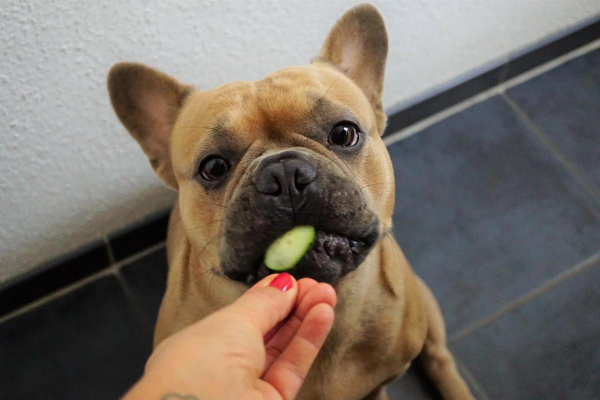
You can offer your dog a variety of kidney-safe diets (dry and/or canned) since his or her appetite varies from day to day and even moment to moment. And you may wish to try adding jarred baby foods to the top of the regular diet as a way to encourage appetite through variety.
Soothe your dog’s sore mouth
If your pup is getting sores in the mouth, rinsing the mouth with green tea can be soothing. Alternatively, your vet may prescribe “magic mouthwash” if your dog allows you to apply it.
Please know that no one set of tools is going to be perfect for every canine patient. It can take some trial and error to find out what is most helpful long-term for your sweet pup.
Prognosis for kidney failure
When managing a dog with kidney disease at home, it is common to wonder “what’s next?” and “how long can we manage his or her disease?” The difficult thing about kidney disease is that there is no consistent and reliable “easy” answer to these questions.
Sometimes, dogs with kidney disease can be managed at home for years after the diagnosis. And the dog can live a very good quality of life in the process. Other times, dogs with kidney failure may progress quickly from mild disease to severe disease, and quality of life declines in a matter of weeks. So how do we evaluate the prognosis?
Well, as mentioned above, the severity of blood work changes can give us an idea of the stage of kidney disease the dog is currently in. This helps us understand how far the disease has progressed. But it still does not tell us how quickly he or she may move through the remaining stages of disease. It is emotionally difficult, but we often must take a bit of a “wait and see” type of approach.
However, sometimes we can get a good idea of a dog’s overall prognosis based on how he or she responds to therapy during the first few days and weeks after the initial diagnosis. As treatment progresses, positive prognostic indicators include:
- Increasing energy
- Good appetite
- Managed nausea
- Improvement in blood work numbers
- Interacting normally with family
- Sleeping well at night and not excessively during the day
Changes during the last days of a dog with kidney failure
Unfortunately though, at some point in the progression of kidney disease, a dog will move from managed disease into end-stage kidney failure. This is when the kidneys have become too damaged to respond to even the best medication and therapy. A dog may gradually progress to this point, or it may happen very rapidly.
It is important to know what is “normal” for your dog and to talk to your vet if your dog’s behaviors and habits change. These differences and the symptoms listed below can be the first subtle signs of a problem.
Lethargy
A pup whose kidneys are failing will be very lethargic. He or she may sleep a lot, and even when awake, he or she may not seem fully “with it.”
Decreased appetite
A dog’s appetite will decrease, or be absent altogether in the end stages of kidney failure. Special treats may still entice him or her to eat a bit, but only little bites of food here and there instead of a full meal. You can try to offer your dog new and different types of food, and it may help to encourage his or her appetite. But often, what the dog enjoys today, he or she may refuse tomorrow.
Your sweet dog may seem hungry, even asking for food—and then when food is offered, he or she may sniff at it, even licking his or her lips or drooling before ultimately refusing to eat. These are signs of nausea. So if your dog isn’t already on an anti-nausea medication, this may indicate a need for additional therapy.
Behavior changes
Dogs with end-stage kidney failure may also seem confused. As toxins build up in the blood stream, it can affect their cognitive function. They may wander or pace, walk blankly into a room, stare at walls, or even seem to get stuck in a corner. A dog who normally loves to be held and snuggled may no longer want to be near you, even wanting to completely avoid your touch. Sometimes, your dog may pant for no obvious reason and seem anxious even in their normally comfortable environment.

Older dogs can also suffer from canine cognitive dysfunction, and the signs of dementia in dogs look very similar to the cognitive changes in end-stage kidney failure. For this reason, it may be beneficial to have your vet check your dog’s kidney values if you are noticing behavior changes. That way you know which of these two processes is likely the problem.
Finally, if your dog is displaying any other concerning symptoms, it is also wise to ask your veterinarian if additional medications or an increased amount of fluids may be helpful. Sometimes adjusting their medications and fluids can help them feel better in spite of their worsening disease. However, if your dog is already on multiple medications, or is already receiving daily SQ fluids at home, these symptoms may be a sign that your sweet friend is at the end of his or her life.
Take care of yourself too
After listing all these things to do and watch for when caring for your dog with kidney failure, I want to address something that all-to-often gets ignored—caretaker fatigue in dog owners. It is real, and it is exhausting. Trying to keep up with your dog’s extensive needs can feel like a full-time job. You are willing to do whatever it takes to keep your dear dog happy…but when his or her joy seems to be dwindling, you may wonder if all of the time invested is truly helping.
When your canine companion is struggling, it feels like you are riding a difficult mental roller coaster. One day he or she seems to be managing ok, and the next your dog may seem close to dying. The process is emotionally taxing, and can be a struggle for you and your sweet pup. It often feels like the weight of the world is on your shoulders as you try to make a very important, very difficult decision.
Resources to help you on this journey
But you don’t have to make the decision alone. Reach out to talk with trusted animal-loving friends—especially if they also know your sweet pup and can help you evaluate quality of life. Your veterinarian is there to help you as an objective third party and source of medical advice too. He or she can share his or her observations and will be able to point you toward resources such as a quality of life assessment tool.
There are also many pet loss and grief resources available online. Plus, it may be helpful to talk with a counselor or a therapist who is trained in pet loss and anticipatory grief. For many people, the anticipation of loss is just as difficult as the loss itself. It can be very helpful to have assistance preparing for your dog’s euthanasia in the days or weeks leading up to your final goodbye.
I have also compiled a list of other articles that may give you hope and help in these difficult days:
- Dog Hospice Care Can Bring Peace and Dignity to Your Dog’s Final Days
- In-Home Dog Euthanasia: Heartfelt Answers to 12 FAQs
- Dog Euthanasia: Knowing When to Say Goodbye
- How Will You Know When It’s Time to Euthanize Your Dog? 5 Caring, Heartfelt Messages
- Grieving the Loss of a Dog After Euthanasia (& Finding Peace)
Making the decision to euthanize your dog with kidney failure
You should know too that there is no clear-cut answer about when it is time to choose humane euthanasia. Rather than looking for one “right day” it is helpful to realize that there is a window of time where euthanasia is a reasonable (albeit very difficult) medical decision.
Sometimes, it is best to make the decision at the beginning of the window. And other times we may feel more comfortable waiting until closer to the end. Each situation is unique, and each dog is different. Even if you have been through the kidney failure journey before, this journey may feel completely new and intimidating.
Some dogs may take their medications well and allow you to administer SQ fluids without a fuss. This can allow them to enjoy life a bit longer. For other dogs, fluid administration is stressful and taking medications is a battle, so their days are full of stress. In that case, it may be kinder to set them free a bit earlier.
Our canine friends always try to have a good day, even when they are facing huge medical challenges. So when we see their joy declining, and when we see them struggling through their days, the weight of their decline weighs heavily on our shoulders. We are not ready for their life to be over, or for them to leave us. But we also hate to see them just existing, rather than truly loving and enjoying life.
And at some point, we realize that watching their decline is just as difficult (or even more difficult) than choosing euthanasia. That is when we know that we are as ready as we ever will be to set them free.
What your dog wants you to know about saying goodbye
Rest assured, our dogs are amazing at sensing our love and knowing the intentions of our hearts. After all, dogs are excellent judges of character…and your own dog knows you better than perhaps anyone else in your life! So he or she knows that you are doing your best to care for him or her.
Your dog knows that you are trying to help him or her through each day. And I believe that if your precious pup could speak with us, he or she would tell us it is ok to say goodbye on a good day, before every bit of joy is gone.
When to euthanize your dog with kidney failure is a decision only you can make. But I do hope that this article has helped you gain some clarity and comfort as you wrestle with this difficult choice.
Have you lost a dog to kidney failure?
Please comment below to share your dog’s story or any words of advice for others.


Hello from Sweden (and excuse ny not perfect English) and thank you for this article. My dog is 14,5 years old and got diagnosed with chronic kidney disease in January 2025. we then started to feed him special food for the kidneys and he got some medications. He has been doing OK. But this summer he started to act and feel worse. We went to the veterinarian and they took his blood work and said that it (I think creatinine) now is 400. Last time they checked it was 125. So they said that he now is on palliative care at home and we got some nausea medicines etc. He acted like you writes in the article. Everything made sense, he was practically dying. But after 1,5 mouth suddenly it has changed. He is eating well (even the special kidney food), he likes long walks again and he sleeps near me and not just on the floor (which is were he has slept for a month or two).
Doesn’t it seem a bit strange? We really thought he was dying.
About three weeks before we were at the veterinarian he got attacked by an other dog in the face. He seemed to be doing well at first but he didn’t allow us to look at it. He got a bit slow and tired the days after this happend. After five days we noticed blood on his cheek but he again didn’t allow us to look. We mentioned it weeks later at the veterinarian and they looked; the fur was gone at the cheek, but other than that it was just skin, no scar. They didn’t say more about it, they just focused on the kidneys that appeared to be failing.
My question is; can it be that his bad blood work was caused of an infection due to the (probably small) dog bite? Maybe the infection is healed and now he feels better? Or is this just some good days that will get worse soon again? Have you heard anything like this? We will see another veterinarian soon. I would be happy to know what you think about all this.
Dear Asa,
I am sorry your senior guy has been battling kidney disease for so long. Without playing a personal role in his medical care it is hard to offer specific conclusions about his condition. I can say that it is very common for dogs with a terminal disease to have some time where they seem to “rally” and improve. Often this improvement fades quickly but it’s different for every dog. Hoping the new vet will be able to offer insight and guide you along this unknown path. Bless you and your sweet boy.
My kids and I said goodbye to our beloved Oreo earlier today. He was a 16 years 4 months poodle-pekingese mix. He was perfect in every way and a blessing to our family. He was diagnosed with kidney disease 3 years ago. Up to earlier this year, he was doing well, going for daily walks on the trail in the forest behind my home, being playful with his humans, enjoying food and treats. I took him in my arms for a last walk this morning. I took him to a part of the trail he particularly liked. He sniffed around, and walk for a short while. He was always curled up against me at night. Today was heart braking beyond measure. After the last blood test results being concerning and seeing Oreo’s health decline, I did not want him to go through a traumatic end at an emergency vet clinic. Oreo was showing the signs of decline due to kidney disease. I chose to help him transition at home. A very kind and compassionate veterinarian came to my home, took the time to interact with him and move at his pace. Because of her, Oreo was able to be at home, in a place he loved, surrounded by the people who love him. That means more to me than I can express. This page helped me tremendously. All the account of dog owners were helpful as well.
Dear Anny,
I am so sorry for your family’s loss of Oreo. What a blessing you were able to give him a peaceful passing and spare him from potential suffering. I am certain he knew how much he was loved and that your presence was a comfort in those final moments. May his memory be with you always. Wishing you peace and healing for your heart. ♥
I have not lost my precious pup yet, but I fear the time is near. He was diagnosed with early-stage kidney disease a little over a year ago, and did really well on his prescribed kidney diet food. But two months ago, he had a herniated disc (not his first — he has a history of IVDD). About the same time, he stopped eating his kidney diet. I assumed it was food aversion due to the additional painkillers and muscle relaxers I was adding to his meals. Turns out it was an unexplained kidney exacerbation — his levels had skyrocketed. After a month of intensive outpatient treatment consisting of fluids, antibiotics, GI/anti-nausea drugs, etc., his levels came down. Once treatment stopped, they shot right back up. He’s now back on fluids every other day and anti-nausea drugs and is eating, but is showing increasing signs of uremia. My gut tells me it’s time to say goodbye, but my brain keeps asking, what if it’s not? I seem to be searching for a definitive and indisputable sign, which doesn’t exist.
Dear crtex,
I am so sorry your pup’s condition is progressing, and you are having to think about when is best to say goodbye. It is hard when your head and your heart don’t agree. I know you will offer him peace and freedom from his struggles when the time is right. Praying for comfort and strength as you navigate this emotional path. Give your sweet boy a hug from me. ♥
Hello Friends, it comes with a very heavy heart that I just said goodbye to my 1 yr old pup, Kobe, who had an extreme case of Chronic Kidney Disease. He was a miracle pup from the start, part of a litter of 5 Belgian Malinois dropped off at the local animal shelter at only a few days old, no one knows the condition of the mother or who the owners were. The litter was fostered and bottle fed, and sadly only 2 of the pups survived past 2 weeks. I came into the picture when the two survivors were 10 weeks old, and I adopted the the little boy pup. He was my everything, just the most handsome and smart boy. Two weeks ago he started acting strange and lacked appetite. I took him into the ER and he was in and out of the ICU for over a week. He was diagnosed with CKD and it was seemingly due to underdeveloped kidneys from when he was in the womb. It was a very steep decline. He was given a low chance of survival, but was put on fluid treatment and fed through a tube. When I took him home he only ate for a day, then refused the food he previously accepted. I tried several different options until he refused anything. I decided to say goodbye to him during my latest return to the ER because the only option for prolonged life was constant replenishment of fluids and food under constant monitoring in the hospital.. The doctors had convinced me that this was the only way to stop his suffering. He was so young, but our bond was so strong in the 10 months that I had him. I never thought it would be this tough to let go. My heart is with anyone who goes through the loss of their beloved pets for the rest of my life, and Kobe will always be a part of me.
Dear Marc,
My heart aches for you with your loss of Kobe. What a blessing you were able to show him unconditional love and spoil him during his short life. I am certain his memory will stay with you forever. Wishing you peace and brighter days ahead as you continue life’s journey. ♥
I just want to thank everyone for posting their stories. I had to make the decision to euthanize our 12 year old lab with chronic kidney disease. He had a creatine level that went from a 3.7 to 10.7 in 3 months. He was severely anemic. He kept vomiting up his food even when I changed his diet to chicken and rice. He was not drinking a lot of water anymore. He would get so tired just going outside to use the bathroom. Why am I still wondering if I made the right decision? I feel so guilty at times that I should of done more..
Hi Cindy,
My heart goes out to you on the loss of your sweet lab. It is natural to have questions and doubts about if you are making the right decision, so please don’t let it get you down. Bearing the weight of needing to chose euthanasia for your dog is so hard and it is rarely an easy decision. Based on what you described (the anemia, vomiting, and lack of energy) it sounds like his quality of life was declining significantly, and it was the right time to let him go. I hope that in the coming days you will continue to find more peace and comfort. Thinking about you in this hard time.