Is your female dog leaking urine while resting? If so, help is here! Integrative veterinarian Dr. Julie Buzby discusses the symptoms of incontinence, why female dogs sometimes leak urine, and how your vet will diagnose and treat your dog’s urine leakage. Plus, you will learn how to help your incontinent female dog at home.
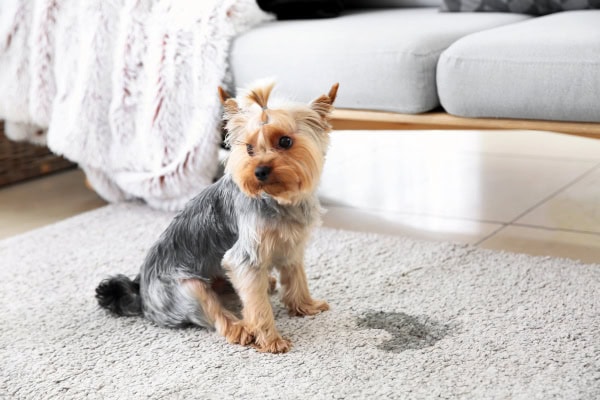
No one likes finding urine-soaked spots on the bed or stepping in dribbles of urine on the floor. However, that is a situation you may find yourself in at some point in your female dog’s life.
In the midst of pulling out the carpet cleaner or starting a load of laundry, keep this in mind—regardless of her age or whether she is sitting, lying down, walking, or standing when it happens, leaking urine isn’t normal for female dogs (or any dogs). And it isn’t something you should ignore as a dog parent.
A female dog leaking urine = urinary incontinence
Urinary incontinence in dogs occurs when a dog involuntarily leaks urine. By definition, then, a female dog who is leaking urine while resting has urinary incontinence.
Incontinence is different than having a urinary accident. Dogs with incontinence aren’t in control of the urine exiting their body and can’t stop it from happening. But a dog who has a urinary accident knows what is going on and is intentionally urinating in that location.
Urinary incontinence can affect any breed, age, or size of dog. However, it is most common in middle-aged and older dogs. Additionally, medium and large-breed dogs have a higher chance of being affected than small dogs.
Female dogs are more likely to experience urinary incontinence than male dogs, with the highest incidence being in spayed female dogs.
More specifically, only 1% of male dogs and intact female dogs suffer from incontinence. But up to 20% of spayed female dogs will start to leak urine at some point in their life.
What does incontinence look like in a female dog?
Sometimes it can be more obvious than others if your female dog is leaking urine. The common symptoms of urinary incontinence in dogs include:
- Finding your dog’s bed damp or wet after she was lying down
- The dog lying in a puddle of urine while sleeping
- Urine dribbling from your dog’s vulva when she is walking or playing
- Urine-soaked fur around your dog’s vulva or hind legs
- Puddles of urine in various locations
- Excessive licking and grooming of the vulva or hind end
- Red or cracked skin on the vulva or hind legs. Urine is irritating and can lead to urine scald in dogs when it sits on the skin
- Stale urine smell on your dog’s fur
- Signs of urinary discomfort or irritation (straining, increased trips outside, bloody or discolored urine)
If your female dog is leaking urine while resting or has any of these other symptoms, it is important to make an appointment with your veterinarian. One of the following conditions could be causing your female dog’s urine leakage, and the sooner you get to the bottom of it, the better.
Urethral sphincter mechanism incompetence: The main cause of a spayed female dog leaking urine
There are many different causes of urine leaking in spayed female dogs. But the most common is urethral sphincter mechanism incompetence (USMI). This condition is also sometimes called spayed female incontinence, post-spay incontinence, or hormone-responsive incontinence.
On average, dogs with USMI will show symptoms 2-4 years after the spay surgery. Unfortunately, we do not fully understand why USMI develops, but likely multiple factors are at play.
Obesity and genetics (being a certain breed) appear to increase the risk of USMI. Also, dogs who weigh over 15 kilograms (33 pounds) are seven times more likely to develop the condition.
However, estrogen levels seem to be the main contributor for dogs with USMI. Estrogen affects urethral tone, so when estrogen levels decrease post-spay, there is a corresponding loss of tone in the urethra and its sphincter. This makes it easier for urine to leak out.
Additionally, decreased estrogen levels after spay surgery appear to cause reduced bladder storage capacity. And it lessens the responses to stimuli from the body that indicate that the bladder is full and needs to be emptied. This could cause the dog to drip urine or leak substantial amounts.
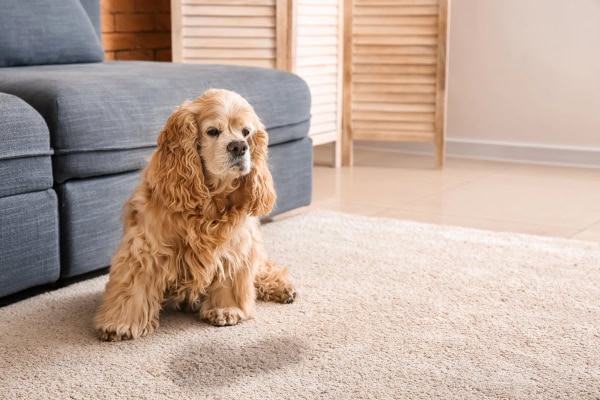
Other reasons a female dog may develop incontinence
In addition to USMI, there are several other medical conditions that may cause a spayed female dog to leak urine while resting or at other times.
Ectopic ureters
Ectopic ureters in dogs are the most common cause of incontinence in puppies (especially females).
Ureters are the tubes that carry urine from the kidneys to the bladder. With ectopic ureters, the ureters don’t enter the bladder in the normal location. Instead, due to this birth defect, one (or both) of the ureters may empty into the urethra, the base of the bladder, or some other abnormal location. Since urine isn’t going into the bladder— the normal storage location—it has nowhere to go, so it dribbles out.
Urinary tract infections
Urinary tract infections (UTIs in dogs) occur when bacteria travel up the urethra and start growing in the bladder. This can cause symptoms like pain, difficulty urinating, and blood in the urine. Additionally, UTIs sometimes lead to incontinence, and incontinence can lead to UTIs.
While UTIs can happen in any dog, they are more common in female dogs who:
- Need to hold their urine for a long period of time
- Have a recessed vulva in dogs or excess hair around the vulva
- Are dehydrated or don’t consume enough water
- Take certain medications
- Suffer from neurological issues that prevent proper bladder emptying
- Have medical conditions such as bladder stones, Cushing’s disease in dogs, incontinence, or diabetes in dogs
Bladder stones
Bladder stones in dogs may occur due to a genetic predisposition or your dog’s diet. They are hard and painful, so as the stones move around in the bladder, they cause irritation to the bladder wall. This can lead to pain and difficulty urinating, urine dribbling, or blood in the urine. Also, because the defenses of the bladder wall are weakened, the dog may develop a concurrent UTI.
Spinal cord injury
A dog’s spinal cord transmits signals to and from the body for motion, sensation, organ function, and more. However, a spinal cord injury due to IVDD in dogs, a spinal stroke in dogs, trauma, etc., interrupts that flow of information.
In certain locations, a spinal cord injury can affect bladder function. The nerves that help keep the sphincters of the bladder open or closed may not work properly. This can lead to the loss of the ability to empty the bladder or the loss of bladder control.
Conditions that lead to an extremely full bladder
Dogs who are making more urine than normal or are having trouble getting up to go to the bathroom may suffer from overflow incontinence. In this case, the increased urine volume exceeds the dog’s ability to “hold it,” and the dog may leak urine or have a urinary accident. Some of the conditions that are more likely to cause leaking in female dogs due to overflow incontinence include:
- Cushing’s disease
- Diabetes mellitus
- Kidney failure in dogs
- Orthopedic conditions that limit mobility such as severe osteoarthritis in dogs
Additional causes
The list of conditions above covers some of the more common causes. For a more comprehensive list of the causes of incontinence in male and female dogs, check out my article on Urinary Incontinence in Older Dogs.
How will the vet figure out why your female dog is leaking urine while resting?
There are a variety of reasons for a female dog to have urinary incontinence. Thus, the vet will need to use the history, physical exam, and diagnostic tests to find the root cause. After asking questions about your dog’s symptoms and past history, your vet will likely start with a comprehensive physical exam.
As part of the exam, the vet will attempt to palpate (feel) your dog’s bladder through the wall of the abdomen. This helps the vet get an idea of the size of the bladder and whether there are any palpable abnormalities (stones, masses, pain, etc.) in or around the bladder.
Additionally, the vet will pay close attention to the state of the skin and hair around the vulva and the conformation of the vulva. If neurologic issues in dogs are on the differential list, the vet will also perform a neurologic exam.
Depending on the history and results of the physical exam, the vet may suggest some of the following diagnostic tests:
- Blood tests for dogs— Typically, the vet will run a CBC and chemistry panel to look for signs of diabetes, kidney disease, Cushing’s disease, or infection.
- Urinalysis—Evaluating the urine can help rule in/rule out a UTI, diabetes, poor urine concentrating ability, and more.
- X-rays—The vet can detect most bladder stones on X-rays, plus they can help evaluate the size and shape of the kidneys and other abdominal organs.
- Ultrasound—An abdominal ultrasound can help the vet look for bladder tumors and certain bladder stones. And it allows the vet to visualize the tissues of the kidneys and other organs.
Keep in mind, though, that this is not an exhaustive list of the potential diagnostic tests. Your vet will advise you about what is best for your dog’s particular situation.
What is the treatment for incontinence in female dogs?
Treatment for your dog’s urinary incontinence will greatly depend on the underlying cause.
Treatment for urethral sphincter mechanism incompetence
If your female spayed dog is diagnosed with urethral sphincter mechanism incompetence (USMI), your veterinarian may recommend a few different medications or treatments, including:
- Estradiol (Incurin®) or Diethylstilbestrol (DES): These estrogen supplements can help increase the sensitivity of the receptors or the number of receptors that help promote urethral tone.
- Phenylpropanolamine (PPA or Proin®): This medication stimulates the receptors in the urethra to help increase urethral tone and function. The good news is that Proin controls urinary incontinence in 74-92% of female dogs with USMI. However, it can have side effects like increased heart rate or blood pressure. Thus, it should not be used in dogs with high blood pressure (hypertension in dogs), heart disease in dogs, or kidney disease (unless otherwise instructed by your veterinarian).
- Surgery: There are several surgical techniques that may be effective for dogs with USMI. Generally, these procedures are reserved for dogs who do not respond to medical therapy or cannot tolerate medical therapy. Should your dog fall into this category, you can consult with a veterinary specialist near you (usually a surgeon) to discuss the options.
- Supportive care: Keeping your dog clean and free of urine collecting on the skin and fur is very important. This will help decrease the chances of additional problems like skin infections, urine scald, or UTIs.
Treatment for other causes of a female dog leaking urine while resting
If your female dog is leaking urine for a reason other than USMI, your veterinarian may recommend different treatment options.
The best treatment for ectopic ureters is surgically re-routing the ureters, so they empty into the bladder correctly.
Dogs with a UTI generally need antibiotics to clear up the infection. In the case of bladder stones, treatment usually involves surgical removal or dissolution of the stones with a prescription diet. Typically, the dog will then stay on the special prescription diet to decrease the chances of more stones forming.
Dogs with diabetes need insulin, dogs with Cushing’s disease may take trilostane for dogs or other medications to reduce cortisol levels, and the vet may recommend subcutaneous fluids for dogs, a special prescription diet, and/or medications to slow the progression of kidney disease.
Sometimes, dogs with spinal cord injuries will need surgery. Other times, medications to manage pain, mobility aids like Dr. Buzby’s ToeGrips® dog nail grips, and good supportive care are the best treatment approach.
Whatever the problem ends up being, you can feel confident that the vet will help you find the treatment approach that is right for your dog.
How can you help support a female dog who is leaking urine?
In addition to working with your vet to develop a treatment plan, supportive care and practicing good hygiene can go far in helping an incontinent female dog have a good quality of life. Keep the following seven tips in mind if your dog is leaking urine:
1. Ensure your dog has access to water
It is important to make sure your dog has access to clean, fresh water each day— especially during hot days. Never limit water intake to try to decrease the urine leakage, as this could be dangerous for your dog.
2. Take steps to prevent urine scald
Urine scald is very painful and can be difficult to get rid of once it develops. Thus, prevention is the best medicine.
Clean your dog’s skin and fur regularly and ensure it is dry when you are done. If you see urine collecting on the floor or bed near your dog, remove the urine (or your dog) to ensure that the urine does not soak into your dog’s fur.
3. Consider using doggy diapers
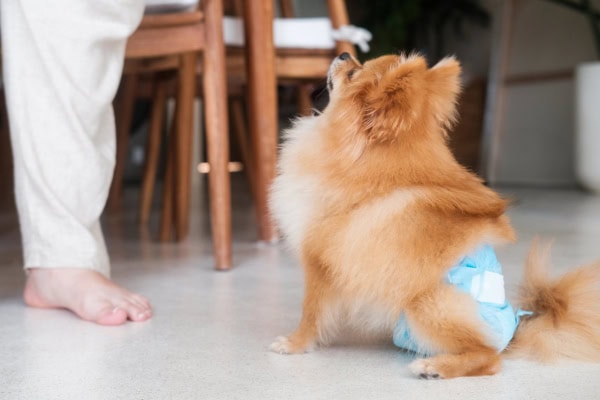
Dog diapers can help prevent urine from staying in contact with the skin and creating further problems (as long as the diaper is changed regularly). Diapers also help reduce the mess around your home and decrease the number of puddles you may need to wipe up.
NOTE: To prevent urine scald, it is extremely important to be diligent about regularly checking the diaper and immediately changing it if soiled. You should only use diapers if you can commit to the level of care they require.
4. Put waterproof covers over furniture or beds and change them frequently
When your female dog is leaking urine while resting, using an absorbent but waterproof cover on couches, the floor, or dog beds will help greatly. These covers soak up the urine to keep it away from your dog and make cleaning easier. Plus, they protect the surface below it from getting damaged by the urine.
However, like diapers, it is important to check and change the absorbent pads regularly, so your dog does not lie in urine.
5. Increase the number of potty breaks for your dog
In many cases, if you take your dog outside to go to the bathroom more often, the bladder will be less full. This means the dog should be less likely to leak urine inside the house.
6. Keep the area around the vulva clean and well groomed
If your dog has long hair or extra skin around the vulva, keep the hair trimmed shorter to help decrease the likelihood of urine collecting on it. You also may need to bathe or clean those areas more often.
7. Watch for signs of a secondary UTI
Any time urinary incontinence is present, the dog could be at risk for a UTI. If your dog develops new or worsening urinary symptoms, please contact your veterinarian right away.
Be your dog’s advocate!
Remember that urinary incontinence (whether a little dribble or big puddles) is not normal for female dogs, or any dogs for that matter. If you notice your dog is leaking urine, please contact your veterinarian. The sooner you get to the bottom of the problem—whether it is USMI or something else—the sooner you can start treatment. And that’s good for everyone involved.
Does your female dog have issues with leaking urine?
Please comment below.