If your dog recently started taking gabapentin and you are wondering about the gabapentin side effects in dogs, this article is for you. Integrative veterinarian Dr. Julie Buzby discusses what side effects to watch for, and how those side effects can be minimized or managed. Plus, she answers seven gabapentin FAQs.
Anytime you start giving your dog a new medication like gabapentin, the potential for side effects can weigh on your mind. Then when you notice something different about your dog, it’s normal to wonder:
Is that a side effect of the gabapentin?
Or is it just a fluke that this change occurred around the time my dog started taking the gabapentin?
That’s why I want to clear up any misconceptions about the side effects of gabapentin for dogs and discuss what to do if you notice them.
What is gabapentin?
Gabapentin is a medication that is FDA-approved for use in humans. Like many medications in the veterinary world, vets use gabapentin “off-label” in dogs.
Vets most commonly prescribe gabapentin to treat chronic pain in dogs (especially neuropathic pain—pain that arises from nerve damage or dysfunction). They may recommend it by itself or in combination with another pain medication.
(However, in the interest of being transparent, you should know that the veterinary literature supporting gabapentin’s use as a pain medication is sparse. Some studies indicate it may be effective while other studies did not find that it significantly decreased pain. Still, my experience as a veterinarian prescribing it for my canine patients has made me a believer in its usefulness and efficacy.)
In addition to helping control pain, gabapentin can also be used in veterinary medicine to treat seizures in dogs (usually in conjunction with other anti-convulsant medications). Plus, it may help decrease anxiety in dogs.
(To learn more about the uses of gabapentin, check out my other article on gabapentin for dogs.)
What are the gabapentin side effects in dogs?
One of the benefits of gabapentin is that many dogs experience no side effects or only mild transient side effects. The three most common potential side effects listed in the drug handbooks (and corroborated by my personal experience) are sedation, loss of coordination, and GI upset. Let’s take a look at each side effect in more detail.
Sedation and drowsiness
Especially at first, gabapentin can cause your dog to be a bit more sedate and sleepy than normal. You may notice that he or she isn’t as excited as usual about a walk or playing. Or your dog may elect to keep snoozing in the bed rather than getting up and interacting with you. And your dog’s reaction time might be a bit slower than usual or he or she may seem like a lethargic dog.
Sedation is even more common in dogs who are also on other medications that cause sedation, such as:
- Antihistamines (e.g. Benadryl for dogs)
- Opioids (e.g. tramadol for dogs)
- CBD supplements for dogs
What to do if your dog is too sedate or sleepy
If you notice that your dog is a bit drowsier or more sedate than normal, don’t panic. Instead, ask yourself how significant the change is. If your dog is just slightly more subdued, all you may need to do is give him or her a few days to adjust to the gabapentin. Usually, that’s all it takes for your dog to get back to normal levels of wakefulness and energy.
Alternatively, if your dog seems more significantly sedate, please check in with your veterinarian. Sometimes your vet will suggest giving the gabapentin only at bedtime for a few days to give your dog time to adjust to it. That way, the sedation is happening when your dog is sleeping anyway. Then, once your dog adjusts, you can go back to the typical every 8 to 12 hour dosing.
Or, in other situations, the vet may recommend decreasing to a lower dose of gabapentin initially. And then you can gradually increase back to the full dose after your dog has adjusted to the gabapentin.
Both approaches (giving every 24 hours at bedtime or using a lower dose) do have the disadvantage of not providing as much pain control at first. But once you get your dog back up to the full dose for a few days, you should have a better idea of how well the gabapentin is working.
Ataxia, loss of coordination, or unsteady gait
Sometimes, gabapentin can also cause a dog to have an unsteady gait or loss of coordination. The veterinary term for this is “ataxia.” You may notice that your dog is wobbly and off balance or your dog’s back legs are collapsing. Dogs who first start taking gabapentin might have more trouble navigating stairs or jumping on or off furniture. Or dogs might occasionally stumble or even fall over when walking.
What to do if your dog is wobbly or uncoordinated
It can certainly be distressing if your dog can’t walk or is unsteady. So the best thing you can do if you notice ataxia is to check with your vet.
Chances are good that it could be from the gabapentin, especially if your dog wasn’t having any issues with an unsteady or uncoordinated gait before starting the gabapentin. But if your dog was experiencing some ataxia before the gabapentin, or has a history of neurological diseases such as IVDD in dogs, it is also possible that worsening of your dog’s condition, not the gabapentin, is to blame for the ataxia.
Since your vet knows your dog’s history, he or she is the best person to advise you in these situations. The vet may recommend giving it a few days. Or he or she may suggest lowering the dose or only giving gabapentin at night, like we discussed in the sedation section. But if there is concern that your dog’s condition could be worsening, the vet may recommend a recheck exam.
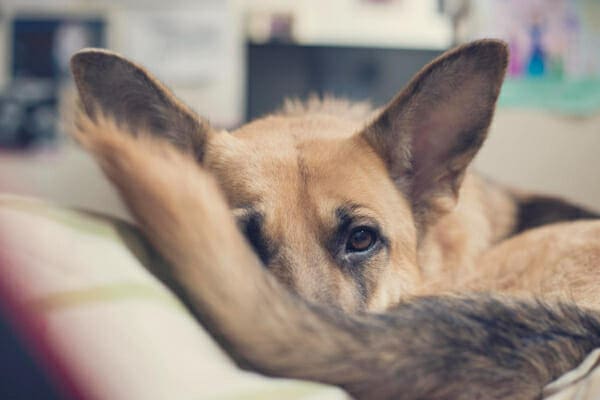
Sedation is commonly seen with dogs starting on gabapentin. Discuss with your vet if it is too excessive.
Gastrointestinal upset (vomiting, diarrhea or lack of appetite)
Just like many other medications, gabapentin can occasionally cause some GI upset. Your dog may have a decreased appetite for a few days, or he or she might experience mild vomiting or diarrhea.
What do to if your dog has GI upset
Depending on the severity of the GI upset, you may be able to manage it by giving the gabapentin with a meal. Or you could try feeding a bland diet for dogs and waiting a few days to see if the GI upset subsides. But if the vomiting or diarrhea is severe, or if your dog isn’t eating, it is best to check in with your vet. He or she may want you bring your dog in for an exam to ensure something else isn’t causing these symptoms.
Less common side effects of gabapentin in dogs
While they don’t tend to show up in the drug handbooks, there are some other side effects that are debatably associated with gabapentin use in dogs.
Increased appetite and weight gain
Anecdotally, it seems like the occasional dog on gabapentin will have an increased appetite. The dog may be counter-surfing, begging for food, or eating more. As a result of the increased caloric intake, the dog can gain weight.
By monitoring your dog’s body condition score (BCS) and taking steps to help your dog lose weight (if necessary) you can combat weight gain and increased appetite. But if you have concerns, it doesn’t hurt to reach out to your vet.
Agitation or behavioral changes
Some veterinarians have noticed that rarely a dog on gabapentin seems to have a paradoxical reaction. In other words, they get agitated or excited rather than sedate. Or the dog might experience behavior changes. Studies have reported this sort of reaction in children who take gabapentin. Therefore, it is possible that agitation and behavior changes could be associated with gabapentin use in dogs too. But the link isn’t clear at this point.
If your dog’s behavior changes suddenly, reach out to your vet for guidance. He or she can advise you on the best course of action.
Changes in urination
Gabapentin might slightly increase urine retention in dogs, but this hasn’t been well studied at this point. Occasionally, it also seems that urinary incontinence in dogs has improved on gabapentin. But it is unclear if this can be attributed to gabapentin or other factors.
If you are worried about changes in your dog’s urination volume or frequency, contact your veterinarian for advice. Since many factors can influence urination, the gabapentin may or may not have anything to do with what you are noticing.
Signs of an allergic reaction (hives or difficulty breathing)
Allergic reactions to gabapentin are possible, just like with any other drug. Dogs who are having an allergic reaction to gabapentin may have hives, swelling, or difficulty breathing. Severe allergic reactions can be life-threatening, so you should make an emergency vet visit ASAP if you notice these symptoms.
How long do the side effects of gabapentin usually last in dogs?
The good news is that, with the exception of allergic reactions, which aren’t really side effects anyway, the side effects we discussed above are generally mild and short-lived. This is true in part because gabapentin has a short half-life.
The half-life is the time it takes for the body to metabolize (i.e. break down) and excrete (i.e. eliminate from the body) half of the dose of medication. It helps give an indication of how long we can expect the effects of the medication to last.
For medications with long half-lives (meaning they remain active in the body for a long time after each dose), side effects may be more concerning. This is because it takes longer for the medication to wear off.
Gabapentin, however, is not one of those drugs. It has a short half-life (3.3 to 3.4 hours in a study of the pharmacokinetics of oral gabapentin in Greyhound dogs). This means the body has broken down and eliminated half of the dose in about 3.5 hours. So the good news is that any side effects should wear off fairly quickly.
Plus, the average dog’s body adjusts to gabapentin after being on it for several days. Therefore, typically, in a week or so, the dog will no longer get significantly sedate or ataxic on gabapentin.
Do I need to stop giving my dog gabapentin if I notice side effects?
Even knowing gabapentin’s side effects are mild and usually subside quickly, I understand that it can be concerning to see your dog wobbling around the house or acting sedate. As discussed, the best thing you can do is contact your vet if you think you might be seeing side effects of gabapentin in your dog. Your vet can provide reassurance and advice on how to proceed.
Occasionally, there are situations where the severity of the side effects may prompt your vet to switch your dog to a different medication. Thankfully, this is fairly uncommon. Most of the time, the strategies we talked about will be enough to get your dog through the initial side effects.
Side effects of stopping gabapentin in dogs
It is important to note that if your vet does want to take your dog off gabapentin, he or she may recommend gradually decreasing the dose rather than stopping cold turkey. Rapidly stopping gabapentin can cause increased seizure activity if your dog is taking gabapentin as an anti-seizure medication. And abruptly withdrawing gabapentin can also cause rebound pain in dogs who are using it for pain control.
Thus, it is best to consult your vet before you stop giving your dog the gabapentin. This is especially true if your dog has been on it awhile, has a history of seizures, or has significant pain. The exception to this would be if your dog is having an allergic reaction, where continuing to give gabapentin could be life-threatening.
What are the symptoms of a gabapentin overdose in dogs?
While we are on the topic of side effects, I also wanted to briefly talk about gabapentin overdoses. Thankfully, because gabapentin has a wide margin of safety and a wide therapeutic range, true overdoses are uncommon. In reported cases of accidental overdose, most of the time the dog showed a more severe versions of the side effects we already discussed.
Overall, the signs of a gabapentin overdose were mostly ataxia (i.e. a wobbly or unsteady gait), sedation or drowsiness, and vomiting. Since there is so much overlap between the expected side effects and the signs of an overdose, the best course of action is to talk to your veterinarian or a pet poison control center (e.g. ASCPA Animal Poison Control Center) if you are concerned. They can advise you about the safest way to proceed for your dog.

7 Gabapentin FAQs
Now that you hopefully have a better understanding of the gabapentin side effects in dogs, I want to address a few other gabapentin frequently asked questions I tend to get from my clients.
FAQ #1: What is the dose of gabapentin for dogs?
As mentioned, gabapentin has a wide therapeutic range. This means vets can safely prescribe it at a wide range of doses for the same size dog. It’s available in 100 mg, 300 mg, and 400 mg capsules and 300 mg, 600 mg, and 800 mg tablets. Plus, it comes in a liquid formulation that vets sometimes use for very small dogs.
As a word of caution, the liquid form of gabapentin often prescribed for humans (trade name Neurontin®), can contain xylitol. This is an artificial sweetener commonly found in human medications, sugar-free gum, and many other products. Unfortunately, xylitol is toxic to dogs.
When vets prescribe liquid gabapentin for dogs, they must check with the pharmacist to ensure the product the pharmacy carries does not contain xylitol. If the human pharmacy doesn’t have a xylitol-free formulation available, your vet may need to order one from a compounding pharmacy.
Typically, dogs take gabapentin every 8 to 12 hours for best efficacy. But sometimes your vet may start out with once-a-day dosing at bedtime until your dog gets used to the medication.
The dose of gabapentin that your dog will take depends on his or her size and the severity of the pain, anxiety, or seizures. Your veterinarian will decide on the best starting dose for your dog. And then he or she will make adjustments along the way based on how your dog responds.
FAQ #2: How does the body get rid of gabapentin?
Like many medications, gabapentin is excreted primarily by the kidneys via the urine. Because of this, sometimes vets need to make dose adjustments in cases of severe kidney failure in dogs. This may involve prescribing a lower dose of gabapentin for that dog compared to a dog of the same size who has healthy kidneys.
However, unlike many medications, the liver only slightly metabolizes gabapentin. Therefore, dogs with liver disease in dogs may not need significant dose adjustments.
FAQ #3: Are there situations where gabapentin could hurt my dog?
As we have discussed, gabapentin is overall a very safe medication. Vets do, however, try to avoid using it in pregnant dogs unless absolutely necessary. This is primarily out of an abundance of caution since, like many medications, the effects of gabapentin on the fetus have not been fully characterized in dogs.
Also, as already mentioned, your vet may also need to adjust the dose for dogs with kidney dysfunction.
Remember too that liquid gabapentin can contain the artificial sweetener, xylitol. Unfortunately, xylitol toxicity in dogs can be fatal in some cases. So it is very important to ensure your dog’s gabapentin does not contain xylitol.
FAQ#4: Are there any long-term side effects of gabapentin for dogs?
Dogs may be prescribed gabapentin long-term for pain control or seizures. But thankfully at this point, it does not appear that there are any concerns with using gabapentin for weeks, months, or even years. Overall, gabapentin seems to be less hard on the body than some other pain medications like non-steroidal anti-inflammatories (NSAIDs).
It is possible that over time a dog may develop a tolerance to gabapentin and require higher doses. However, this has not yet been conclusively demonstrated to be the case.
FAQ #5: How do gabapentin’s side effects compare to non-steroidal anti-inflammatory drugs (NSAIDs)?
Vets commonly prescribe NSAIDs when they notice signs a dog is in pain. So, it would make sense to compare the side effects of NSAIDS (e.g. carprofen for dogs) to gabapentin since both are used as pain relievers.
NSAIDs are popular because they’re very effective at decreasing pain and inflammation. And they can also relieve arthritis pain in dogs to dramatically improve quality of life. However, the side effects of NSAIDs include vomiting, diarrhea, bloody stool, GI ulcers, and lack of appetite.
Additionally, NSAIDs can negatively impact kidney function. Thus, vets must use them sparingly in dogs with kidney issues. Since many dogs who need daily medication to manage joint pain are seniors, this population is also more likely to have pre-existing kidney disease.
Gabapentin is an attractive alternative for pain management in these dogs. Although dogs with kidney disease may need a lower dose due to slower excretion, gabapentin does not seem to have adverse effects on the kidneys like NSAIDs do.
One of the drawbacks to gabapentin as a pain medication, however, is that it does not have anti-inflammatory effects like NSAIDs do. This may make it less effective for conditions where inflammation is contributing to the degree of pain.
FAQ #6: How do gabapentin’s side effects compare to those of trazodone for dogs?
Trazodone for dogs is a popular anti-anxiety medication. And gabapentin also has some use in controlling anxiety. Therefore, it also makes sense to compare the side effects of trazodone vs gabapentin.
Interestingly, they have several side effects in common. Both can cause some sedation and GI upset. Plus, trazodone can cause agitation, aggression, and increased appetite, which debatably also occur with gabapentin.
One of the big differences, though, is the fact that administering trazodone with many other anti-anxiety or anti-depressant medications runs the risk of the dog developing a dangerous condition called serotonin syndrome. And there is a list of other medications that trazodone doesn’t interact well with. However, gabapentin can safely be combined with trazodone and most other medications.
At the end of the day, though, the vet will select the medication that best fits the particular situation. There are a variety of potential anxiety-reducing medications. So the goal is to find the one or ones that work best for your dog.
FAQ # 7: How do the side effects of tramadol and gabapentin compare?
Another medication that gabapentin sometimes gets compared with is tramadol for dogs. Tramadol is an oral opioid medication, which means it provides pain relief. But like gabapentin, it does not have anti-inflammatory properties.
Vets sometimes use tramadol and gabapentin together. Or they may combine either one with an NSAID to provide better pain control.
When looking at side effects in dogs, the list for tramadol includes sedation, GI upset, constipation, panting, and dilated pupils. As is the case for gabapentin, these tramadol side effects are uncommon and tend to be mild.
Both tramadol and gabapentin lack enough evidence in the literature to prove their efficacy. But I do believe that they do a great job of helping decrease pain in dogs, especially when combined with another pain reliever. It is up to your vet to decide if gabapentin, tramadol, or both, is right for your dog.
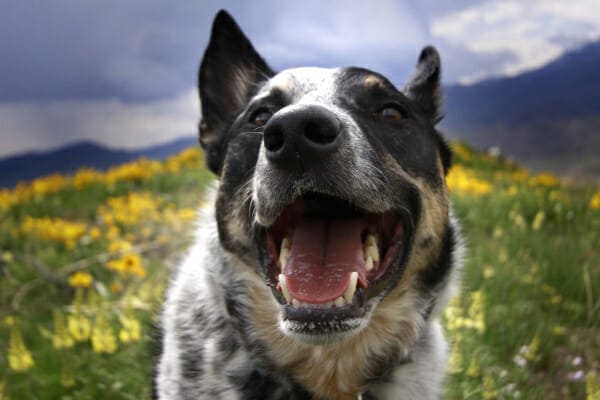
Don’t let the concern about side effects of gabapentin keep you (and your dog) down
We all want what is best for our dogs and hate to see them experience any medication side effects. But the good news is that, as far as side effects go, gabapentin’s really aren’t so bad. They are unlikely to be harmful and usually go away within a week or so.
That doesn’t mean that it isn’t concerning to see your dog acting wobbly or sleepy. But it does mean that you can take some comfort in knowing that these side effects are par for the course and pretty easy to manage.
If your dog is experiencing side effects from gabapentin, please talk to your vet. Don’t let the short-term side effects make you think you should throw in the towel on gabapentin. Often the long term benefits that your dog will reap from being on gabapentin will far eclipse the stress and worry about the side effects. In the end, gabapentin may give your dog more good days, which is always a win in my book!


Is Gabapentin okay for dogs with liver disease? My dog took gabapentin for arthritis for a few days and it really helps. She barely moves without it.
My dog has elevated liver enzymes (mild) but the vet isn’t sure if it’s mild or serious. She is taking supplements for this. She was vomiting on gabapentin so I withdrew it, but now I think this was probably related to the liver disease and not gabapentin as she has been off it two days and still vomiting.
I see there is conflicting advice about whether Gabapentin is metabolised in the kidneys or liver, so I’m not sure if I can try it again? I will double check with the vet but I’m just interested in your opinion.
Hi Sarah,
Gabapentin is mostly metabolized by the kidneys, but the liver does help in a minor way. It is generally considered safe for does with mild liver dysfunction. Since I haven’t examined your girl myself, it is hard to make specific conclusions about her medications and the symptoms you are seeing at home. It might be a good idea to schedule a consult with a veterinary internal medicine specialist. They can review your pup’s case and offer additional testing to determine the extent of her liver issues. They may also have different treatment options and recommendations that could lessen the side effects and symptoms that are causing your girl to struggle. I hope you can find the answers you need to restore your dog’s quality of life. Praying for a good prognosis and many more happy memories together.
Hello,
I’ve been researching the liver question too. My 14 year old 50 lb Cur, Sally, has just been upped to 100 mg 3x/day (from 100 mg 2x/day). She does have elevated liver enzymes but the vet said the same thing as you; it metabolizes mostly in the kidneys, and her kidney’s are fine. We are on 6 month blood work monitoring.
My question/concern: After 5 days of 3x/day, she vomited once at 5 am, the longest time in between dosages which I thought was odd. She hasn’t since, but I’ve been monitoring. Also, she gets in a deep sleep and starts twitching, I have to moderately rub her to get her to wake up, could that be a seizure? I have continued the 3x/day dosage because I desperately want her to have pain relief, but should I be worried? Or discontinue back to 2x/day? My vet mentioned Adequan as a supplemental drug, although it’s much more costly than Gabapentin; what are your thoughts on that? Thanks for any info, feedback. NSAIDs are not an option with her liver.
Hi Lindsey,
Sally is lucky to have you advocating for her quality of life. I am glad the Gabapentin seems to help relieve her pain. Since I have not examined your dog myself, it’s difficult to make specific conclusions. I do think since Sally only vomited once after the dosage had been increased for 5 days that the vomiting probably was not related to the gabapentin. Also, the side effect of sedation that can occur when first starting this medication can also happen when increasing the dosage. The deep sleep you are noticing may be due to this temporary side effect, but it would be a good idea to mention it to your vet so they can monitor it closely and advise you on how to proceed. I will attach a link to an article about Adequan to offer additional information. It is a great treatment to help with arthritis but would probably be added in conjunction with the gabapentin instead of in place of the gabapentin. I hope this helps a bit and you can find the answers you need to keep your sweet girl feeling her best. Give Sally a hug for me!
Adequan for Dogs: Don’t Just Treat Arthritis, Slow it Down
My nearly 13 year old boy had surgery yesterday and was prescribed gabapentin (2 capsules every 8 to 12 hours) in addition to the Galliprant he has been on for a few years. He is beyond drowsy. I am guessing that is part of the reason for giving post-op? to keep him calm and quiet? We were given a 5 day supply with no instructions to reduce dose gradually. Is that OK for short term use?
Hi Susan,
I hope your pup is comfortable and his recovery is going smoothly. Gabapentin can definitely be used short term to help with anxiety and post-operative pain. Since I don’t know all the details about your dog’s case, it is hard to make conclusions and recommendations about his medications. It might be a good idea to call your vet and talk about your concerns. They can tell you the exact reason the gabapentin was prescribed and confirm if there needs to be a gradual taper before discontinuing the medication. Wishing you luck as you help your sweet boy get back to feeling his best!
Hi , my 11 year pug Lola has DM finds it’s hard to walk but is still happy in herself , vet has just given us gabapentin , she is not in any pain but I just don’t understand how this might help her legs , she is slightly Inconteneint too , after reading comments I’m really worried and confused .
Hi Karen,
I am sorry Lola is struggling to use her back legs. DM can be such a difficult diagnosis. Often it is hard to assess if a dog is truly painful as they don’t always display obvious signs of discomfort like we would expect to see in humans. I recommend you talk to your vet and discuss your concerns. They can answer any lingering questions and let you know if there are alternative medicine options to try. I hope you can find the answers you need and enjoy your time with sweet Lola.
My 7 year old shin tzu has been on Gabapentin 1 week for weakness in hind legs. He is becoming progressively worse everyday. Sleeping constantly, loss of appetite, now he is unable to stand alone. Wet bed during night. Headed to veterinarian right now
Hi Retta,
I am sorry your boy’s condition is declining so rapidly. These symptoms could be side effects from the sedation that Gabapentin can cause when it is initially started, but there could also be something more serious happening unrelated to the medication that needs to be addressed. I hope you were able to find some answers. Praying all is well. ♥
Retta, I would like to know the outcome of your situation? My 14 year old Dachshund started with a small dose of Gabapentin for weakness in his hind legs. He seemed to tolerate it well. He went in for his teeth cleaning and since he was still having trouble walking they gave him a stronger dose of gabapentin. Now he will not eat or drink, his back legs collapsed completely yesterday, this morning he is able to stand and walk a little but still no eating or drinking. We were with the vet yesterday for IV fluids and exam. We return this morning to determine what could be causing his rapid decline. Our dog isn’t really sleeping which is odd to me. Leads me to believe his problem could be vestibular? I would like to know what happened with your pup?
My 14 yo Standard Poodle was prescribed Gabepentin for intermittent severe pain in the lower back causing her to jump up and move around with her back legs (looked like) spasming. 300mg twice a day, she weight 30kg.
After a few days because I was busy I only gave her one tab in the morning
She seems relaxed and restful more than too sleepy – she is 14yo she slept a lot before the medication her sleep does seem deeper, she is now deaf so her sleep isn’t disturbed noise
She is still keen for her 2 walks a day, I let her dictate how far we walk.
The one tab a day seems to working for her, no pain spasms since starting the drug it’s only been a few weeks I will monitor her and adjust accordingly.
So far I am pleased with the result I feel she must have been in a bit of lower spine pain before but didn’t show it, as I said now she is just more relaxed.
Hi Jasmine,
I am glad your girl is feeling so much better and is resting easier since starting the Gabapentin. Thank you for sharing your experience with our readers. I wish you and your senior girl many more happy days together!
Hi Dr. Buzby!
Thank you so much for this reassuring article on Gabapentin. It’s so scary to give an off label drug to any creature but maybe it’s worth the risk. My Shih Tzu Pomeranian Truffle was diagnosed with probable IVDD about 3 weeks ago. I’ve kept her on strict pen rest and she’s doing so much better now. Vet had prescribed the Gabapentin for her but she was regurgitating so vet said to stop it ( she has an iffy tummy and also can’t be in anti-inflammatory meds) I went off it for two weeks and as she continued to improve I increased her activity, allowing her to walk for short distances when going potty. Well, I think she over did and seemed to be in some pain again so I restarted the Gabapentin. I give it to her hours after her regular food in just a pill pocket (.75ml liquid) and so far so good. It seems to have quelled her pain again. My long winded question is, can I taper her off after a week to see if her pain is gone? Is it bad to only give for a short duration? I may prefer trying CBD if this is an ongoing situation. Fortunately, I think her IVDD is mild at this juncture. Thank you for any advice!
Hi Alyssa,
I am glad to hear the gabapentin has helped relieve Truffle’s pain. I am not sure that it is necessary to taper the medication prior to ending the course gabapentin. Since I haven’t personally examined your girl, it is hard to make specific recommendations. With that being said, I do recommend you talk to your vet and seek their advice. They can let you know if it should be given for a longer period of time or if they have any concerns with CBD. I hope Truffle has a quick recovery and I wish you both the best!
Thank you for your article!! My 10 year old doxy was put on Gabapentin 100mg a week and a half ago for nerve pain (constant licking of the arm, even jolting awake to lick) his vet thinks it’s nerve/arthritis pain.
We are at the ‘mommas worried’ point where the side effects of lack of energy (even when given at bedtime) wobbly and a little vomiting have given me second thoughts and certainly don’t want to go to twice a day!! He’s very active dog and I hate to see him like this!!
I talk to his vet tomorrow and your article has given me much peace of mind that I’m not doing something wrong by even starting him on this to begin with!
Hi Jamie,
I understand your concern with the extreme sedation and ataxia that gabapentin can cause. You definitely didn’t do anything wrong by giving this medication a try and it may turn out to be a great option for your little guy. I hope the conversation with your vet went well. I wish you the best of luck for a happy future with your sweet boy.
Hi there. I have a Staffordshire bull terrier old lady approximately 14 years. She is a rescue who has owned me for nearly 6 years now. She struggles with anxiety and in the past has been on selgian. We stopped that as she didn’t really improve. She has been diagnosed with subcutaneous mast cell cancer but this is well looked after. In 2020 during lockdown she unfortunately had to have her tail taken off due to a big lump that kept having to be drained every 2 days. She has arthritis in her hind legs and is on loxicom for pain. Since her amputation her anxiety for so bad she was being sick all the time. Vet suggested gabapentin as it helps with anxiety and also possible nerve pain she’s having in her stump. Wow us all I can say. She takes 200mg morning and night and they are helping so much. However apart from the sedation effects she seems to be starving all the time. She was never a big eater since I’ve had her. She’s been in the gabapentin now for 6 weeks and it’s not getting any better. Any advice?
Hi Helen,
I am so glad the medication has helped with your senior girl’s anxiety and pain. I am not familiar with gabapentin causing a ravenous appetite, but I guess it could be possible. Since I haven’t examined your dog myself, it is hard to make specific recommendations. I do think you should talk to your vet about this new side effect. They may need to do some additional testing or change up the medications a bit. When looking at the overall picture of your girl’s health and wellbeing, if increased appetite is the only downside, it may be a side effect worth dealing with to keep her happy and comfortable. I hope you can find the answers you need to make the best decisions for your sweet girl. Best wishes to you both!
I have been on Gabapentin for 10 years 300mg 3 x day people dose haha same dose same intervals….but I do remember when starting about a hour after I took it I would get crazy munchies like lock the fridge munchies…just thought I would share and it only lasted a week or so…..
Our cavapoo was put on gabapentin for pain at the end of December for pain due to a ruptured CCL in her left knee. We can’t see the Ortho vet until 3/1. She is getting 200 mg every 8 hours without any side effects described above. Her urine, however, has a very odd odor. She is also on Temaril-P for a mild collapsed trachea and Denamarin for her liver. I assume the urine smell could be one of those as well. I am just starting my quest for information with the gabapentin.
Thanks!
Hi Sue,
I am glad your girl seems to be doing ok while waiting for her orthopedic appointment in a couple weeks. I am not familiar with gabapentin causing the urine to have an odor although it can’t be completely ruled out. Make sure to let your vet know about this new development as this could be a sign of a urinary tract infection or other issue that might need to be addressed. I hope the CCL surgery goes well and the recovery is quick. Best wishes to you both!
My 11-year-old chocolate lab was recently placed on gabapentin, 300 mg. She received her First dose yesterday morning and her second dose with dinner. By 2 AM she lost control of her bowels and was leaking urine. We initially chalked it up to somebody forgetting to let her out overnight. But again this morning, on her way up the steps, she pooped AS she was walking up the steps, she had no idea she pooped. We also noticed puddles under her bottom while she was sleeping throughout the day. Later on she had another accident while she was walking and looked back at us looking absolutely mortified. We have pulled her off the drug for now until we are able to talk to her vet. She was placed on the medication for potential nerve pain as she is constantly dragging her back left foot.
Hi Palmermia,
I understand your concern with the severity of these new side effects in your Lab. Since I haven’t personally examined her, it’s hard to make specific conclusions. It is common for dog’s when initially starting gabapentin to see some sedation and ataxia (wobbling) which can be extreme in some cases. I am curious to know if the urinary and fecal incontinence could be due to some of the sedation effects of the drug. Also, I would be wanting to make sure the original neurological issue hadn’t progressed and is now affecting the nerves to the bladder and colon. I highly recommend you talk to you vet and let them know about these new issues. They may want to change the gabapentin dosage, try a different medication, or even recommend a referral to a veterinary neurologist. I hope you can find the answers you are looking for a find a treatment that works for you and your sweet girl. Best wishes to you both as you navigate this difficult road ahead.
I just had this happen to my chocolate lab as well, but he fortunately had just gotten outside. He was very wobbly and usually walks quite a distance before he does his job. He was trying to hurry and lost control. I’m sure it was from the gabapentin. He is almost 13 years and is having problems with his left leg as well.
Hi Dr Buzby. Thank you for the informative article! I, too, have a gabapentin question. My giant lab mix (now down to 97 lbs) had a slipped disk at 6 years and was very paralyzed in his hind end. After a surprising but difficult rehab, he is almost normal! Now, at 10, he does have some pain. The gabapentin seems to make his hind end much weaker. I have tried it intermittently, and it always does this. Tonight was severe, with his back toes dragging and back legs almost collapsing. Would this go away if I were to give this med consistently? I do not want to do galliprant because of the stomach issues, but because of his nerve damage don’t feel that glucosamine would help. Thank you in advance for your answer.
Hi Jenniffer,
I am glad to hear your big boy did so well with his rehabilitation therapy and has done well for several years. It is very possible that the severe hind limb weakness would resolve if the Gabapentin was given on a consistent basis. In my experience, if ataxia and wobbling are noticed when Gabapentin is first initiated, with time, the body acclimates to the medication and the unwanted side effects resolve. I understand you are most concerned with the nerve damage, but I do think joint supplements would be a beneficial addition. A slipped disk causes inflammation in the joint space of the spine just like a torn ligament in a knee joint would cause inflammation and pain. Anything that helps reduce inflammation will help reduce pain, such as laser therapy and other rehab exercises. It might be a good idea to reconnect with a rehab vet in your area! I hope you can find the answers you need to give your big guy the best quality of life possible. Wishing you both many happy days ahead to keep making memories.