Dog anal gland issues (e.g. anal sac impaction, infection, rupture, or cancer) can quite literally be a pain in the rear for your dog. To help you navigate these problems, integrative veterinarian Dr. Julie Buzby gives some background on anal glands, and then explains the causes, symptoms, diagnosis, treatment, and prevention of anal gland issues in dogs.
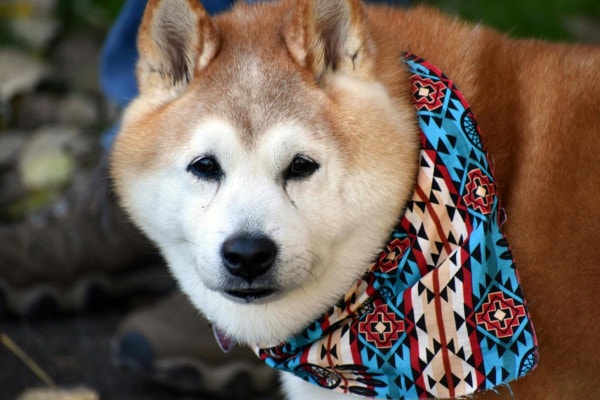
Dogs like Chester, who was driving his mom (and himself) crazy by scooting his hind end on the carpet non-stop, show up on my schedule fairly often. And more times than not, the culprit ends up being some sort of anal gland issue.
Chester was no exception. As I examined him, I discovered that he had a small hole about the size of the tip of my little finger below and to the side of his anus. This told me that Chester’s anal sac, which was probably previously impacted, had now ruptured.
Chester’s mom was very surprised to hear this because she didn’t know that there could be anal gland problems in dogs other than the glands just being full. I explained to her that there are actually multiple different anal gland problems that a dog could have. Thankfully, though, many of them can be treated, and often even prevented, with proper management.
What are anal glands in dogs?
To understand problems associated with the anal glands in dogs, it is important have an idea of the anatomy and function of healthy anal glands.
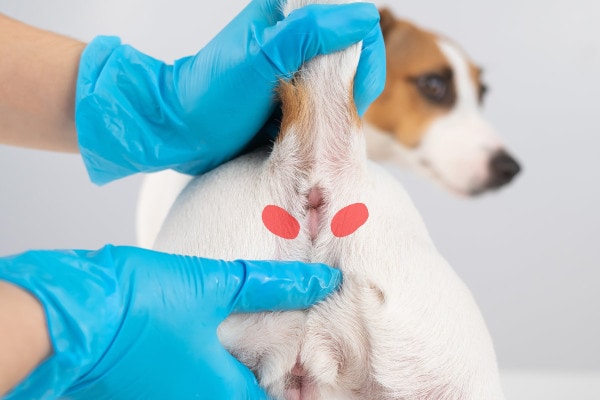
The anal sacs are two small pouches that are located beneath the skin in a dog’s anal area. Both male and female dogs have an anal sac on each side of the anus—one at approximately four o’clock, and the other at approximately eight o’clock.
The anal sacs are lined with sebaceous glands (i.e. the anal glands) that produce a foul smelling fluid. Normally this fluid builds up slightly in the anal sac. Then, as the dog has a bowel movement, the fluid exits the anal sac to the outside world via a small canal.
(Thus, strictly speaking, the anal glands line the anal sacs. However, most people use the terms “anal glands” and “anal sacs” interchangeably, so I will do so in this article too.)
The fluid that the dog releases from the anal glands is normally fairly thin and tan, and has a strong fishy odor. This smell acts as a dog’s “signature” or “name tag” in the environment. The odor is unique to each dog. And dogs use it to mark their territory and identify themselves.
When another dog sniffs the feces and anal gland fluid on the ground (or smells the other dog’s hind end), that dog will be able to “recognize” the other dog. This signature helps dogs investigate and learn about each other.
Why do anal glands sometimes cause problems?
As discussed, dogs can empty their anal glands naturally when defecating. However, sometimes all doesn’t go according to plan, and the anal gland secretions start to accumulate in the anal sacs. As a result, pressure builds up in the anal area—which can be very uncomfortable or even quite painful. If not resolved, the buildup of anal gland material can lead to anal sac disease.
4 Anal gland issues in dogs
There are four main anal sac problems in dogs—anal gland impaction, anal gland infection, anal gland rupture, and anal gland cancer. Let’s discuss each one.
1. Anal gland impaction in dogs
Anal sac impaction occurs when the anal gland secretions begin to build up abnormally in the anal glands. The exact reason this happens isn’t clear. However, there are some theories.
Expressing the glands requires applying the right amount of pressure to the glands to carefully squeeze the fluid out during the bowel movement. Typically, the physical act of defecating and the presence of the feces passing through the anal sphincter should apply the necessary pressure.
Contributing factors
However, if the feces are an abnormal consistency, having a bowel movement may not exert the right forces to empty the glands. Additionally, in some dogs, the glands may be harder to empty than normal due to abnormal anatomy or health problems. For example, the opening of the canal out of the anal sac is already very small. But sometimes it is naturally abnormally narrow or becomes narrower due to inflammation.
Plus, some conditions (e.g. allergies) can cause a dog to produce a large amount of anal gland fluid. Or the anal gland secretions may become thickened and compacted. All these factors may create a situation where not enough anal gland material may be able to get out of the anal glands during defecation.
Conditions that contribute to anal gland impaction in dogs
Thus, the following conditions may make dogs more likely to have an anal gland impaction (and subsequent anal gland issues):
- Chronic, ongoing skin infections (especially near the hind end)
- Obesity (which may reduce muscle tone)
- Inappropriate amounts of fiber in the diet
- Soft stool or chronic diarrhea
- Food allergies or seasonal allergies
- Genetic predisposition (especially in small breed dogs)
- Swollen anal sacs
Progression of anal gland impaction
If a dog has any of these conditions, he or she might be unable to fully express the anal glands. As more and more material builds up in the anal glands, the tissue may become swollen and inflamed. And the whole gland may become blocked or plugged—which is uncomfortable for your dog. Impacted anal glands also can make it difficult for a dog to defecate because there is so much pressure in the anal area.
Minor impactions may be resolved when a dog scoots or has a large bowel movement. But many dogs with impacted anal glands need a veterinarian to perform manual anal gland expression. Otherwise, if the impacted gland is left untreated, it could lead to an anal gland infection.
2. Anal gland infection or abscess in dogs
Anal gland infections can occur relatively easily after an anal gland becomes impacted. This is the case because the fluid and environment in the anal sac are ideal for bacterial growth. Also, since the anal glands are located so close to the anus, bacteria from the feces can enter the anal sac.
If the dog is unable to properly express the anal glands, the bacteria continues to grow and multiply (rather than being “flushed out” as the anal glands empty). This leads to an anal gland infection or abscess in dogs— which can be extremely painful.
As the anal gland abscess grows, the gland fills with not only the normal secretions, but also bloody fluid or pus. This adds to the pressure that your dog feels in his or her hind end. Your dog might scoot more often, whimper when defecating, or have abnormal bowel movements.
3. Anal gland rupture in dogs
As the pressure continues to build from the infection and anal sac inflammation (i.e. anal sacculitis), the anal glands become more swollen. Eventually, the infection may rupture through the surface of the skin. Once the anal gland bursts, the dog typically has a small hole near the anus—just like Chester did. The ruptured anal gland may leak anal gland secretions, blood, or pus, and have a foul smell.
While the rupture might relieve some of the pressure that your dog was feeling, it leaves your dog with a potentially painful open wound. And it exposes the inside of the anal sac to the “outside elements,” including bacteria from feces or the dog’s environment.
Left untreated, dogs with anal gland ruptures may develop irritation or infection of the anus or rectum and the surrounding skin. When this happens, your dog’s appetite and bowel movements may be affected due to the pain.
4. Anal gland cancer in dogs
While anal gland impactions, infections, and ruptures are the most common problems associated with dog’s anal glands, it is also possible for dogs to develop tumors in the anal glands.
The most common type of cancer that occurs in the anal glands of dogs is called anal sac adenocarcinoma. This is a malignant cancer that typically originates in one anal sac. However, since it is malignant, it can metastasize (i.e. spread) to other parts of the body. Usually, it first spreads to nearby lymph nodes. But it can later metastasize to more distant locations like the liver, lungs, and spleen.
Initially, the dog may be asymptomatic or show signs associated with other anal gland issues. But as the cancer grows and spreads, it becomes increasingly painful for your dog. If the cancer spreads to other locations, your dog may begin to have trouble breathing or other symptoms associated with the lungs or liver. Plus, dogs with anal sac adenocarcinomas may also develop hypercalcemia in dogs (i.e. high blood calcium). This can cause a lethargic dog, GI upset, increased thirst in dogs, or muscle weakness.
What are the symptoms of blocked anal glands in dogs?
Unlike dogs with anal gland cancer, who tend to have more systemic signs, dogs with anal gland impaction, infection, and rupture usually have symptoms that center around the anal glands themselves. Their signs may include:
- Scooting or dragging of the hind end (this is often the first sign)
- The dog licking the base of the tail or chewing under the tail
- Abnormal or strong odor associated with your dog’s rear (your dog smells like fish)
- Swelling or bulging near your dog’s anus
- Straining to defecate
- Red or irritated skin near the anus
- Constipation or diarrhea
- Decreased appetite
- Bloody or dark discharge on the feces (not to be confused with melena, which is digested blood in the stool)
- Bloody, dark, or pus like discharge in the anal area
- A small wound or opening near your dog’s anus
- Whimpering or crying out when defecating
- Holding the tail tucked between the legs
- Repeated quick sitting or reluctance to sit
If you notice any of these symptoms, especially if you know your dog has a history of needing his or her anal glands expressed, please schedule a visit with your veterinarian. Anal gland issues are much easier to treat if they are caught early—before there is an infection or rupture.
How will the vet address anal gland issues in dogs?
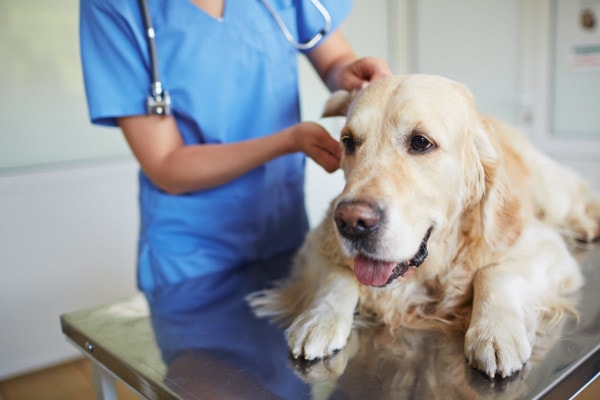
During the appointment, the vet will talk with you about your dog’s symptoms and history. Then he or she will examine your dog and perform a rectal exam with his or her index figure. The rectal exam gives the vet a chance to palpate each anal sac and the surrounding tissue. Plus, the vet may also be able to palpate the dog’s lymph nodes in the area with a finger.
If the anal glands are full, the vet will attempt to express them. (Some dogs are too painful to tolerate this without sedation). While expressing the anal sacs, your veterinarian will be able to tell if the gland was full, impacted, or contained abnormal discharge. From there, the vet will develop a treatment plan.
Treatment for anal gland impaction
If the anal glands were merely impacted, expressing them may be all the treatment your dog needs. However, the veterinarian will most likely also give you recommendations to prevent anal gland problems in the future. If your dog has an anal gland issue because of an underlying condition such as allergies, being overweight, or a skin infection, your veterinarian will develop a plan to address that problem.
Additionally, your veterinarian might recommend routine, scheduled appointments for anal gland expression. This can help ensure the sacs are being emptied properly, and it allows the vet to monitor the dog for worsening symptoms.
Another method to prevent anal gland impactions is to add more fiber for dogs into your dog’s diet. You can do this by changing to a different dog food or by adding a fiber supplement like Metamucil for dogs to your dog’s food. Alternatively, you could consider giving your dog some canned pumpkin for dogs, which is also rich in fiber. The goal with the dietary changes is to bulk up the stool. This can increase the chances that having a bowel movement will express your dog’s anal glands.
Anal gland infection, abscess, or rupture
If your veterinarian detects an anal gland abscess or rupture, he or she will mostly likely recommend additional treatment beyond expressing your dog’s anal glands. This may involve pain medications such as non-steroidal anti-inflammatory drugs (e.g. carprofen for dogs) or steroids (e.g. prednisone for dogs).
Plus, the vet will need to address the infection in some way. Systemic antibiotics are one option, however, local treatment is also becoming popular.
In a study in Veterinary Dermatology on local treatment for canine anal sacculitis in 33 dogs, flushing and infusing the anal glands with an antimicrobial and steroid combination achieved clinical resolution of anal sacculitis in 72.7% of dogs. And the owners reported a resolution of symptoms in an additional 12.1% of dogs. These results were achieved without the need for systemic antibiotics.
Therefore, in some cases the vet may recommend surgically draining the anal gland abscess and/or flushing the anal sac and filling it with an antimicrobial (and sometimes anti-inflammatory) medication. Depending on the situation and your dog’s comfort level, your vet may suggest sedating your dog for this procedure.
Additionally, your veterinarian might recommend applying warm compresses to your dog’s anal gland region to decrease the pain and swelling. Or, he or she might suggest a course of laser therapy for dogs, since it has healing and anti-inflammatory properties.
Plus, from a preventive aspect, the vet may advise you to bring your dog in for routine anal gland expression or provide dietary fiber supplementation as described above.
However, for dogs with recurring anal gland issues or cancer associated with the anal sac, these measures may not be enough. Some dogs need surgical removal of the glands.
Can a dog’s anal glands be removed?
Dealing with repetitive anal gland issues can be very frustrating for dog parents and their dogs. Sometimes, if medically necessary, the veterinarian can surgically remove a dog’s anal glands. This is the case because dogs do not need their anal glands to survive and enjoy a long, happy life.
If your dog is consistently developing anal gland infections or has been diagnosed with anal gland cancer, removing the anal glands may be the best treatment plan. Some general practitioners are comfortable performing this surgery themselves. But other primary care veterinarians might refer your dog to a veterinary specialist.
Most dogs do very well after surgery to remove the anal glands. However, some dogs might experience mild inflammation and drainage from the surgical site. And occasionally, dogs can develop fecal incontinence because of nerve damage from the surgery.
If your dog is in pain, has cancer, or has chronic reoccurring anal gland problems, surgery might be the best option. But before committing to surgical anal gland removal, you should discuss all your treatment options with your veterinarian to decide what is right for your dog.
Back to Chester
After I explained anal gland issues and treatments to Chester’s mom, we decided on the best course of action. Chester’s treatment plan consisted of:
- Pain management and antibiotics
- Warm compresses at home
- Wearing a cone to prevent licking and worsening irritation
- Adding canned pumpkin to his diet
- Regular anal gland expressions at the vet clinic for the next three months
At the end of his three-month plan, Chester’s anal glands were healthy, and he was back to normal. Chester’s mom changed his diet long-term to include more fiber and monitored his bowel movements very closely. Thankfully, since then, Chester has not had any more anal gland problems.
Work with your veterinarian
Anal gland problems can be frustrating for you and painful for your dog, especially when it seems like your dog can’t catch a break. However, hopefully by working closely with your veterinarian, using preventive strategies like routine anal gland expression or increased dietary fiber, and closely monitoring your dog, your dog’s anal gland issues will become a thing of the past. And then you can get back to enjoying more good days together, just like Chester and his mom.
Does your dog have anal gland issues?
Please share your experiences below.


Hi, I am looking for options. and your experience in this scenario. My 2.5 year old, 84 lb, neutered , utd on all shots, otherwise healthy, eats adult Purina pro plan chicken and rice , male Pyrenees mix had a massive very quick growing left anal gland abscess that spontaneously burst while in the vets office about a year ago. He was not given any treatment, just cleaned a bit, area shaved and sent home. Over the course of the next 6 -8 weeks or so he was given two courses of antibiotics in an attempt to get it to heal. He did finally heal. He then had 3 or so recurrences about 6 weeks apart before having surgery which confirmed a burst gland and fragments along with scar tissue. The vet tried very hard to remove everything he could find. Healing went great but 10 weeks later another abscess, healed, followed by abscesses at 8 weeks, 7 weeks and the 5.5 weeks when a second surgery was done to remove any remaining gland tissue that was found. The vet was hopeful that he got it all but again could not guarantee which we understood.. At about 7 weeks post surgery it happened again although that episode seemed less intense. My poor guy does not feel well the day before we start seeing the physical signs. We are now 7 weeks out from the last episode and we can tell he is not himself and the area is painful, so we can tell it is happening again. Are they any options to improve his quality of life? Is a third surgery even worth considering? Thank you. He has never had a problem on the right side.
Hi Nancy,
I am so sorry your big guy is having these recurring issues with his anal gland. It sounds like your vet has tried to do everything possible to resolve this frustrating issue and your boy just happens to be a complicated case. At this point I would recommend referral to a specialist. They may have access to alternative treatments or therapies that aren’t readily available in general practice. I am wondering if there isn’t some way to resect the affected tissue with a surgical laser or implant a slow-release antibiotic into the problem area. I am hopeful there is a way to offer your sweet boy relief and restore his quality of life. Wishing you both the best and praying for a positive outcome.
l have a 6yr old small poodle. ln the past week he has been scooting on the floor. Not consistently but noticeable. At that point I checked. l got his tail up.and noticed he had fecal matter all around and a fair amount. l used a cotton cloth and removed what was there. l also applied hydrochlordisol cream as well. Day 2. Repeat of Day 1 – No feces. l applied the same cream, bc he was still somewhat red. Day 3. Cleared up but I don’t know about bowel movement as he goes outside. l do know how to disimpact however l don’t feel the need to do this. Àny answer would be so very much appreciated.
Thank you so very much 🐕He is my Baby 🐕
Hi Rita,
I am sorry your Poodle is having these issues around his rear end. I would love to offer some helpful advice, but I’m not sure I know exactly what your question is. Are you asking if I think this is an anal gland problem? Or if your boy needs his anal glands expressed? From what you have described, this sounds like something your vet would need to evaluate. It is hard to offer specific recommendations without being able to personally examine your pup. Hoping all is well and wishing you both nothing but the best.
Hello my 12 year old dashound has anal gland tumor om the side of his anus which jad grown pretty large he is still eating an seems to be ok ge sleeps alot an drinks alot of water.. Wjat will i do it this birst open ? Will he be in pain?
Hi Mart,
I am sorry your senior pup is living with this worrisome tumor. There is really no way to know what will happen if it ruptures. I can’t predict if it will be a life-threatening issue or just cause a mess. Generally, if something ruptures it is painful. But I also can’t say for sure that your boy is not painful already. Dogs are great at hiding discomfort and will continue to go about their daily routines despite the pain. I strongly encourage you to have this evaluated by your vet. They can give you more details and offer guidance. Hoping you can get some answers and ensure your boy doesn’t have to suffer needlessly. Wishing you both the best.
My hound/lab mix boy, Apollo (about to be 13), recently had surgery on Jan 24th 2025 to remove a golf ball sized “growth” by his anus and come to find out, it happens to be a mass cell cancer after doing the biopsies after the surgery. My vet told me to give him two 25 mg Benadryl twice a day because they can possibly fight off the mass cell cancer cells from growing or forming back….. he seemed fine until recently and started scooting his butt across everything even pavement outside. Obviously, that caused some bleeding, and he seems restless. Also, around his anus, seems very firm and also has a bit of puss and I have absolutely no idea what to do. I’ve been cleaning it with a warm compress with a little bit of peroxide diluted with water that my vet recommended after he had the surgery. The vet isn’t open on the weekends, open Monday in 2 days and I am definitely going to be calling first thing to get him in to be seen. But for now, I would just like some input hopefully, on what you guys think it could be now. Super worried I may have to just put my soul pup down and I don’t want to do that because I have had him since I was 16 but I also don’t want him living in pain and discomfort for the rest of his days… 🙁
Dear Leonna,
I am sorry Apollo has received this difficult diagnosis and is experiencing some new issues. Without examining him myself, it is hard to make specific conclusions about what is happening. I think your best bet is to get him evaluated by your vet as soon as possible. Hoping for clear answers and an easy solution. Praying for a positive outcome for your sweet boy.
I don’t have a senior dog but my 3 year old Labradoodle has an anal gland that is most likely to rupture over night before I can get her in somewhere.
I’m confused by my pup. She doesn’t have many typical signs (on occasion it can take her a couple of attempts to poop and sometimes seems to chew at the base of her tail – up until today she’s never done the bum scoot or anything obvious to me that she has issues. We had her at the vet last yearish for an eye issue and she offered to check her anal glands and said there was a hard substance in them…. When I took her back another time they said they were full!
She’s a shaggy pup. Took her to the groomers today and she got shaved. Well I had no idea she had anything going on whatsoever with her bum until the fur was shaved and then today everything got so much more worse so quickly. She’s been shaved multiple times and we’ve never ever had a visible issue with her.
I’m hoping to get her in tomorrow morning for antibiotics. I spoke with someone tonight on the phone for a triage appointment.
She seems to work around the current cone I have on her to lick the area. My nerves!
What can I do to prevent this from ever happening again??
Dear Alesha,
I am so sorry your young dog is having ongoing issues with her anal glands. It is likely something as simple as adding fiber to her diet could help fix the problem. There is also a company called Glandex that makes products specifically for dogs with these types of symptoms. Here is a link to their website: https://www.glandex.com/
I will also attach links to other articles with more information that could be helpful. Hoping your vet was able to offer some great suggestions and praying for a full resolution to this issue for your sweet girl.
1. Dog Anal Glands: Everything Your Vet Wants You To Know
2. Canned Pumpkin For Dogs: A Veterinarian’s Guide
3. Metamucil for Dogs: Can I Safely Give It to My Dog?
I discovered my Pomeranian’s right anal gland abscess after a night shift when I noticed that he wasn’t using the bathroom like he normally does in the morning also I took a look at his anal. His right anal gland was swollen and it was already slightly leaking. I accidentally pooped/drained it, cleaned the area up and did my research and instantly felt so bad. I actually consulted w a vet tech since I was/am on a really tight budget right now. I bought a couple products for the “rupture” and continuously researched and cleaned the area and putting ointment on.
I was able to find a credible site that helped me with my stress and regarding vet visits and antibiotics. It’s been 5-7 days and my Pomeranian has improved tremendously without a vet visit and antibiotics (I am planning to take him in to the vet at some point). There was an open wound but with meticulous care, it will close up! My dog’s did and I actually went and got two more products that have helped the healing process tremendously! I have been monitoring him and he has been behaving fine and occasionally uses the bathroom. The only red flag I’m really seeing from my dog is that he’s not doing his #2 business when we’re outside. I am happy that the little rupture/open wound of his is closed up and VERY close to healing. I’m definitely taking him to get his anal glands regularly expressed and giving him more fiber.
Hi Kaylee,
I am sorry your pup experienced this painful condition. I am glad to hear the ruptured anal gland seems to be healing well and your boy is slowly getting back to his normal routine. Thanks for sharing your experience with us. Hoping things continue to improve and wishing you both the best of luck!
Could you tell me the treatment products you used?
Could you share the products you used for relieving anal sac issues
My 12 yr old border collie mix had on going stinky drainage butt. He has allergies and is seen monthly for his shot so I was surprised they always said he’s fine when I mentioned his butt. Two weeks ago at his allergy shot I pointed out the two small open wounds. He ruptured both anal glands. We have finished the carprofen and are still on the antibiotic. I’m curious when the open wounds would close. I’m thinking he may also need some more pain medication as he has stopped eating the last 24 hours. He is drinking his water but may only take one bite of food. I will possibly call the vet tomorrow morning also.
Hi Brittany,
I am sorry your senior pup is dealing with chronic anal gland issues, and I understand your concern with this recent change to his appetite. I am glad you were planning to call your vet. Were you able to get an appointment to have your boy evaluated? Hoping for answers and a clear path forward with treatment. Wishing you all the best of luck!
My small mix breed mini foxy Max who is seven ruptured his left anal gland. The vet gave us antibiotics and he has one and a half days left on it. My concern
Is that the site is still bleeding. Should it have stopped bleeding by now? He went to the vets on Thursday and it is now Sunday.
Hi Rose,
I am sorry your boy has endured this painful condition. Without examining him myself, it is hard to make specific conclusions about how things are healing. I would have thought the bleeding wouldn’t be an issue at this point. Is Max licking the site or scooting his rear end on the ground? It may be best to have your vet take a look at Max once the office is open again. Hoping all is well and praying for healing.
My Westipoo was diagnosed five years ago with anal sac cancer. We did surgery and chemo and he has been doing great! Recently, his other sac was infected and he was put on antibiotics. When I came back for a recheck, my vet informed me that he felt something nodular and hard where the sac was removed. He thought it might just be scar tissue, but wanted me to go back to the oncologist that saw him five years ago so I did. She examined my boy and said it is regrowth from the cancer because it was too large to be scar tissue. She said it is about 1.5 centimeters. I’m currently doing chemo with my boy again, but I question if it’s really regrowth since she didn’t do a biopsy. Can it really be too large to be scar tissue? Thoughts?
Hi Cheryl,
I understand your concern for your boy and am sorry he is facing cancer treatment again. Without being able to examine him myself, it is hard to make specific conclusions. Usually when it comes to more complicated cases like this, I defer to the specialists. They have tons of experience, and I am sure after treating many cases exactly like your pup, the oncologist has a good idea of what she is dealing with. If you want to pursue another biopsy to be certain and for peace of mind, don’t hesitate to discuss this with her. Hoping your boy responds favorably to the treatment and praying for a positive outcome.
We have a 13 1/2 year old chocolate labradoodle! He was diagnosed with anal gland adenocarcinoma. After talking to my vet, and an oncologist and a surgeon, we decided to do the surgery to remove the anal gland seeing that the tumor was very small and has not spread! A few days after surgery, we noticed stool was leaking out of the incision site which also started opening up, (which neither should have happened). We went back to the surgeon and he informed us that a fistula formed and that he can go back in a patch the hole that was causing the leaking. A few days after that, stool was leaking again! Now ,he wants to wait a week and a half to do another procedure, a rectal pull-through, to sew up the hole from the inside! I don’t know what to do! I’ve literally been cleaning leaking poop for 2 weeks! The surgical site is packed with gauze that I have to go daily to get changed! My dog is still SO happy, eating, drinking and being himself! Is this the next best thing for him (besides costing us a lot of money) ! The surgeon is now not charging us for his time but there still is cost of the surgery>! HELP!
Dear Barb,
I am so sorry you are dealing with this unfortunate situation with your senior boy. I can only imagine how difficult it must be to be constantly cleaning your house and his surgical site. What a blessing the surgeon is working with you to absorb some of the cost. I hope this next procedure will get things resolved and allow your pup to return to his normal daily activities. Praying for healing and wishing you all the best!
This was a great article! It is good to know that I need to consider a more routine schedule for my little dog to have his glands expressed. He’s been going every 2-3 months, but it’s worth it to me to consider his going in every 4 weeks until I better understand his anal sac issues. He is always full and he always feels better afterwards so I am going to go every 4 weeks for a bit and see how we do.
Thank you!
Hi Nancy,
I am glad the article was helpful, and I appreciate the positive feedback. I hope increasing the frequency of his appointments will offer more consistent relief and comfort. Wishing you both the best of luck. Keep up the good work!
We have a 13 year old curly coated retriever
Last November he started really smelling but not the smell of anal glands it was like dead flesh we took him to the vets and the vet did an examination and could only squeezed one gland the other he said was thickened and suspects cancer, we have made an agreement between ourselves we don’t want to put him through loads of tests due to his age, the vet gave him antibiotics which took smell away but it soon came back so we’re given more and worked then he has been fine since March but he started to smell again so we go back and both glands are thickened he has 2 weeks now of antibiotics that’s 4 days ago and he still smells. He is very quiet but he also has bad back legs and gets weaker by the day now, we had spoken with the vets he says when he becomes incontinent then it’s time. He still like to eat and plays at times. We just don’t know what to do for the best.
Dear Annette,
I am sorry you are facing this difficult situation with your senior boy. As long as he is not living with pain and still finds joy in his days, then it can be ok to give him more time. I do think it is better to let go one day too early than one day too late and allow unnecessary suffering. I will attach links to other articles with more guidance on how to determine when is best to say goodbye. Praying for clarity and strength. Bless you and your sweet boy. ♥
1. Using a Quality of Life Scale for Dogs
2. How Will You Know When It’s Time to Euthanize Your Dog? 5 Caring, Heartfelt Messages
3. Dog Euthanasia: Knowing When to Say Goodbye
4. Preparing for Your Dog’s Euthanasia: 10 Thoughts for Peace