Hemangiosarcoma in dogs, an aggressive cancer of the spleen, liver, or heart that arises from blood vessels, is a heartbreaking diagnosis for any dog parent to face. Integrative veterinarian Dr. Julie Buzby welcomes friend and fellow veterinarian, Dr. Erica Irish, to share her story of loving her senior dog through a canine hemangiosarcoma diagnosis. Along the way, Dr. Irish will teach you about the symptoms, diagnosis, treatment, and prognosis for dogs with hemangiosarcoma.
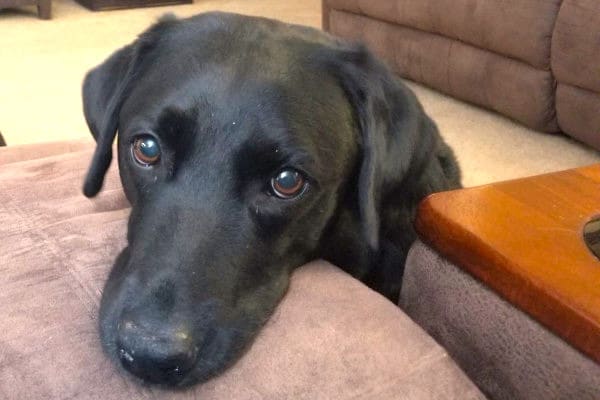
Lulu was a special little lady, a 10-year-old black Labrador Retriever. She was what I would call my “heart dog” — a dog with whom your connection is so special and strong that it forever leaves an imprint on your heart.
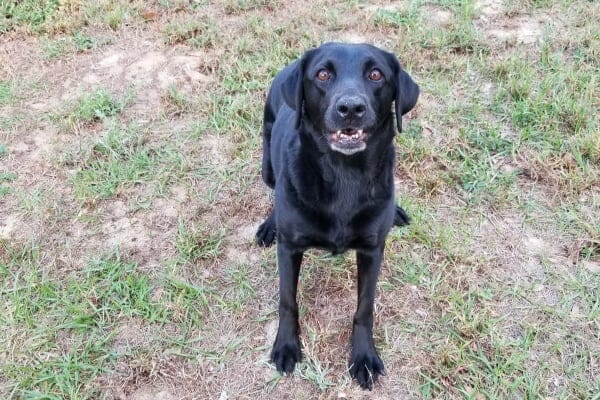
I adopted Lulu when she was only a year old. I had never owned a Labrador Retriever before, and I was so nervous. “They’re way too active,” I thought to myself. “I don’t think I can keep up with one!”
After adopting her, I realized I was completely wrong. I am 100% a Lab person. In fact, I don’t think I could go through life without one.
Lulu was always game for any activity, whether a walk to the dog park, a game of fetch, or a trip to the kitchen for a snack. She slept at the foot of my bed every night, was always in a good mood, and was by far the most well-behaved of all my dogs.
Although she was a healthy and lively girl, I knew from vet school that hemangiosarcomas were common in Labrador Retrievers. In fact, there were days when I would come across information about hemangiosarcoma in dogs and immediately think of Lulu.
Wishfully, I’d look right into her eyes and say, “Don’t you dare even think about getting one of those!”
My heart dog’s hemangiosarcoma diagnosis
On the evening of September 4, 2019, Lulu was eating her dinner just like she did every night. Suddenly, she stopped halfway through her meal. Any Labrador Retriever owner will tell you this is highly unusual behavior!
She seemed to be okay as I patted her head and checked her for any obvious problems. She even gladly accepted one of her favorite treats. Unsure what was going on, I made a mental note to watch her closely for the next several days. Clarity would come way sooner than I expected.
The next morning, she didn’t want to eat anything. She was lethargic, sluggish, and tired. I had a sinking feeling that something serious was going on.

Since hemangiosarcoma in dogs causes blood loss and, therefore, pale gums, I moved toward Lulu to check her gums. My heart dropped. Her gums were pale. I loaded my beloved dog into the car and took her to work with me that day, readying myself for whatever news the day would hold.
Little did I know, surgery to remove a bleeding hemangiosarcoma in her spleen was in the very near future.
What are hemangiosarcomas in dogs?
Hemangiosarcomas are malignant tumors originating in the blood vessels of a dog’s liver, heart, and spleen. Scientists don’t know what causes these tumors to form. But they do know that certain dog breeds, including the Golden Retriever, German Shepherd, and Labrador Retriever, have a genetic predisposition to them.
Sadly, hemangiosarcomas are highly invasive. And the primary tumor can quickly spread to other parts of the body. Hemangiosarcomas on the skin are also possible, but they have a significantly lower chance of moving elsewhere in the body (metastasizing) and rupturing.
What are the symptoms of a hemangiosarcoma in dogs?
A dog’s symptoms will depend on the affected organ and whether tumor cells have expanded to other parts of the body.
Symptoms of hemangiosarcoma of the heart
Hemangiosarcomas of the heart tend to cause symptoms related to right-sided congestive heart failure in dogs and/or tumor rupture. Some potential clinical signs of a cardiac hemangiosarcoma include:
- Weakness or collapse—If the tumor ruptures or prevents blood from effectively circulating, the dog may seem weak or collapse and be unable to get up again.
- Exercise intolerance—When walking or playing, your dog may seem to get tired faster than normal.
- Coughing or difficulty breathing—You may hear your dog coughing or notice your dog breathing fast or breathing hard.
- Enlarged abdomen—Fluid build-up in the abdomen (ascites) from right-sided heart failure may give your dog a pot-bellied dog appearance.
- Lethargy—A lethargic dog may be lying around or sleeping more than normal or not be interested in daily activities.
- Sudden death—A ruptured cardiac hemangiosarcoma can cause your dog to unexpectedly die.
Symptoms of a hemangiosarcoma in the liver or spleen
Hemangiosarcomas in the liver or spleen also have the potential to spontaneously rupture and bleed. Before that, the dog may be asymptomatic or only have mild non-specific signs. Possible symptoms of a liver or spleen hemangiosarcoma include:
- Lack of appetite—Your dog may not want to eat anything, have a poor appetite, or only want to eat treats.
- Excessive panting—Even in a cool environment and without any exercise or excitement, your dog might be panting more than usual.
- Appearing weak—Dogs with a ruptured hemangiosarcoma may walk a short distance, then lie down or have trembling legs that look like they are going to give out.
- Collapse—With significant blood loss, the dog may be unable to stand.
- Pale gums—If you lift your dog’s lip, his or her gums might be a pale pink to white color rather than a nice bubble gum pink.
- Abdominal distension—A large tumor or a significant amount of blood filling the abdomen may make your dog’s belly look bigger than normal.
- Weight loss—Your dog’s body condition score (BCS) might drop even though you haven’t changed his or her food or exercise level.
- Lower activity level—Dogs with hemangiosarcoma may seem to be moving slowly or getting tired more quickly than normal.
- Death—Sadly, tumor rupture and subsequent bleeding into the abdomen from a liver or splenic hemangiosarcoma can lead to death.
Keep in mind, these are not hard and fast divisions. There can be some crossover of symptoms from one type of tumor to another, especially if the tumor ruptures. Plus, some of these symptoms can accompany other conditions.
How do you diagnose hemangiosarcoma in dogs?
Diagnosing hemangiosarcoma in dogs begins with a thorough physical exam by your veterinarian. If a tumor of the liver or spleen is large enough, your veterinarian may be able to feel it while palpating your dog’s abdomen. Your vet may suspect a cardiac tumor by listening to the heartbeat through the chest cavity.
An ultrasound of the heart or abdomen is one of the best ways to confirm these kinds of tumors. But because hemangiosarcomas appear quickly, routine screenings for detection in the early stages are often cost-prohibitive. Other diagnostic tests may hint at the condition, but by themselves are inconclusive.
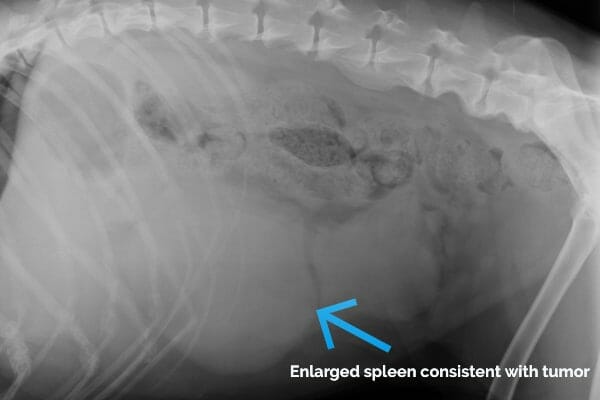
For example, blood tests for dogs may indicate mild to severe anemia in dogs (low red blood cell count). And X-rays might show an abnormal heart, enlarged liver, or enlarged spleen. However, that doesn’t automatically equal a cancer diagnosis. Additionally, some tumors are too small to recognize and go undetected until a dog presents with life-threatening symptoms.
How do you treat hemangiosarcoma in dogs?
Dogs diagnosed with a tumor that is suspected to be a hemangiosarcoma have several treatment options. Your vet will be able to explain each option and provide realistic expectations to help you decide what is best for your dog.
1. Surgery
After a tumor is found, your vet may suggest surgical removal, preferably before the hemangiosarcoma ruptures. If the tumor is in the spleen, your vet will remove the entire spleen (perform a splenectomy in dogs) and submit it to a laboratory to reach a final diagnosis.
It is important to send the tumor to the laboratory because not all tumors are cancerous. Hemangiosarcoma in a dog is a malignant (cancerous) tumor. But there’s always the chance the dog’s enlarged spleen is due to a benign tumor or process, which are “good” diagnoses.
It’s important to note that tumors on the liver and the heart are more difficult to remove surgically. So are hemangiosarcoma tumors that have spread to other body parts like the lungs, kidneys, brain, and spinal cord.
2. Chemotherapy
Chemotherapy is recommended in cases where the tumor cannot be treated with surgery. Dogs with severe anemia will need blood transfusion(s), and all hemangiosarcoma patients need to avoid blood-thinning medications. Long-term, twice-daily use of a unique herbal supplement known as Yunnan Baiyao for dogs may help prevent further bleeding.
What is the prognosis for dogs with hemangiosarcoma?
When determining the outcome for cancer in dogs, veterinarians look at the median survival time (MST). According to the National Cancer Institute, MST is the “length of time from either the date of diagnosis or the start of treatment for a disease, such as cancer, that half of the patients in a group of patients diagnosed with the disease are still alive.” In other words, MST represents how long patients (or our beloved dogs) survive with a disease after a certain treatment.
I’m sad to share that dogs with hemangiosarcoma who undergo both surgery and chemotherapy have a MST of six to nine months, while those who undergo surgery alone have a MST of two months. Overall, only 29% of dogs diagnosed with hemangiosarcoma survive one year. How long a particular dog survives also depends in part on whether the tumor had already metastasized (spread) at the time of diagnosis.
Loving—and losing—my beloved dog
After running a few tests on Lulu that September day, I discovered she was actively bleeding in her abdominal cavity, increasing the odds of a hemangiosarcoma. Because she was severely anemic, surgery was extremely risky. Humane canine euthanasia would have been a loving and logical choice, but I chose surgery to give my heart dog one last fighting chance.
A wonderful colleague started a blood transfusion for Lulu and performed her surgery. She found a large tumor on the spleen, the source of the bleeding. At the time, we didn’t know if it was a hemangiosarcoma, but because there were also abnormal lesions on the liver, it was likely that the tumor was malignant, and the cancer had already spread. We submitted her spleen to the pathology lab for testing. A week later, the lab results confirmed her hemangiosarcoma.
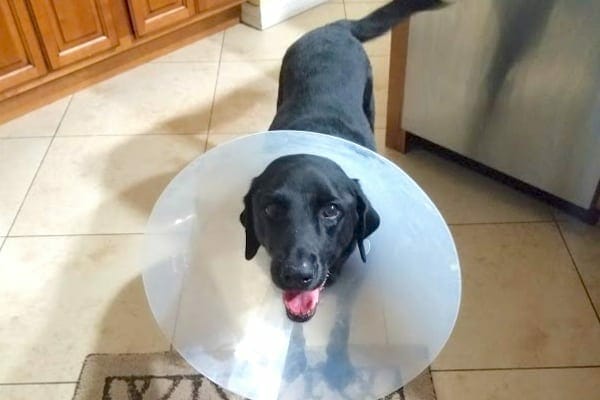
Post-surgery, I chose to forego chemotherapy and focus on Lulu’s quality of life. Just like before, I gave her plenty of tasty treats, loads of attention, and gentle games of fetch with her almost every night.
Three weeks after surgery, over the course of several days, she grew increasingly tired, lethargic, and uninterested in her food. My family and I knew it was time. We decided to say goodbye to our beloved dog.
Parting thoughts on hemangiosarcoma in dogs
Hemangiosarcoma tumors are among the worst types of cancer in dogs. They are difficult to detect on wellness exams and may only become obvious when your dog is in an emergency situation. Hemangiosarcomas usually have a guarded to poor prognosis because they spread quickly or abruptly rupture without any trauma, and the average survival time is low.
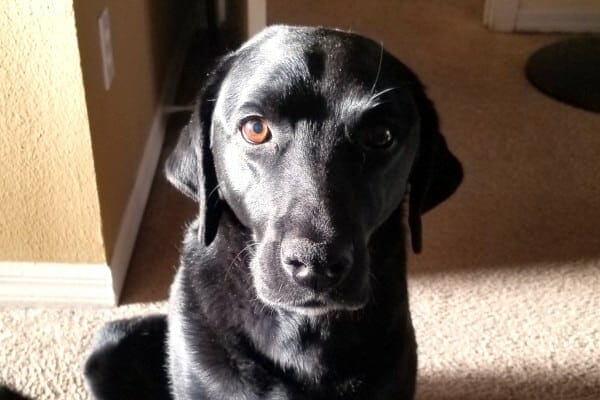
By sharing Lulu’s story, I hope you are now better equipped to recognize the signs and seek immediate medical treatment if you find yourself in a similar situation with your beloved canine companion.
While I do miss her dearly, I was happy Lulu could pass peacefully while my family said their goodbyes. She’s left nothing behind but treasured memories and tremendous love for all things Labrador.
Additional resources for facing the loss of your dog
If you’re making the difficult decision to say goodbye to your beloved dog, you may find comfort and answers in these resources:
- The companion article to this one that I also wrote: When To Euthanize A Dog With Hemangiosarcoma: A Vet’s Guidance
- Dr. Buzby’s complimentary ebook: Saying Goodbye to Your Dog: Counsel, Care & Comfort for the Journey
- Preparing for your Dog’s Euthanasia: 10 Thoughts for Peace
- Grieving the Loss of a Dog After Euthanasia
- Pet Loss Support: Groups & Resources for Comfort
- Helping a Child Through the Loss of a Pet
- In-Home Dog Euthanasia: Heartfelt Answers to 12 FAQs
- Dog Memorial Ideas: 10 Ways to Honor Your Dog’s Legacy
Has a diagnosis of canine hemangiosarcoma touched your life?
Share your experience below. Our community is here to offer you comfort and support during this difficult time.
This post was originally published on February 8, 2021. It has been updated to include more information on the signs of hemangiosarcoma in dogs.


My dog was diagnosed last Tuesday with heart based hermangiosarcoma. It happened sereptitiously as her vet listened to her heart before doing a dental exam and heard a murmur. After X-ray ultrasound and blood tests we got this sad news. Our dog is 12 years old and although has been slowing down with age, is doing completely well. Playing a bit. Eating ok. So I don’t know what time line we are on. Since we found this out almost by accident when would the ‘start date’ of prognosis be? It is confusing to me she has a terminal cancer. She is acting no different than she has for months.
Hi Sheila,
I am so sorry your girl has received such a devastating diagnosis. I am glad your vet was able to detect the murmur and have the necessary testing done to get these answers before attempting anesthesia. Unfortunately, your “start date” is the day of diagnosis. The disease has already progressed to the point your vet could hear audible changes in the function of your girl’s heart. With cancerous process such as hemangiosarcoma, it is common for dogs to remain fairly “normal” and stable for a while and then have a sudden decline in health. There may not be much warning leading up to a critical/crisis situation. My best advice is to make the most of the time you have together. It is also a good idea to prepare and make decisions about what you want her end-of-life process to look like before you are in an emergency situation. The more decisions you can make ahead of time and services you can have lined up ready to go, will make a difficult and emotional time less stressful for everyone involved. Here is a link to another article with more information: When To Euthanize A Dog With Hemangiosarcoma: A Vet’s Guidance
Praying for your strength and comfort. Give your sweet girl a hug for me. ♥
My Teddy dog, a mix of husky, am staff, & rott, but looks like a black lab, had a large hemangiosarcoma tumor removed Oct 14. It was near his backbone & stomach. They took muscle, (left lumbar/flank). Today he received his 1st Torigen Autologous Cancer vaccine. Is It is bad/wrong to play fetch? Will it make any cancer still in Ted bleed? He is acting his very very active self at 7 yrs.
Hi Angie,
I understand your concern for your dog’s wellbeing since starting his first dose of cancer treatment. These are great questions, but unfortunately since I haven’t examined your dog myself, I can’t make specific recommendations. I wouldn’t think there would be a bleeding risk just because of the vaccine but can’t say for sure. Your best option is to call your vet and discuss these issues and see what they think is best for your boy. Hoping all goes well and he has many happy days ahead.
Hi!
Thank you for sharing your story and please accept my sincere condolences.
My story is almost exactly the same as yours, it’s uncanny.
My 11.5 year old soul puppy, Lola, my literal best friend had a episode Saturday June 19th, she was acting unlike herself and seemed in pain when I touched her side very gently. We were ready to take her to the ER but she perked up and went for a walk when we brought out her harness to leave. No more wincing happened after that walk and she was acting fine so we didn’t go to the ER. A week later she woke up early Friday morning and was lethargic and sad, walking very slowly. I contacted our mobile Vet and she came out that day and examined her. She checked her gums and they were pale. She then x-rayed Lola and found the mass in her spleen. We immediately took her to the ER, our vet called in to them and they were waiting for her. She had a splenectomy and they also removed 1/2 of her liver on June 26th. She came home and recovered that Sunday. I got that dreaded call on Tuesday July 5th that it was indeed hemangiosarcoma. I also opted not to give her chemotherapy. We just loved her up, spoiled her rotten which was normal anyhow. She went on small walks twice a day. I knew what to look for when it was her time. She was ok until she wasn’t. She woke me up at 4am on Saturday July 30th and I knew this was almost her time. She wouldn’t eat, she looked sad and walked very slowly. I was panicked to find an at home euthanasia vet and couldn’t find one until Sunday at noon. Well we snuggled and I brought her water every few hours so she could drink and her human brothers and Dad all loved on her too. She made it until Sunday and was more alert but not her normal self, obviously. We were all with her and she was so incredibly beautiful and peaceful when we helped her to the rainbow bridge on her favorite pillow and favorite couch. My heart was never so shattered with another pup before. She will forever be my heart dog. Thank you for letting me share.
Dear Nikki,
I am so sorry for your loss of Lola. You went above and beyond for her, and I have no doubt she knew how much she was loved. I am glad you were able to be with her until her last breath. Thank you for being willing to share your experience as it may be helpful to other readers in a similar situation. I hope Lola’s memory will stay with you as you continue life’s journey. Blessings to you and your family.
My 7 year old Weismaner was just diagnosed after having his spleen removed and 2 masses removed from his omentum. He’s ok right now and I’m still in shock from the results. Starting to plan his journey from here. Are there any herbal or holistic medicines that help?
Hi Lisa,
I am sorry your dog has received this difficult diagnosis, but glad the surgery was successful. I am sure there are herbal supplements and alternative therapies that could help your boy. Since I haven’t examined him myself, I can’t make specific recommendations. Your best bet is to find a holistic vet in your area and schedule a visit. Telemedicine may be an option if you can’t find one locally. Wishing your guy a full recovery and many happy days ahead.
Dr. Buzby, I’m so glad I found this post. My dog was recently diagnosed with Cushings Disease and when they did the ultrasound they found a small nodule on her spleen. My vet has recommended having her spleen removed. She’s about 11 years old and I’m not sure what to do. Everything I have read does not seem to have a good prognosis, so I’m not sure I should have the surgery done and put her through the stress and pain. My goal at this point is to give her the best quality of life for whatever amount of time I have left with her. Her surgery is scheduled for next week and I will certainly move forward with the surgery, if that’s what’s best for her. Any thoughts or recommendations would be greatly appreciated.
Hi Donna,
I am glad your vet found the splenic nodule early before it caused any issues. I know you must be worried about prognosis and how this surgery will affect your senior girl. If your dog is fairly healthy, then I vote to have the spleen removed now. The mass could be benign, and removal would be curative. Here is a link to another article with more information: Splenic Masses in Dogs: Types, Diagnosis, Treatment, and Prognosis
I understand your concerns and even routine surgeries can have unexpected complications. I hope you can find the answers you need to make the best decision for you and your pup and find comfort in your choice. Feel free to leave an update if you have a chance. Wishing you both the best.
Thank you Dr. Buzby, for sharing your photos and story of Lulu. She was the picture of my lab Flori who has just returned from the vet. We don’t know her diagnosis yet, but I have a sinking feeling. I lost my lab mix boy at age 12 to metastatic hemangiosarcoma of the spleen. I caught it before it ruptured only because his hind legs were swollen and purple. I had a CT scan done following surgery and it was throughout his body. He was in extreme pain. I put him on morphine and took him home 123 miles from the hospital that provided the scan and gave him all the love and affection I could in the ensuing 24 hours until his kind veterinarian came to the house and euthanized him. Flori was there with him. I prayed the same would not happen to her but it seems that as vigilant as I have been and knew the signs of lethargy, I couldn’t stop this demon. My veterinarian has a feeling it’s involved the heart. She currently has ascites and the vet says she saw a cloudy mass near the heart. Tomorrow she will do an ultrasound on her abdominal area. She sent X-rays to cardiology for a reading.
I want to thank you and those who have commented above as I know what to expect if the heart is involved. I understand it could burst and it breaks my heart. Flori is only 10 and such an amazing hiker and loving creature that every person she meets gets a personal greeting. She pulled me through Covid and the loss of her brother. As soon as I receive the diagnosis I will opt for euthanasia. I can’t bear to see her suffer one day and certainly not a month like her brother post op. I won’t subject her to a surgery. Your emails have convinced me. My heart breaks for all of you. Thank you.
Dear Angela,
I am so sorry you are facing this diagnosis again in one of your beloved pups. It sounds like you are doing everything you can to make an informed decision and choose what is truly best for Flori. My heart goes out to you during this difficult and emotional time. I have no doubt your sweet girl knows how much she is loved and hope you can make her transition smooth and peaceful should it come to that. Feel free to leave an update if you have a chance. Bless you both. ♥
Dr. Buzby, I am grateful for your response. I received the news today from the cardiologist confirming cardiac hemangiosarcoma. She is eating well, sleeping well and though her breathing is fast it isn’t labored. She doesn’t cough and her gums are a healthy pink. She has fluid in her belly which has dropped a bit with lasix. How will I know when to end her life when the only problem is exercise intolerance? I don’t want to wait until the tumor bursts or she is in full blown heart failure. Can that happen when she’s bright and eating and curious? I want to have her euthanized at home so I will need to arrange a date. The weekend is nearly here. I don’t want to put her down too soon. Any information would be helpful. Thank you.
Dear Angela,
My heart goes out to you as you try to make decisions about Flori’s quality of life. Unfortunately, deciding on the right time to say goodbye can be tricky. There is a chance the tumor could rupture, or heart failure could happen quickly with little to no warning. If you want to avoid these possible situations, you may have to go ahead and set a date for the vet to come to your house. I will attach links to other articles with more information and good comments from other readers. Praying for comfort for your heart and strength to face the day. Bless you both.
1. When To Euthanize A Dog With Hemangiosarcoma: A Vet’s Guidance
2. Preparing for Your Dog’s Euthanasia: 10 Thoughts for Peace
3. In-Home Dog Euthanasia: Heartfelt Answers to 12 FAQs
I euthanized my sweet gentle French Bulldog Mac due to suspected hemangiosarcoma on August 30. He is not one of the breeds listed as frequently having this cancer and I had no idea it could strike so suddenly. He seemed a bit lethargic during his last week or so, but as a 13-year old Frenchie, he was not a ball of fire anymore so it was easy to think he was just old and arthritic. And he wasn’t looking bad, just a little tired. No pale gums or collapsing, although he was lying down more than usual. He’d just had a full panel of bloodwork the week before, nothing unusual. A couple days later I noticed his breathing and heartrate were elevated. No panting, just higher respiratory rate. Took him to the vet the next day and they diagnosed pneumonia and sent us home with antibiotics. Three days later, no improvement and I was getting worried. Vet thought maybe congestive heart failure so we scheduled a visit with a cardiologist for the next day. That evening, his breathing became even more rapid and shallow and he just looked scared. He’d lie down but not sleep, eyes wide open and looking back and forth. So I took him to the emergency vet and they diagnosed hemo-abdomen, then upon x-ray and ultrasound found a tumor on his spleen and two in his liver, with “suspected” metastasis to the lung. They told me he was not a candidate for surgery due to the metastasis and recommended euthanasia that night, telling me he probably would have died at home that night had I not brought him it. That he might not survive the surgery and if he did, he would probably only live a few weeks, most of that time recovering from the surgery. To say I was stunned is an understatement. What is so hard is the lack of definitive evidence. “It’s most likely hemangiosarcoma.” “He probably won’t live more than a few weeks even with surgery.” I’m a person that likes proof and I’m racked with doubt over my decision. I know there are no guarantees, but I wonder if he would have pulled through… maybe it was not malignant… and he was tough little guy. I am angry with the veterinary profession for not discussing this tragic cancer with me over the years and recommending x-rays or ultrasound during senior wellness exams. I know the chances of catching it early might be slim, but there must be something that can be done. This was horrific, a nightmare. I miss Mac terribly and feel that I failed him somehow.
Dear Janet,
I am so sorry for your recent loss of Mac. I know you are grieving and struggling with the “what ifs”, but you definitely did not fail him. You took action quickly and had him evaluated by the emergency vet. I think you made the right decision to end his suffering and I would have wanted the same thing for my own pup. I understand you are angry that Mac’s life was cut short, but I don’t think the veterinary profession has earned the blame for this tragic and unpredictable outcome. As you mentioned, hemangiosarcoma is not common in French Bulldogs. That is probably why this topic was never discussed. There are so many different types of cancer and cancerous processes that it would not be possible to go over every possibility with each client. X-rays and ultrasound usually require sedation. No matter how careful we are, sedation always carries a risk. I am not sure it would be in a dog’s best interest to recommend this procedure be performed every year, especially if no symptoms are present. Also, splenic tumors can form very quickly. So, it is likely that even if your pup’s abdomen had been evaluated with ultrasound at a yearly appointment, these tumors could have formed sometime after the visit and then progressed to this stage before his next yearly visit was due. My heart goes out to you as you work through these emotional and difficult days. I hope with time your heart will heal and you will be comforted by the memories of all the good times you shared.
Thank you for sharing, I just lost my beautiful 10 year old Border Collie who was also a rescue dog. Alfie was such a loving dog, he would nuzzle up to strangers for a cuddle and win their hearts. In the days before we lost him he was playing ball, walking, finding sticks and dropping them at our feet. A day later he struggled to getting into our car after a walk on the beach. I kept an eye on him, he was Lethbridge and breathing heavily but when I noticed his gums had suddenly gone pale I phoned our vet for an emergency appointment. They did the ultrasound and took a sample from his abdomen It was so sudden and I’m devastated, but reading your story has given me some comfort knowing that I hadn’t missed an opportunity to save Alfie. Thank you. Andy
Dear Andy,
I am so sorry for your recent loss of Alfie. You noticed the signs of a crisis and acted quickly. I am glad you were able to get some answers and know that this was not your fault and couldn’t have been prevented. What a blessing that Alfie spent his last days playing and enjoying life to the fullest. I hope with time your heart will heal. May Alfie’s memory be with you always.
Thank you for sharing your story… I lost my Bentley in April 2021 to this same cancer. He was a beautiful black standard poodle just a week shy of his 7th birthday when it ruptured.
I could tell for the previous 6 months he was slowing down but thought this crazy big boy was growing up and calming down. That last day he staggered when I was taking him out for a walk so we went back inside. He laid down on the floor and never got back up. His gums were pale. Carried him to the van and to emergency vet where he was diagnosed (he was bleeding out) and had to be euthanized. Due to the pandemic we didn’t even get to say goodbye. Even now my emotions are raw. He was such a good boy. It was all so sudden.
I’m so grateful for the months I had with him while I worked from home with him at my side every minute. He loved that attention.
Dear Valerie,
I am so sorry for your tragic loss of Bentley last year. I know it was hard to lose him so suddenly and my heart breaks for you that you weren’t able to be with him in his last moments. I am sure the veterinary staff was gentle and loving to him. I have no doubt he knew how much he was loved by you. Thank you for being brave enough to share your experience with our readers. I hope your story will help someone else in a similar situation. Praying with time your heart will heal. Bless you.
I know we have talked privately but I am still in shock over this type of canine cancer. I am floored and gutted by the sudden and tragic loss. I consider myself an uber diligent pet parent, and this was by far the worst canine experience of my life. I cherish the life I had with him but so very much will never understand how or why this happened. So scary. Thanks for all you do, Julie.
My heart dog died unexpectedly from this illness on May 16, he was not quite 9 years. He was my true soul dog, a complete comedian and character. He was a rescue and his mix was Great Pyrenees, German Shepherd, Chow, and Sharpei and unknown, 75 1bs and a lap dog. I noticed he was slowing down in March, I thought it was because his leg ached. Then I put it down to the Texas heat as it was unusually hot the last month of his life. The final week I thought he had eaten something bad, or caught giardia but he was still smiling. The last walk he did a short sprint and nearly collapsed- I thought it was dehydration but it was his tumor on his heart bursting. During the night he breathing was bad and I rushed him to the clinic first thing. I told the vet his breathing was bad multiple times but he ignored that. His blood work was normal but it took them a few attempts and two legs to actually take blood. He had an anti nausea shot and fluids. We were sent home. By the evening he was exhausted and had bloody diarrhea, I rushed him back in. They performed xrays. As the blood moon reached its total eclipse I received the news that he had a large tumor on his heart and fluid around it and in his abdomen, prognosis was dire. This was 11 pm. My husband joined me at the clinic and we rushed him to the best animal hospital in Houston. They drew blood from his cavity and told us they could run tests the next day but his prognosis was terrible, he had an aggressive advanced stage cancer. At 4.30 am he was euthanized with his loved ones by his side. I am still in shock, he was my baby, my love, my cuddles, my shadow. I have had many pets but my Monty was the most devastating loss ever, more so than close relatives. It was too sudden and unexpected, cruel and I cannot stop crying. Reading your story lets me know I am not alone…
Dear Anne-Marie,
I am so sorry for your tragic loss of Monty. He sounds like a once in a lifetime dog. You made the most loving decision to allow your own heart to break so he could have peace and rest. I have no doubt he knew how much he was loved. I hope with time your heart will heal and that his memory will be a blessing to you and your husband.