Hemangiosarcoma in dogs, an aggressive cancer of the spleen, liver, or heart that arises from blood vessels, is a heartbreaking diagnosis for any dog parent to face. Integrative veterinarian Dr. Julie Buzby welcomes friend and fellow veterinarian, Dr. Erica Irish, to share her story of loving her senior dog through a canine hemangiosarcoma diagnosis. Along the way, Dr. Irish will teach you about the symptoms, diagnosis, treatment, and prognosis for dogs with hemangiosarcoma.
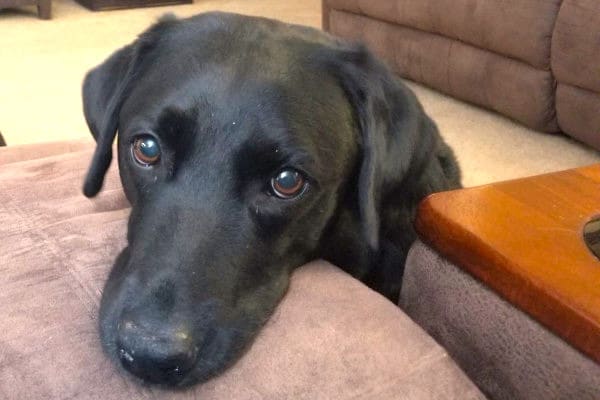
Lulu was a special little lady, a 10-year-old black Labrador Retriever. She was what I would call my “heart dog” — a dog with whom your connection is so special and strong that it forever leaves an imprint on your heart.
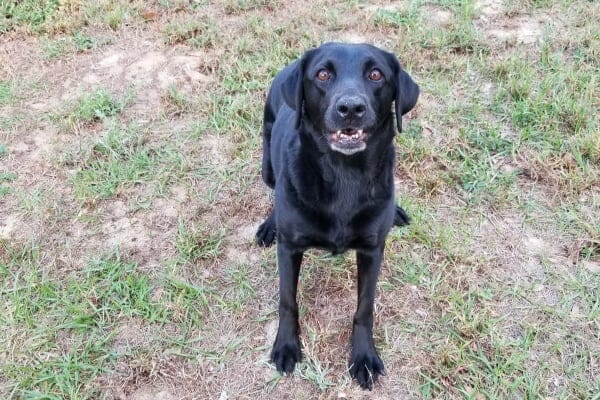
I adopted Lulu when she was only a year old. I had never owned a Labrador Retriever before, and I was so nervous. “They’re way too active,” I thought to myself. “I don’t think I can keep up with one!”
After adopting her, I realized I was completely wrong. I am 100% a Lab person. In fact, I don’t think I could go through life without one.
Lulu was always game for any activity, whether a walk to the dog park, a game of fetch, or a trip to the kitchen for a snack. She slept at the foot of my bed every night, was always in a good mood, and was by far the most well-behaved of all my dogs.
Although she was a healthy and lively girl, I knew from vet school that hemangiosarcomas were common in Labrador Retrievers. In fact, there were days when I would come across information about hemangiosarcoma in dogs and immediately think of Lulu.
Wishfully, I’d look right into her eyes and say, “Don’t you dare even think about getting one of those!”
My heart dog’s hemangiosarcoma diagnosis
On the evening of September 4, 2019, Lulu was eating her dinner just like she did every night. Suddenly, she stopped halfway through her meal. Any Labrador Retriever owner will tell you this is highly unusual behavior!
She seemed to be okay as I patted her head and checked her for any obvious problems. She even gladly accepted one of her favorite treats. Unsure what was going on, I made a mental note to watch her closely for the next several days. Clarity would come way sooner than I expected.
The next morning, she didn’t want to eat anything. She was lethargic, sluggish, and tired. I had a sinking feeling that something serious was going on.

Since hemangiosarcoma in dogs causes blood loss and, therefore, pale gums, I moved toward Lulu to check her gums. My heart dropped. Her gums were pale. I loaded my beloved dog into the car and took her to work with me that day, readying myself for whatever news the day would hold.
Little did I know, surgery to remove a bleeding hemangiosarcoma in her spleen was in the very near future.
What are hemangiosarcomas in dogs?
Hemangiosarcomas are malignant tumors originating in the blood vessels of a dog’s liver, heart, and spleen. Scientists don’t know what causes these tumors to form. But they do know that certain dog breeds, including the Golden Retriever, German Shepherd, and Labrador Retriever, have a genetic predisposition to them.
Sadly, hemangiosarcomas are highly invasive. And the primary tumor can quickly spread to other parts of the body. Hemangiosarcomas on the skin are also possible, but they have a significantly lower chance of moving elsewhere in the body (metastasizing) and rupturing.
What are the symptoms of a hemangiosarcoma in dogs?
A dog’s symptoms will depend on the affected organ and whether tumor cells have expanded to other parts of the body.
Symptoms of hemangiosarcoma of the heart
Hemangiosarcomas of the heart tend to cause symptoms related to right-sided congestive heart failure in dogs and/or tumor rupture. Some potential clinical signs of a cardiac hemangiosarcoma include:
- Weakness or collapse—If the tumor ruptures or prevents blood from effectively circulating, the dog may seem weak or collapse and be unable to get up again.
- Exercise intolerance—When walking or playing, your dog may seem to get tired faster than normal.
- Coughing or difficulty breathing—You may hear your dog coughing or notice your dog breathing fast or breathing hard.
- Enlarged abdomen—Fluid build-up in the abdomen (ascites) from right-sided heart failure may give your dog a pot-bellied dog appearance.
- Lethargy—A lethargic dog may be lying around or sleeping more than normal or not be interested in daily activities.
- Sudden death—A ruptured cardiac hemangiosarcoma can cause your dog to unexpectedly die.
Symptoms of a hemangiosarcoma in the liver or spleen
Hemangiosarcomas in the liver or spleen also have the potential to spontaneously rupture and bleed. Before that, the dog may be asymptomatic or only have mild non-specific signs. Possible symptoms of a liver or spleen hemangiosarcoma include:
- Lack of appetite—Your dog may not want to eat anything, have a poor appetite, or only want to eat treats.
- Excessive panting—Even in a cool environment and without any exercise or excitement, your dog might be panting more than usual.
- Appearing weak—Dogs with a ruptured hemangiosarcoma may walk a short distance, then lie down or have trembling legs that look like they are going to give out.
- Collapse—With significant blood loss, the dog may be unable to stand.
- Pale gums—If you lift your dog’s lip, his or her gums might be a pale pink to white color rather than a nice bubble gum pink.
- Abdominal distension—A large tumor or a significant amount of blood filling the abdomen may make your dog’s belly look bigger than normal.
- Weight loss—Your dog’s body condition score (BCS) might drop even though you haven’t changed his or her food or exercise level.
- Lower activity level—Dogs with hemangiosarcoma may seem to be moving slowly or getting tired more quickly than normal.
- Death—Sadly, tumor rupture and subsequent bleeding into the abdomen from a liver or splenic hemangiosarcoma can lead to death.
Keep in mind, these are not hard and fast divisions. There can be some crossover of symptoms from one type of tumor to another, especially if the tumor ruptures. Plus, some of these symptoms can accompany other conditions.
How do you diagnose hemangiosarcoma in dogs?
Diagnosing hemangiosarcoma in dogs begins with a thorough physical exam by your veterinarian. If a tumor of the liver or spleen is large enough, your veterinarian may be able to feel it while palpating your dog’s abdomen. Your vet may suspect a cardiac tumor by listening to the heartbeat through the chest cavity.
An ultrasound of the heart or abdomen is one of the best ways to confirm these kinds of tumors. But because hemangiosarcomas appear quickly, routine screenings for detection in the early stages are often cost-prohibitive. Other diagnostic tests may hint at the condition, but by themselves are inconclusive.
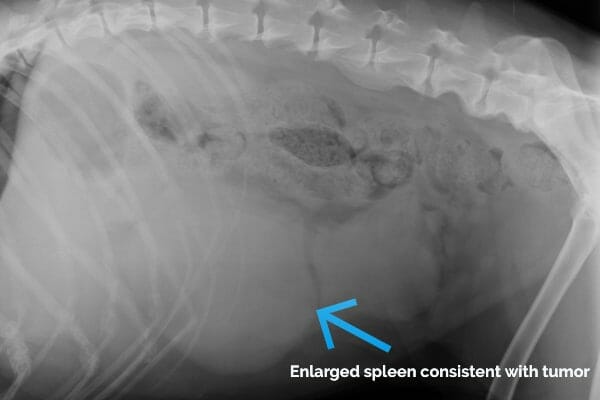
For example, blood tests for dogs may indicate mild to severe anemia in dogs (low red blood cell count). And X-rays might show an abnormal heart, enlarged liver, or enlarged spleen. However, that doesn’t automatically equal a cancer diagnosis. Additionally, some tumors are too small to recognize and go undetected until a dog presents with life-threatening symptoms.
How do you treat hemangiosarcoma in dogs?
Dogs diagnosed with a tumor that is suspected to be a hemangiosarcoma have several treatment options. Your vet will be able to explain each option and provide realistic expectations to help you decide what is best for your dog.
1. Surgery
After a tumor is found, your vet may suggest surgical removal, preferably before the hemangiosarcoma ruptures. If the tumor is in the spleen, your vet will remove the entire spleen (perform a splenectomy in dogs) and submit it to a laboratory to reach a final diagnosis.
It is important to send the tumor to the laboratory because not all tumors are cancerous. Hemangiosarcoma in a dog is a malignant (cancerous) tumor. But there’s always the chance the dog’s enlarged spleen is due to a benign tumor or process, which are “good” diagnoses.
It’s important to note that tumors on the liver and the heart are more difficult to remove surgically. So are hemangiosarcoma tumors that have spread to other body parts like the lungs, kidneys, brain, and spinal cord.
2. Chemotherapy
Chemotherapy is recommended in cases where the tumor cannot be treated with surgery. Dogs with severe anemia will need blood transfusion(s), and all hemangiosarcoma patients need to avoid blood-thinning medications. Long-term, twice-daily use of a unique herbal supplement known as Yunnan Baiyao for dogs may help prevent further bleeding.
What is the prognosis for dogs with hemangiosarcoma?
When determining the outcome for cancer in dogs, veterinarians look at the median survival time (MST). According to the National Cancer Institute, MST is the “length of time from either the date of diagnosis or the start of treatment for a disease, such as cancer, that half of the patients in a group of patients diagnosed with the disease are still alive.” In other words, MST represents how long patients (or our beloved dogs) survive with a disease after a certain treatment.
I’m sad to share that dogs with hemangiosarcoma who undergo both surgery and chemotherapy have a MST of six to nine months, while those who undergo surgery alone have a MST of two months. Overall, only 29% of dogs diagnosed with hemangiosarcoma survive one year. How long a particular dog survives also depends in part on whether the tumor had already metastasized (spread) at the time of diagnosis.
Loving—and losing—my beloved dog
After running a few tests on Lulu that September day, I discovered she was actively bleeding in her abdominal cavity, increasing the odds of a hemangiosarcoma. Because she was severely anemic, surgery was extremely risky. Humane canine euthanasia would have been a loving and logical choice, but I chose surgery to give my heart dog one last fighting chance.
A wonderful colleague started a blood transfusion for Lulu and performed her surgery. She found a large tumor on the spleen, the source of the bleeding. At the time, we didn’t know if it was a hemangiosarcoma, but because there were also abnormal lesions on the liver, it was likely that the tumor was malignant, and the cancer had already spread. We submitted her spleen to the pathology lab for testing. A week later, the lab results confirmed her hemangiosarcoma.
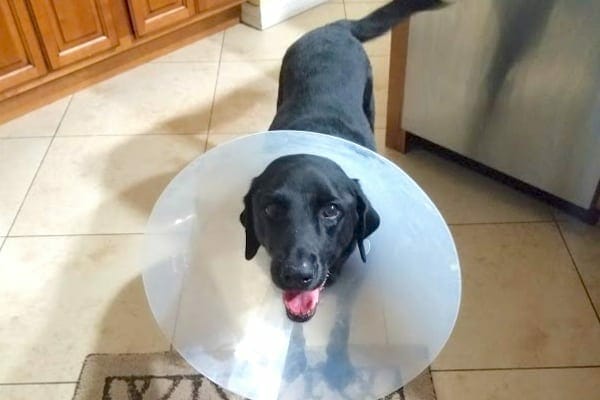
Post-surgery, I chose to forego chemotherapy and focus on Lulu’s quality of life. Just like before, I gave her plenty of tasty treats, loads of attention, and gentle games of fetch with her almost every night.
Three weeks after surgery, over the course of several days, she grew increasingly tired, lethargic, and uninterested in her food. My family and I knew it was time. We decided to say goodbye to our beloved dog.
Parting thoughts on hemangiosarcoma in dogs
Hemangiosarcoma tumors are among the worst types of cancer in dogs. They are difficult to detect on wellness exams and may only become obvious when your dog is in an emergency situation. Hemangiosarcomas usually have a guarded to poor prognosis because they spread quickly or abruptly rupture without any trauma, and the average survival time is low.
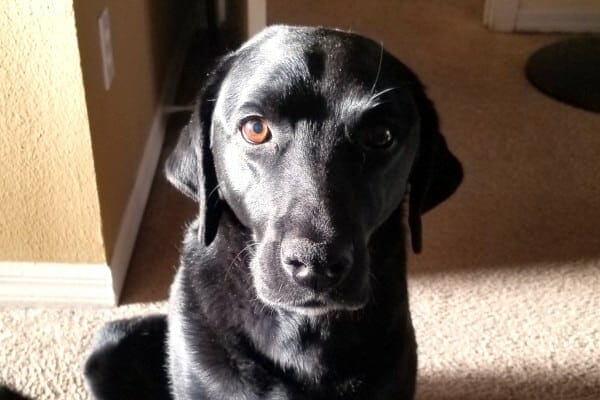
By sharing Lulu’s story, I hope you are now better equipped to recognize the signs and seek immediate medical treatment if you find yourself in a similar situation with your beloved canine companion.
While I do miss her dearly, I was happy Lulu could pass peacefully while my family said their goodbyes. She’s left nothing behind but treasured memories and tremendous love for all things Labrador.
Additional resources for facing the loss of your dog
If you’re making the difficult decision to say goodbye to your beloved dog, you may find comfort and answers in these resources:
- The companion article to this one that I also wrote: When To Euthanize A Dog With Hemangiosarcoma: A Vet’s Guidance
- Dr. Buzby’s complimentary ebook: Saying Goodbye to Your Dog: Counsel, Care & Comfort for the Journey
- Preparing for your Dog’s Euthanasia: 10 Thoughts for Peace
- Grieving the Loss of a Dog After Euthanasia
- Pet Loss Support: Groups & Resources for Comfort
- Helping a Child Through the Loss of a Pet
- In-Home Dog Euthanasia: Heartfelt Answers to 12 FAQs
- Dog Memorial Ideas: 10 Ways to Honor Your Dog’s Legacy
Has a diagnosis of canine hemangiosarcoma touched your life?
Share your experience below. Our community is here to offer you comfort and support during this difficult time.
This post was originally published on February 8, 2021. It has been updated to include more information on the signs of hemangiosarcoma in dogs.


My dog passed of hemangiosarcoma on September 19, 2022. I am still haunted by the fact that our two family vets couldn’t detect it until an autopsy was done. Can someone tell me why? He suffered 10 long days and when I finally decided to give him some peace that Monday morning, he died next to me. I’m so heartbroken even three years later and blame myself for not feeding him something different or taking him sooner so he wouldn’t have suffered so much. It came out of nowhere. He was around 11, but he just basically collapsed on the back porch, wouldn’t eat, and then couldn’t walk anymore. I miss him so much.
Dear Angela,
My heart aches for you with the tragic loss of your beloved pup. I understand your grief and the need to get more answers about what happened. The problem with hemangiosarcoma is that even in advanced stages, blood work can look completely normal. And the mass that ends up causing the fatal bleed doesn’t have to be large. This makes trying to feel any abnormalities when palpating the abdomen on physical exam impossible. Most splenic tumors that are found prior to a bleed are detected due to their very large size or by complete accident with ultrasound while investigating an unrelated issue. Some dogs will have several mild bleeding episodes early in the disease process and the symptoms that emerge can help make the diagnosis. But others will have no symptoms at all until it is too late and there is nothing that can be done for intervention except to say goodbye and offer peace. I hope with time your heart can begin to heal, and the grief will fade. Wishing you brighter days ahead. Bless you. ♥
Condolences on the loss of your fur baby. May I ask what you mean when you say “you wish you would have fed him differently “? May 4 year old lab was just diagnosed with the same cancer. Our hearts are broken, with the decisions we’re now faced with.
I just came across your article when looking for answers for our JoJo who we just had to say goodbye to at the young age of 5. I saw your LuLu and thought I was looking at and reading about JoJo. She was a sweet black lab who stole our hearts. A “pandemic pup” I was very against getting. My young boys were attached from the beginning and yes I came around very quickly and she won my heart. I was worried about hip dysplasia after reading about all the labs having that and felt her “sexy walk” would come to haunt her some day. Little did I know that hemangiosarcoma had other plans for her, hemangio–what?
She vomited once, no big deal it happens, then she refused to eat…say what?! Then I convinced myself she was just getting picky, she ate the chicken breast and rice. Took her to the vet, exam looked great (we were just there a few months ago for her annual and the vet said., “she is in the prime of her life”. ) The neighbor who also has a black lab recommended Farmer’s Dog and she was eating again. She was a bit less active….well she isn’t a pup anymore. She was staying a bit closer, wanted to sleep in our bed. A little less eager to get up with me in the morning, sleeping more, then not eating again…seems like she is breathing harder sometimes even though she is just relaxing. Back to the vet, recommended we get an ultrasound…fluid in the abdomen, slow bleed, lungs filled with metastasis. Our vet was dumbfounded as it is not typically in a dog this young. We brought her home, had a slumber party in the living room with her all of us close and loving her, giving her all the treats we could think of. Next morning we took her to the vet to say goodbye, never knew I could be this attached to a dog. JoJo gave us all a lick as we tried to understand what happened and we said goodbye. Now I know more than I ever knew I would about something that sneaks in and steals your sweet gal despite all the prevention, love, tender care and caution you take to make sure your dog is healthy. My heart is broken and will be for a long time. Thank you for sharing your story and giving me some clarity on something we have been wondering “if we caught it earlier”, “we missed something”, “maybe if only”. I am so sorry to see all the posts here as I know all too well how everyone feels.
Dear Michelle,
My heart aches for you and your family with your recent loss of JoJo. Five years is just not nearly enough time with a beloved pup, but it sounds like they were happy years and full of joy. I am glad you were able to give your girl a peaceful passing and feel certain she was comforted by the presence of her family during those final moments. I hope with time the grief will begin to fade and your heart can start to heal. May JoJo’s memory stay with you always and continue to be a blessing in your lives. ♥
We just adopted a 12 year old beagle whose owner could no longer care for him. Such a well behaved charming little boy! We are totally in love. But we noticed he wasn’t pooping normally, and had that checked while he was getting his ‘dental’ done. He has an anal cancer, small, and likely curable with surgery, but they recommended an abdominal ultrasound and chest xray first. The ultrasound shows a 5x4cm splenic mass with cavitation. They suspect a hemangiosarcoma and recommend splenectomy now and maybe the anal cancer resection later.. In reading about this, though, it seems like splenectomy will not be curative. Most dogs will live only a few months, with or without surgery. But also, it seems like most dogs are diagnosed after having symptoms, whereas ours was an incidental finding. Is his prognosis better because of this? We don’t want him to have the pain and recovery of surgery if he only has a matter of weeks to live. we are struggling with what to do.
Dear Duncan,
My heart aches for you as you face this emotional situation with your senior guy. I am so glad your vet was proactive and thought to do x-rays and ultrasound prior to surgery. If the splenic mass is indeed hemangiosarcoma, then surgery will not be curative no matter if symptoms are present or not. The good thing about catching this cancer before symptoms have developed is it can allow your boy to live a bit longer (especially if the spleen is removed). So, you are correct that the surgery may not provide a different outcome but could offer a few more months of quality time with your boy. Also, there is a small chance that the mass is not hemangiosarcoma at all and could be benign. The surgery is risky either way and it is ok to forgo an invasive procedure and focus on comfort care instead. Here is a link to another article with more information: Splenic Masses in Dogs: Types, Diagnosis, Treatment, and Prognosis
No matter what you choose, try to make the most of the time you are gifted. Wishing you all happiness and joy. Bless you and your sweet pup.
I’m currently feeling shattered as I just lost my sweet Husky girl Ghost very suddenly and unexpectedly on Saturday June 7th. She had been her usual active self all morning as we went for our early walk doing her poop and pees. Then had her breakfast and treats of broccoli and carrots which she absolutely loved. After that she usually lays around in different areas of the house. Then later around noon I usually take her out for a pee before I sit down for lunch and I couldn’t get her to stand up. It took a lot of coaxing for her to finally get up which was concerning right away. I took her out she seemed wobbly but she peed and we went back towards the house again wobbly and she sat down before we could get in the door. There was drops of drool dripping from her mouth also. We got in the house and I immediately grabbed my purse and car keys and headed to the emergency vet. In the car she was laying down and breathing heavily with her head down, she always sits looking out the window normally. We arrived at the emergency vet and I explained her symptoms and they shortly took her back for assessment. Shortly afterwards the vet came and told me she has alot of fluid around her heart quite possibly blood from a ruptured tumor she called it cardial effusion. Also a small amount in her abdomen. Needless to say I was in shock at what she was saying. She said she can only offer 2 options, euthanasia or they can try and remove some of the fluid to remove some pressure from her heart. She said there is always a risk that it may not work. I couldn’t even think straight I was in such shockI was speaking to my son on the phone because he was very close to her too. He was in shock when I told him what was happening and the options. He lived about 45 minutes from me and he was on his way, he didn’t want to immediately put her down if there was a slight chance that it may help even for a short time so we can say a proper goodbye if that’s what has to happen. I told her we want her to try. She left and I was in a waiting room in the meantime. All of a sudden I heard a horrible howl/scream coming from the back and a minute later she came in and had told me her heart stopped. I’m beyond devastated and inconsolable. This all happened in about an hour or so from when I first noticed her symptoms.We didn’t get to say goodbye to her at the end and hearing her cry out like that is tormenting me to think that she was in any kind of pain. She did say they gave her a sedative and barely even began the procedure. I can’t get those last moments out of my head. I’m feeling truly gutted that I probably should have just euthanized her right away. I have not been able to stop crying. I said goodbye to her when they brought her in the room afterwards and begged for her to forgive me and that I loved her more than anything
Dear Angie,
My heart is broken for you and all you went through with Ghost. I am so sorry her passing was not as you had hoped and has left you with negative memories. Please don’t let guilt weigh heavily on you. You did what you thought was best and I am certain the veterinary staff made sure she was as comfortable as possible. I hope with time the grief will fade, and your heart can begin to heal. May the memories of all the good times you shared be with you always. Bless you. ♥
Grieving the Loss of a Dog After Euthanasia (& Finding Peace)
Pet Loss Support: Groups & Resources for Comfort
Our family dog is a 12-year-old lab. He was involved in a pretty bad neglect case and as a result of that has had several health issues throughout his life. He never saw sunlight, so his eyes didn’t develop correctly, he was kept in small cages, so his hips have always been in bad shape. Despite all of this, he has been so great and loving since we rescued him and his brother 8 years ago. A few months back we thought we were losing him. We were told he was in end stage liver failure and that we needed to put him down. Somehow, he turned a corner, and his liver values started getting better and within days he was back to his old self. Now he is experiencing similar symptoms again and the vet told us he is in kidney and liver failure. On top of that he has a mass on his backside that we are told could burst at any minute. The vet said he is not a candidate for surgery since his body would not be able to metabolize the anesthesia. He was his normal happy self just a week ago and when this happened a few months ago he got “better.” He is still eating a little and drinking. I know we are just prolonging the inevitable, but him and his brother have changed our lives these last 8 years. And he’s such a happy boy. How are we supposed to know when the right time is to no longer have him in our lives?
Dear Emma,
I am sorry you are facing this difficult situation with your beloved boy. He sounds like a wonderful pup, and it is clear he is dearly loved. I understand how hard it can be to try and evaluate quality of life. I would rather let go one day too early than one day too late and allow unnecessary suffering. Sometimes saying goodbye is the most loving option and only way to offer peace and freedom from struggles. I will attach links to other articles with more information and great advice from other readers as well. Hoping you can find the answers you need to make the best choice for everyone involved. Bless you and your sweet pup. ♥
1. Using a Quality of Life Scale for Dogs
2. When to Euthanize A Dog With Liver Failure: A Vet’s Advice
3. How Will You Know When It’s Time to Euthanize Your Dog? 5 Caring, Heartfelt Messages
4. Preparing for Your Dog’s Euthanasia: 10 Thoughts for Peace
Our 12 year old black & tan male dachshund was always a healthy dog until he wasn’t. Always active and lived for his long walks around the neighborhood. He was a very proud walker and showed it as if he was at a dog show. Suddenly without any warning signs he seemed disoriented and trouble getting his breath. We immediately took him to the emergency veterinary hospital. Upon examining him the vet diagnosed him with having a hemangiosarcoma on his heart. After discussing the options and the prognosis we decided to have the sac drained around his heart. Although it was a risky procedure we were not ready to say goodbye to our best friend ever. Riley would always be ready for a nap whenever he noticed daddy would stretch out on the recliner. He would run over and snuggle in my arms and gazed into my eyes as if saying ‘I love you dad”. After the procedure Riley had a real good week with us and also his partner in crime 11 year old Bentley.
After that week the symptoms came back suddenly and again we rushed back to the vet. We knew what we had to do to relieve his pain and suffering. We held him in our arms while he went over the rainbow bridge. It was the hardest thing I have ever had to do. Even now while writing this the tears fall as the hole in my heart isn’t healed and probably never will be. His little brother is constantly looking for his playmate though-out the house. There isn’t a day that goes by that Riley isn’t thought of. It’s very hard to deal with the loss but we know the happy memories will always remain.
Dear Tom,
My heart aches for you with your loss of Riley. What a blessing you were able to gain an extra week with him where he felt good and was happy. I am certain Riley knew how much you loved him. I hope with time the grief will fade, and your heart can find peace. Praying for healing and comfort for you and Bentley.
My black lab Louie is 12 and a half. He has an ultrasound on Monday. The vet is suspecting a bleeding mass because he has been anemic this past week. I’m starting to accept that he might not have very long with me. I just feel so horrible. I don’t want him to have to go through such pain. We just moved into a new apartment together and things seemed to be alright and then he randomly started to throw up and become lethargic. It’s just so hard to accept and process. He is my soul dog and baby. Reading your blog really helped me get an idea of what the future holds for him. I don’t want to let go but I want to be prepared for that so I can say goodbye properly. Ugh. Thanks for taking the time to read. Please send Louie good energy. I’m about to go pick up some gabapentin for him at the vet. I just need to be with him this weekend and take it very easy.
Dear Kathleen,
I am sorry you are facing this difficult situation with Louie. I am glad the article was informative and helped to prepare you for the tough days ahead. Hoping for favorable results from the ultrasound tomorrow. Praying for comfort and peace for your sweet boy. Bless you both. ♥
My 12 year old male Rottweiler/Pitbull mix was diagnosed with a splenic tumour. I chose to have it removed, it was sent to the lab and confirmed to be hemangiosarcoma. I spoke with an oncologist who gave me a bleak prognosis even with chemotherapy- which I opted not to do.
It has been a year since his surgery and he is doing well, I have noticed some changes mostly loss of appetite and slowing down which is expected as he is now 13!
The last two blood tests have shown infection but we don’t know where? Also low red and high white blood cells.
I was worried about a new tumour growing as that’s what I was told would happen.
X-rays came back and they can’t see any!!
I’m so happy yet concerned, I know this cancer is in the blood but what does that mean? If there is no tumours growing are we good? No one seems to know the answer. The Vet calls him a Miraculous Miracle!
Maybe the early detection and removal of the spleen was key, I did start giving him Turkey Tail mushroom supplements immediately after surgery. I also boosted his diet with pork tenderloin and broccoli/ carrots/ cauliflower.
I’m so proud of him and grateful that so far he has beaten the odds.
Hi Karen,
I am sorry your boy is living with hemangiosarcoma. What a blessing he has gained so much extra quality time since his diagnosis! Unfortunately, just because a tumor wasn’t seen on x-rays doesn’t mean one is not forming somewhere. All tumors start out microscopic and there is no way to know how quickly they will grow. I have heard great things about Turkey Tail Mushroom supplements and think your boy is very lucky to have you taking such good care of him. Thank you for sharing your experience with our readers. Hoping for continued success and many happy days ahead for your sweet boy.
Our dog, Diego, was a healthy, happy Jack Russell mixed with Pug. He was so entertaining His previous buddies, 2 labs – Storm and Bender had passed away at almost 13 years and almost 15 years. Everyone had told me that little dogs live longer so I was surprised when at 12 years Diego started acting differently. I took him to his vet in August 2024. They did bloodwork and everything was in the normal range except his MPV. The vet thought he might just have an infection and gave me antibiotics to give him. I wish I would have done a few more tests at the time because I read where that could mean cancer. Diego seemed to get better and we took him camping, Buffalo Trace in Frankfort, Kentucky, to cabins in Ohio. He went everywhere with us. In December 2024, he seemed mopey and sometimes I would notice he would go to his water bowl and just stand there (like he forgot what he came out for). I took him in 12/31/24 and we received devastating news that she thought Diego had Hemangioscaroma. His bloodwork showed red blood cells low, platelets low and his gums were not pink. We set up surgery; however, the vet’s office did not have blood products so we drove him to another vet’s office immediately on 1/2/25. They planned on removing his spleen; however, when they started the surgery they found his spleen healthy. They told me it was his adrenal glands and they couldn’t do the complicated surgery. They told me I could go to MedVet; however, he would have a 50/50 chance making it through the surgery and live 1-2 months afterward. We had to make a painstaking decision to let him pass on the operating table. I feel so bad because I saw him before we left, Diego stood up, wagged his tail and wanted us to take him home. I thought I was going to see him the next day. I know he isn’t in pain anymore but it doesn’t erase the heartache I feel everyday losing him. Thanks for the other posts on here, especially the other Jack Russell story, because I thought he was the only small dog to have it.
Dear Debbie,
I am so sorry for your loss of Diego. It is clear he was dearly loved, and I am certain he knew how much you cared about him. What a blessing he lived 12 wonderful years by your side. Thank you for being willing to share his story with us. Wishing you healing for your heart and brighter days ahead. ♥
Hi all, I stumbled over this page trying to find information on hemangiosarcoma while I was looking for more information about this tumor and some support for myself.
My dog was diagnosed with hemangiosarcoma last week, it was by chance that we found it, or almost by chance. On Tuesday my mixed breed was very letargic, so I rushed him to the vet. I didn’t really understand what happened at first: at 12 pm he didn’t wag his tale when I came to the bedroom where he usually sleeps while I’m working. At. 2 pm I started to suspect that something’s wrong, but still unsure what it is exactly, I touched his paws and ears, they were cold, but he also was resting by the balcony door, so I blamed it for the cold ears. Also, it’s not really unusual for him to have cold ears. But he didn’t really moved and it continued to bother me. Then at 3.30 he slowly got up, threw up right there where he was standing and then heavily lied down again. I got scared: if it’s just a stomach problem he usually goes to throw up to another room, he never does it in the bedroom. But he refused to get up again, didn’t really react to anything. He’s a big dog and it’s hard for me to carry him, so I managed to get him up, he walked very slowly to the door and to the car constantly trying to turn back home. And in the car he couldn’t even keep his head up. I don’t know how I was sane and driving at that time….
Because he threw up the vet chose to have an ultrasound check first when we arrived. And on the ultrasound we found that it’s cardiac tamponade. He got treated, and now, a week later he feels almost fine, except that he’s slower than usual, and less playful.
But we also found that he has 2 quite large masses: 1 in his spleen, and it looked really scary: like a giant berry about tennis ball size planted in his stomach. And another one, just slightly smaller, in his liver.
I think on day one I didn’t even realize what happened. I told my mom who lives in another country, and to my friends here in Poland who also have dogs. But the words didn’t really registered in my brain, I didn’t feel anything at that time. But the next several days I gradually came to realization.
Whether this tamponade was caused by the metastases in his heart or not is still unknown, just like we still don’t know if the growth in his liver is related to hemangiosarcoma. We did the X-ray, but there are no visible metastases in his lungs and heart, however I was told that it doesn’t mean anything.
So now I’m faced with a choice: to do the surgery and condemn my sweet dog, my dear friend of 10 years to slow and inevitable death. Or to leave it as is and still condemn him to death, though it won’t be slow and it will definitely be painfull.
Ultimately it comes to a choice between living in constant fear that this thing raptures any time, or endless guilt that I may have shorten my dog’s life.
It is really hard to imagine that he’s sick when he looks so fine, now that he recovered from the tamponade.
The vet’s advise is to have the spleen removed and not to wait until it raptures. He said that there are cases when dogs live several years after the surgery. But the most likely outcome is that after the surgery the metastases, if they are not there already, will take over the body within several months.
I’m not looking for an advice here. I think I already gathered all information that is available. We’re also waiting for the blood work results and maybe go to an additional ultrasound check up within the next 2 weeks.
What I’m looking for is some moral support… The choice I have to make is between two most horrible options. And I don’t really know how to deal with it… My friend is dying, I cannot save him, but I don’t want to bring the death closer either…
Dear Anastasia,
My heart goes out to you as you face this impossibly difficult situation with your beloved boy. I am glad you have found the information you needed and pray you can be at peace with the plan moving forward. Feel free to keep us updated on how things go. Wishing you strength and comfort as you navigate this emotional path. Bless you and your sweet boy.
I am going through the same thing here. I have a 14 year old pitt bull is is the best dog I have ever owned. She is so sweet. I took her to the vet and she said she felt something in her pretty big. After bloodwork and xray she said she had a mass on her spleen. her blood work was had platelets very low so. not able to do surgery right now. i am currently going day by day doing comfort. are. she is on gaba and tramadol 2 times a day but can do gaba 3 ton4 times if needed. it is needed. her worst issue at this moment is heavy breathing. I am trying to take it day by day and going to repeat blood work. Next week. This will tell the tell on where she stands if she makes it that long. My heart is breaking also because I have a hard time putting my best companion down when she is eating and drinking and shows me she wants to stay. Her eyes sometimes get very large and the panting s ares me to death. I live alone and have no one else with me. It scares me to death. I don’t want to put her to sleep if she looks and acts normal. I also do not want to mass to rupture but she is not able to do surgery right now. So options are, put to sleep, risk having a vkeed outbid it ruptures or surgery and she dies on the table or after the surgery. best possible out co.e is survives it amd lives an extra 1 to 3 mths.
Dear TR,
I am sorry you are facing this tragic situation with your beloved girl. I understand how hard it is to choose when to say goodbye. It is ok to let go before all joy is lost and the only thing that remains is pain. Hoping your girl will remain stable and you will have the option to offer her a peaceful goodbye. Bless you and your sweet pup. ♥
When To Euthanize A Dog With Hemangiosarcoma: A Vet’s Guidance
I just want to extend my heartfelt sympathy to all those who have been or are going through this. I had to say goodbye to our beloved Monty last week. Monty had been ‘slowing down’ for quite some time, going from an active boy to an old man in too short a time. It doesn’t seem many years ago when he would happily walk 10k or more. He was then diagnosed with arthritis and we (and the vet) put his reduced enthusiasm for exercise (and increased barking and whining) down to pain from arthritis. He was on Metacam, plus later librela, and then also gabapentin. Then in May, he had a vestibular attack. In October, he started drinking like crazy and wetting the bed- he was diagnosed diabetic and went onto insulin. The insulin seemed to be doing the job for a few months, then we got some mega high blood glucose readings whilst doing a curve. Same the next week. And the next day. The vet asked us in to do bloods. She felt around and asked if she could do an ultrasound. Spleen covered in tumours. Our poor boy. Oh how we sobbed. When the vet brought him back after the ultrasound, Monty was practically collapsing from lethargy down the corridor and then he laid down (totally out of character). It felt like he was telling us ‘I’m done mum and dad, I’m really tired, I ache all the time, and now you know I’m not ok, I can let you really see’. We didn’t want to put our 13 year old through the trauma of surgery and potentially a long and v uncomfortable recovery during which he would be in pain, very morose, and hating not being able to potter in the garden aside from for a loo break. We also didn’t want the vet to find tumours elsewhere and euthanise him on the table without having time to give all our focus to him, and be with him at the end. We spent that weekend with him at the very centre- beach, grass, stream, balloons, squeakers, cheese, sausage and joining him on the floor. We took a million photos, videos, paw and nose prints. We gave him our all. I had some time off work, we had a vet come to our house to give him his well deserved peace, and we checked she would sedate first as I couldn’t stand the idea of euthanising without that initial step. We can still feel him with us and I take some comfort in that. The hole in our hearts will never be filled. But I know we did right by him. He will be travelling in our van with us in an ashes infused sun catcher, and he will always be in our hearts. Those of us with this love for our shadows, how lucky are we to have been blessed with such a gorgeous friend <3
Dear Claire,
My heart aches for you with your loss of Monty. But what a beautiful ending to a wonderful life. Thank you for sharing Monty’s story with us as I am certain it will bring comfort to others to know they are not alone. May his memory stay with you forever and continue to be a blessing in your lives. ♥