Knowing the signs of a brain tumor in dogs can be helpful whether you want to be a well-informed dog parent, are worried your dog could have a brain tumor, or are wondering what other symptoms your dog with a brain tumor might exhibit. To help dog parents like you, integrative veterinarian Dr. Julie Buzby discusses 16 signs of a brain tumor in dogs.
As our beloved companions age, they experience a variety of physical and mental changes. So sometimes it can be hard to know how significant a particular symptom might be. You could easily find yourself wondering (or Googling), “Is this change normal for an older dog? Or could it be a sign of a brain tumor?”
Ultimately, you need a vet visit to get a definitive answer. But it can be helpful to know the potential symptoms for brain tumors in dogs, and what other conditions those signs could be pointing to.
What is a brain tumor in dogs?
In short, a brain tumor is a mass in the brain or tissues surrounding the brain that develops due to disordered cell growth. There are many different types of brain tumors in dogs. Some are primary brain tumors, which arise from the brain or meninges (the covering of the brain and spinal cord). Others are secondary brain tumors. These masses occur when cancer in a different part of the body ends up spreading to the brain.
Overall, brain tumors tend to occur in older dogs. While there are numerous types of brain tumors, meningioma is the most common primary brain tumor in dogs. And glial tumors are the second most common.
The diagnosis of brain tumors in dogs, treatment options (like radiation therapy or surgery), and prognosis for a dog with a brain tumor are beyond the scope of this article. But you can get the details in my article: Brain Tumor In Dogs: A Dog Parent’s Guide.
In this article, I want to focus on the signs of a brain tumor in dogs. That way, you can recognize them at home and/or monitor your dog for changes after the diagnosis of a brain tumor.
4 look-alike conditions
Before discussing dog brain tumor symptoms, it is important to understand that some signs of a brain tumor can also occur fairly commonly in four other neurological conditions—vestibular disease, epilepsy, canine cognitive dysfunction, and stroke.
Vestibular disease
Vestibular disease in dogs, or doggy vertigo, occurs when a dog’s vestibular system (which is responsible for helping your dog maintain balance) is not working properly. It is most common in senior dogs and cats and in dogs who have severe ear infections (otitis in dogs).
Epilepsy
Epilepsy in dogs is very similar to epilepsy in humans. This disease consists of recurring seizures that don’t have any distinct cause (versus other seizures that occur due to a brain tumor, infection, or other known cause). Epilepsy can affect dogs of any age, but most dogs with epilepsy experience their first seizure between 1 and 5 years old.
Canine cognitive dysfunction
Canine cognitive dysfunction (aka CCD or doggy dementia) is a disease that occurs primarily in senior dogs. It is estimated that 68% of dogs will have CCD by the time they are 15-16 years old. Dogs with CCD appear to have decreased cognitive function. And the signs of dementia in dogs may mirror those in human Alzheimer’s patients.
Stroke
Strokes in dogs occur when blood flow to the brain is interrupted. Thankfully, strokes in dogs are less common than strokes in humans, but they can occur, especially in senior dogs.
What are the signs of a brain tumor in dogs?
Now that you know which diseases might be confused with a brain tumor in dogs (especially elderly dogs), let’s take a closer look at the symptoms of brain tumors. We will explore each of the following signs of a brain tumor in dogs in more detail below:
- Seizures
- Panting and restlessness
- Balance problems or difficulty walking
- Behavior changes such as aggression, excessive whining, or mentation changes
- Circling
- Head tilt
- Head pressing
- Decreased cognitive function
- Changes in vision (including blindness)
- Abnormal pupil size and/or nystagmus (repetitive flickering or twitching eye movements)
- Changes to the appearance of the face
- Neck, back, or head pain
- Loss of appetite (anorexia)
- Vomiting and diarrhea
- Licking the air or sneezing
- Weakness and lethargy
It is important to note that the exact signs seen in a dog with a brain tumor will depend on the type of cancer present, how far the cancer has progressed, and the location where it has invaded the brain.
Additionally, while I will try to identify some of the symptoms as an early, late, advanced, or end-stage sign of a brain tumor in dogs, this can get a bit murky due to the variation in tumors. Thus, looking at the progression of signs rather than the particular signs can give you a better picture of your dog’s condition.
1. Seizures
Seizures in dogs are one of the most common signs of brain tumors in dogs. However, not every dog who has a brain tumor will have seizures. If they do have seizures, dogs with a brain tumor may have focal seizures (e.g., the dog is fly biting or licking the air). Or they may experience generalized/grand mal seizures (e.g., the dog falls over, starts paddling, etc.) or tremors. Sometimes the dog could have multiple seizures within a 24-hour period of time, which are known as cluster seizures.
Dogs can develop seizures at any stage of a brain tumor. And they may worsen or become more frequent as a tumor grows and progresses.
Any dog that has a seizure should be evaluated by a veterinarian and have diagnostics like blood tests for dogs and possibly X-rays or advanced imaging. This allows the vet to identify the cause of the seizure (e.g., brain tumor, trauma, inflammation, epilepsy, etc.) and create a treatment plan.
2. Panting and restlessness
Restless behavior, like panting and pacing, is common in dogs with brain tumors. This can happen because the dog is in pain or is aware that something is wrong. Or the dog may be panting and restless due to abnormal brain function or altered brain activity.

It is important to note, though, that restlessness and panting are not specific to brain tumors in dogs. This symptom can also be seen in the other four diseases discussed above. Plus, it may occur in many other conditions that are not specific to senior dogs or the brain.
Thus, if your dog is acting restless, you should consult your vet and monitor your dog for any additional clinical signs in the meantime.
3. Balance problems or difficulty walking
Dogs with brain tumors may also develop an unsteady gait (ataxia) and have difficulty walking. This could look like:
- Stumbling when standing up
- Incoordination when trying to lie down
- Staggering (walking with a drunken gait)
- Tripping when walking
- Leaning to one side when walking or sitting
- Crossing the front or back legs when walking
- General incoordination (aka a dog who is wobbly and off balance)
However, dogs with other conditions can also have balance abnormalities. For example, vestibular disease, stroke, epilepsy, or weakness and pain associated with musculoskeletal diseases (e.g., IVDD in dogs, degenerative myelopathy in dogs, etc.) can also cause a dog to appear ataxic.
If your dog is having difficulty walking, it is important to let your veterinarian know. Balance problems are abnormal for any dog. So, your dog needs a veterinary exam to determine the underlying cause and create a treatment plan.
Additionally, if you know your dog has a brain tumor and his or her balance is getting worse, please let your vet know. This could be a sign that the tumor is growing or is invading a new part of the brain.
4. Behavior changes (aggression, excessive whining, decreased mentation)
One of the more specific signs of a brain tumor in dogs is behavioral changes. Because the brain is so important for regulating the chemicals and hormones that control behavior and thought processing, brain tumors can, unfortunately, affect a dog’s behavior.
Behavior changes can look very different depending on the dog, the tumor location, and the tumor size. Some dogs with a brain tumor may never experience behavioral changes. Others may experience them very early on in the disease (sometimes this is even the first symptom dog parents notice).
Also, behavioral changes can come and go. Because of this variation, when dog parents ask me, “How does a dog act with a brain tumor?” it is very difficult for me to give them a straight answer. The type of behavior changes your dog may experience can differ from dog to dog.

Let’s take a look at three common changes in detail.
Aggression
Unfortunately, one of the most common behavioral changes I see in dogs with brain tumors is aggression. Brain cancer can sometimes cause the sweetest, most friendly dog to become aggressive. And the aggression can come and go and take various forms. Different types of aggression could include:
- Resource guarding—starting to protect his or her food, bed, toys, etc.
- Sudden aggression toward or fear of a family member or friend with whom the dog was previously comfortable
- Newly developed aggression toward another dog or other pet in the household
- Appearing more grumpy or growly in general
If you notice any of these changes in your dog, please consult your veterinarian. Aggression is not something that you should ignore because it can progress and become dangerous. Thus, it’s important to work with your vet to determine the cause of the new behavior. It could be a brain tumor vs. a stroke vs. dementia vs pain vs. another condition. And the sooner you know the underlying cause, the sooner you can address it.
Excessive whining
Another behavior change you might notice in a dog with a brain tumor is increased whining. This symptom can also go hand in hand with the restlessness discussed above. Dogs who are experiencing brain changes from a tumor, sundowners in dogs (a component of CCD), epilepsy, or a stroke are all at risk of developing anxious behavior, including increased whining.
Often, excessive whining is most obvious in the evenings or at night. Instead of sleeping, a dog with senior dog anxiety at night might be up pacing and whining or howling. Or dog parents sometimes notice that their dog is suddenly barking at imaginary things on the walls or imaginary noises.
If you see these behaviors, please bring your dog to the vet for an evaluation.
Decreased mentation
Sometimes a dog with a brain tumor may seem to be less aware of his or her surroundings or less responsive to normal stimuli. These changes fall under the category of decreased mentation (mental status). It may seem like your dog’s attitude and personality have changed, and your dog just isn’t himself or herself anymore.
Interestingly, a study of 177 dogs with secondary intracranial neoplasia revealed that mentation changes were the most common clinical sign in dogs with tumors that had spread to the brain from another location.
5. Circling
Dogs with a brain tumor may circle. This may mean they walk in circles rather than a straight line. Or they may not make complete circles but rather walk in a curved line. Either way, usually, dogs will circle more to one side than the other.
If your dog is circling, please let your veterinarian know. Before the vet visit, it can also be helpful to take a video of your dog’s behavior, especially if your dog does not always circle.
Circling is usually related to a brain tumor, vertigo, or a severe ear infection.
6. Head tilt
Dogs with a brain tumor may also have a head tilt (holding the head cocked to one side). And because the dog has a head tilt, he or she may be more likely to walk toward the side of the head tilt rather than in a straight line. Thus, head tilt and circling may go together. And just like circling, a head tilt could be due to a brain tumor, vertigo, seizures, or a severe ear infection.
7. Head pressing
Head pressing is another pretty obvious brain tumor symptom that dogs can develop. When a dog is head pressing, he or she will stand near an object (usually against a wall, couch, or corner) with his or her head pressed against that object.
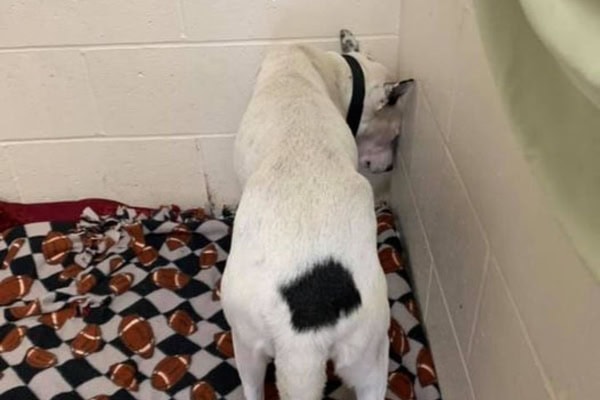
We don’t fully understand why dogs head press. But it is believed that it might give them some pain relief or help them feel secure.
Like many of the other symptoms, head pressing can be associated with epilepsy, stroke, vertigo, canine cognitive dysfunction, head or brain trauma, improper salt levels in the bloodstream, parasites, and more. So, if your dog suddenly develops head pressing or is doing the behavior more often, please let your veterinarian know right away.
8. Decreased cognitive function
In addition to head pressing, another common symptom of brain tumors (or other conditions) is decreased cognitive function. Like many signs, cognitive dysfunction can look different for each dog. And it can change as the disease progresses.
Some potential indicators of decreased cognitive function include:
- Appearing lost in the home where they live
- Forgetting who familiar people or other dogs are
- Not remembering where the food bowl, dog bed, or other familiar items are located
- Forgetting previously known tricks or commands
When dogs start to show these symptoms in their senior years, it is common for dog parents to assume they are a normal part of aging. However, this is not always the case. These changes may point to a brain tumor, epilepsy, stroke, or canine cognitive dysfunction.
9. Changes in vision (including blindness)
Depending on the tumor location, dogs with brain tumors can also develop vision changes or sudden blindness. However, acute blindness could also be due to a stroke, a severe seizure associated with epilepsy, trauma, or sudden acquired retinal degeneration syndrome (SARDS in dogs). And more commonly, gradual vision changes are related to other conditions like glaucoma in dogs, cataracts in dogs, or normal aging and deterioration of the eyes, not a brain tumor.
In any case, it is best to make an appointment with your veterinarian if you feel that your dog’s vision is declining or if your dog suddenly goes blind. That way, you can get to the bottom of the issue and take steps to treat or manage it.
10. Abnormal pupil size and/or nystagmus
Additionally, dogs can develop abnormal pupil size and/or nystagmus (repetitive flickering or twitching eye movements) if the brain tumor is located near a nerve that controls eye function. But one or both of these signs can also occur with ear infections, vertigo, growths in the ear, Horner’s syndrome in dogs, head trauma, or other conditions.
11. Changes to the appearance of the face
Some dogs with brain tumors will develop abnormal bulging around the eyes, nose, or face. This may occur if the dog had a primary tumor in or around the eyes, nose, mouth, or skull, which then spread to the brain. Any sign of facial deformity (especially if sudden) should be evaluated right away by a veterinarian.
12. Neck, back, or head pain
In some situations, dog parents may notice signs of neck, back, or head pain in a dog with a brain tumor. Thus, when clients ask me, “Are brain tumors in dogs painful?”, the answer is “It depends.”
Tumors that are not invading any nearby structures where nerves are present are less likely to be painful. However, if the tumor is pressing on structures in the head (like the eyes), stretching the covering of the brain, invading the pain centers of the brain, or affecting the back or neck, this can be very painful.
Signs of pain in dogs that you might see include:
- No longer wanting to be petted on the head, neck, or back
- Flinching when certain areas are touched
- Whimpering or crying out when making certain movements
- Walking with a hunched back or kink in the neck
If you suspect your dog is in pain, please let your veterinarian know right away. Pain can negatively affect your dog’s quality of life. Thus, it is one of the symptoms you should watch closely for if your dog has a brain tumor. Also, if your dog is painful, please use caution when handling him or her. Severe pain can make dogs more prone to bite or snap if you touch them the wrong way.
13. Loss of appetite (anorexia)
Loss of appetite is another symptom that may occur in dogs with brain tumors. But this symptom can also accompany almost any disease or condition that dogs can develop. For some dogs, even the smallest amount of discomfort can cause changes in appetite.
However, just because loss of appetite is not a very specific sign, this doesn’t mean you should ignore it. Decreased eating is often one of the first symptoms that dog parents notice. And it is also one of the earliest signs that dogs exhibit for many different diseases. If you are concerned about your dog’s appetite, please make an appointment with your vet.
Additionally, if you know your dog has a brain tumor, monitoring his or her appetite after diagnosis is very important. If your dog suddenly has less interest in food (including special treats or snacks) or is not eating at all, this could be an indication that the cancer has progressed to the point where it is impacting your dog’s quality of life. And your vet may need to reassess your dog to determine if the brain tumor has changed, spread to another location, or if there is another unrelated problem.
14. Vomiting and diarrhea
In addition to a decreased interest in food, some dogs may develop vomiting or diarrhea when they have a brain tumor. Vomiting and diarrhea could occur if decreased food intake upsets the normal GI bacterial population. Also, some brain tumor medications and treatments may have side effects that cause gastrointestinal upset. Or it is possible that a metastatic tumor may have spread to the GI tract and caused the vomiting or diarrhea.
However, dogs with vertigo might be vomiting, too. This occurs because the sense of “being lost in space” can make the dog nauseous. Plus, dogs may also vomit or have diarrhea due to a whole host of other conditions.
While vomiting and diarrhea are not very specific symptoms, you should not ignore them—especially if your dog already is not eating (or drinking) regularly, is losing weight, or has other ongoing problems. Please contact your vet if your dog has persistent or recurrent vomiting or diarrhea.
15. Licking the air or sneezing
Some pet parents also ask if excessive licking of the air or sneezing could mean that their dog has a brain tumor vs. dementia vs. another condition. This is a great question because your dog licking the air frequently or excessively sneezing could be associated with various diseases, including:
- Seizures (from epilepsy or a brain tumor)
- Allergies
- Nasal tumors in dogs or dog mouth cancer (both of which could spread to the brain depending on the tumor type)
- Severe dental disease in dogs
- Canine cognitive dysfunction
As you can see, excessive air licking or sneezing could be related to a variety of diseases. If your dog has either of these symptoms, please reach out to your veterinarian to help determine the underlying cause.
16. Weakness and lethargy
Dogs with brain tumors also tend to experience weakness and be a lethargic dog. You may see these symptoms early on in the disease progression, and they may worsen as time goes on. However, just like many of the symptoms above, weakness and tiredness are not specific to brain tumors. They could also be a sign of many other conditions.
If your dog does appear to be tired or weak, it is important to monitor him or her carefully. Does your dog still perk up for food, water, or to go outside? When your dog rests, does he or she gain more energy? Is the tiredness increasing over time? Does your dog have tremors? The answers to those questions can help guide you and your vet.
If you are concerned that your dog may be lethargic or weak and the signs aren’t improving, please consult your veterinarian. And if your dog with a brain tumor appears to be weaker or more tired, please let your vet know right away. It is important to note any changes in symptoms so your vet can monitor or treat your dog accordingly.
Don’t underestimate the role you play in your dog’s health
As you can see from the long list of symptoms you just read about, there are many different signs of a brain tumor in dogs. Some of these signs are more likely to be associated with a brain tumor. But others can just as easily point toward a different senior dog disease. This can complicate matters a bit.
The key is knowing what symptoms to watch for and remembering how important it is to get your dog to the vet if you have concerns about your dog’s symptoms.
Additionally, once your dog has been diagnosed with a brain tumor (or any other disease), it is very important that you monitor your dog carefully for new or worsening symptoms. You know your dog better than anyone else, so you are the most likely to detect these changes quickly. Should you notice any worsening of the symptoms or new signs, please contact your vet promptly.
As the dog parent, your veterinarian and your dog are relying on you to be a voice for your dog. Your input is critical for reaching a diagnosis and creating the best plan possible. Although the overall prognosis for dogs with brain tumors is grim, through proper treatment or palliative care and close monitoring, you can give your dog the best quality of life possible after a brain tumor diagnosis.
What symptoms did your dog with a brain tumor exhibit?
Please comment below.


My 16.9 year miniature mixed dashund Oliver has the majority of these signs. LSU Vet Ctr diagnosed him. Purchased in Christmas 08, he has been a joy and my best friend. As this worsens I have made peace with 11-01-25 as target euthanasia date, his birthday. The seizures, circling, whining, loss of waste control, blindness, etc is difficult. When he stops eating/drinking I will know it’s time.
Dear David,
My heart goes out to you as you face these final days with your beloved Oliver. Praying for comfort and peace. ♥
I know the time has passed. My Ziggy had a tremendous seizure 27 hours ago and has struggled to walk, eat and mostly rest since. He is sleeping quietly now at midnight but I, like you, know what I will have to do. It is heartbreaking and my heart goes out to you. I hope you are doing alright and hope Ziggy will be at peace soon either here or in heaven. God bless all fellow animal lovers out there. ❤️
Dear Melanie,
My heart aches for you as you face this emotional situation with Ziggy. Praying for clarity and strength as you make some tough decisions about his quality of life. Bless you and your sweet boy. ♥
My 13 year old miniature schnauzer has been constant pacing for months and then started circling to the right. He bumps into things and always seems confused and lost. I noticed his pupils are always small. Our vet gave him prednisone but it didn’t make a difference. She said it was possibly a tumor and I should consider his quality of life. I have made the decision to let go and free him from his misery. It is so hard to do.
Dear Mary,
My heart aches for you as you face this emotional decision for your beloved pup. From what you describe, I do think that saying goodbye may be the most loving option and only way to offer freedom from suffering. Praying for your strength and comfort. Bless you and your sweet boy.
Preparing for Your Dog’s Euthanasia: 10 Thoughts for Peace
My 14 year old dog is in the hospital tonight. He had a seizure last night and it was the scariest moments of my life- he is scheduled for an MRI tomorrow and difficult decisions will have to be made. My home is lonely tonight without my boy. Just wanted to reach out because I,m lonely and scared-can’t imagine my life without my Gabriel.
Dear Stephanie,
I am so sorry Gabriel is not doing well and you are in this terrible situation. Hoping the MRI will offer the answers you need to be at peace with the tough choices ahead. Praying for your strength and comfort. Bless you and your sweet boy. ♥
we just had to let our boy ceasar go. he was a boston . he had a large glioma. some of the symptoms we noticed were the limb weakness, he started having trouble seeing things like his treats right near his face. and the pacing and confusion. months before he had started the increased whining. we thought he was bored or hungry. we misread so many of his symptoms until it had gone too far. I’m absolutely gutted that I didn’t catch it sooner. I may have been able to get him treatment sooner. and now I spend my days looking up things I may have done to cause his cancer. I constantly question if the food we gave him caused it or did we walk him near a yard with pesticides. he was only 10. and it seemed to happen so fast at the time. but now I know what the signs were I’m beating myself up for not seeing them sooner. I miss my baby so much
Dear Vicky,
My heart aches for you with your loss of Ceasar. It is normal to ponder all the “what ifs” while grieving but please don’t let guilt weigh heavily on you. There is likely nothing you could have done to prevent the tumor from forming. I am certain he lived a wonderful life by your side and knew how much you loved him. I hope with time your heart can begin to heal, and you can find peace. May Ceasar’s memory stay with you always.
Hi Vicky
I want to reassure you that it was nothing you did that caused his tumor, and even if it had been found earlier it would not have made a difference. Gliomas come from within the brain and are not on the outside brain membrane. A 2mm size Glioma is already 2mm too big.
Bosties are prone to Gliomas. To put it in perspective, of all brain tumors in dogs; 50% are Gliomas. Of all tumors in Bosties; 70% are Gliomas.
My Bostie is 11 and he has just started with the partial seizures. There is nothing to be done that will ultimately save him.
He is my soul. He sleeps with me and steals the pillow, He goes everywhere I go. I don’t know how I will deal with what’s coming. But I do know that this is something that happens with Bosties and that he has had a life well lived. All your little Ceasar wants is for you to be at peace.
Sending love.
Dear Pia,
Thank you for offering sympathy and comfort to others while facing a difficult situation with your own pup. Prayers for peace for you and your sweet boy. Bless you both. ♥
We are going through it she had her first seizure she’s been knuckle walking and walking in circles started. Ywar ago when she would get lost at night and get stuck in corners . Then one leg started giving out just a little . Then two months go by and it’s all one side of the body . Then it would get better with prednisone twice a day until today she has her first seizure and is now on seizure medicine . She’s a bulldog pug mix 12 years 7 months old . We never got the mri because they saw lymph nodes all in her lungs and thought it may be dangerous to sedate for it I still am debating what to do but seems like palliative care which we have been doing for two months : her doctor was shocked she was still alive when I called her a few weeks ago :
Dear Kaitlin,
I am so sorry your senior girl is struggling and understand your concern. I agree with you that palliative care seems like the best option at this point. Try not to dwell on the “what ifs” and make the most of the time you are gifted. Also, it is ok to let go before all joy is lost and the only thing that remains is pain. Ultimately, you have to trust your intuition as you know your girl better than anyone. Praying for clarity and strength as you navigate this emotional path. Bless you both. ♥
Just lost my dog 3 days ago. She collapsed at home and took her to vets right away. She had been treated for neurological symptoms on the Monday but was also walking in circles head pressing, whining and was unsteady on her feet. Was unresponsive at vets, was told she was in a coma and so we felt we had no choice but to let her go. Now having read your article I see that she ticked nearly every one of the signs of a brain tumour so thank you as very painful but I think it was the right thing to do just miss her very much. She was 12 and a half.
Dear Ann,
My heart aches for you with the loss of your beloved pup. I am certain that you made the most loving choice by offering her peace and freedom from her suffering. I hope with time the grief will begin to fade, and your heart can start to heal. May her memory be with you always as you continue life’s journey. ♥
My dog Hailey is 13 years old. For the past two weeks she has had a very bad head tilt. She can’t walk straight and when she does walk she usually falls down. She has lost her appetite. I took her to the vet two weeks ago when I first noticed the head tilt and we thought it might an ear infection. Started with gabepentin then simplicef. Then brought her back and dr thought it was likely a brain tumor based on her eye movements. She was hospitalized for the day – took X-rays and found her liver was enlarged. Put her on prednisone. That helped her with the pain but she was panting a lot and drinking a ton of water.This past week I went to the neurologist and he couldn’t make a diagnosis without an mri. I don’t have the money to get the mri and even if I did the surgery to go along with a brain tumor would be even more expensive. This morning there was blood in her poop. She hasn’t t eaten in a day and a half. I hoped it was IVDD but I’m starting to think she might have a tumor. My best friend for the last 13 years. Terrier – I think mixed with min pin or Manchester terrier.
Dear Mitchell,
My heart goes out to you as you face this difficult situation with your senior girl. I am so sorry that despite all the testing and treatment you are still left with more questions than answers. This may be a good time to consider palliative care for Hailey and focus on quality of life. Don’t be afraid to have the hard conversations with your vet and make your wishes known. Praying for comfort and strength as you navigate this emotional path. Bless you and your sweet girl.
My 7 year old spayed female Cavalier has recently been having these episodes of panic, ear scratching, head shaking and constant running around repeating the head/ear scratching and rubbing in the floor. The only way to stop it is if I can get a melatonin/ginger supplement into her, which is very difficult. She will continue this behavior, if I don’t intervene, for about an hour and then is exhausted, panting and finally falls asleep. This is a new behavior that just started about a week ago and I have alerted my vet and am waiting for a call back for a medication I can easily administer during these recurring episodes. Thank you, PS I do have a video of this behavior, and Shelby was a rescue at the age of 4 from a puppy mill.
Dear Isabella,
I am sorry your pup has been experiencing these worrisome episodes. I understand your concern and think it was very wise to catch this strange behavior on video. Hoping your vet will come up with some good treatment options that offer relief for your girl. Wishing you both the best and feel free to leave an update if you have a chance.
Hi my dog has had some of these symptoms but she’s fallen out of bed several times before they began how do I know the difference I took her to dog neuro they think a brain tumor she’s on prednisone daily 2ml twice a day to start then she was doing great we dropped to 1-1.5 day and now she’s gotten worse again head pressuring circling over and over the knuckling she will stand to drink water can’t back up and fall into the water she hits into walls and furniture hard . She will get stuck in corners . She still eats and goes bathroom outside and knows us . She doesn’t cry . Any idea ? MRI is 5k they’re saying
She’s 12.5 year old bulldog pug . She also years prior to this was getting shots for her allergies she has severe animal food allergies can’t have chicken beef etc she lost so much hair and black body skin severe ear infections etc her labs were normal cbc on steroids her hair is growing back and she’s not itchy anymore .
Hi Kaitlin,
I am sorry your senior dog is struggling with these neurological issues. From what you describe, I agree with the neurologist that this sounds like a brain tumor. Treating with steroids is a form of palliative care. It helps minimize the symptoms but is definitely not a cure. I am not surprised that your girl’s allergies and skin have improved since starting the prednisone. Steroids are powerful anti-inflammatory medications but do come with their own negative side effects. If you are just trying to keep your pup comfortable for as long as possible, I would recommend you discuss with your vet the possibility of increasing the prednisone dosage back to the original 2ml twice a day. They can let you know the risks and help you weigh the benefits. Wishing your girl comfort and peace. Bless you both.
We just got word our almost 13 year old shit Zu mix has a brain tumor. Every single thing you mentioned he does except for aggression. And sadly we have made the decision to let him go. Thursday is the date mind you the beginning of July I had to make that decision on my cat.
Dear Ryan,
My heart aches for you as you prepare to say goodbye to your beloved Shih Tzu. I am sorry for all the loss you have experienced over the past few months and wish I could spare you from further grief. Try to make the most of the time you are gifted and fill each day with love. Praying your sweet boy’s passing will be peaceful. Bless you both. ♥
Preparing for Your Dog’s Euthanasia: 10 Thoughts for Peace
My golden retriever was 13 years, 3 months old. Last july we played fetch on friday night. Saturday morning he began crying in a sound i had never heard him make. He was walking in left handed circles. I took him to the emergency veterinary hospital. They evaluated him and decided to keep him overnight until their neurologist could see him. They did an MRI and discovered he had a large brain tumor that had probably been growing for a while. It started at the brain stem and grew forward under the sinus cavity. It was inoperable. I was told surgery and radiation was not an option. They could offer palliative care.. i brought him home. Within 24 hours he couldnt stand or walk. I called his regular veterinarian who had cared for him since he was 8 weeks old. The next day we said goodbye. I held him in my arms when his heart stopped and he breathed his last breath. It tore my heart out….but I owed it to him to be there and comfort him at the end. I didnt want him to be scared. I wanted him to leave this life knowing how much he was loved
Dear Sheril,
My heart aches for you with the tragic loss of your beloved Golden. I am glad you were able to get a definitive diagnosis and offer your boy a peaceful passing. I am certain he knew how much you loved him and that your presence during those final moments was a comfort. Thank you for being willing to share your story with us. Wishing you peace and healing for your heart. Bless you. ♥