If your vet has recently prescribed amantadine for dogs for your painful pup, you may have some questions about how this medication works, side effects to watch for, and its safety. Integrative veterinarian Dr. Julie Buzby is here to help with an in-depth review of amantadine—a great tool in the “pain management toolbox.”

Managing chronic pain in dogs may require a vet to think beyond the common pain medications such as NSAIDs, tramadol, and gabapentin. Perhaps the patient has an underlying condition that means an NSAID might not be safe or effective. Or in other situations it’s because those popular medications simply aren’t doing the trick anymore. In either case, sometimes the medication amantadine for dogs can be a huge help.
What is amantadine?
Better known by its brand name, Symmetrel®, amantadine hydrochloride is an antiviral medication that can also be used for the treatment of pain in dogs and cats. It antagonizes (i.e. inhibits) N-methyl-D-aspartate (NMDA) receptors in the nervous system. These receptors normally transmit pain signals. By temporarily inactivating the NMDA receptors, amantadine can prevent the pain signals generated in the body from reaching the brain. If the brain never gets the pain signal, it doesn’t perceive the pain.
Amantadine is especially helpful in cases of chronic pain, such as osteoarthritis in dogs. In these cases, repeated stimulation of pain pathways in the spinal cord and brain can cause harmful changes in the nervous system. The end result is that the nervous system becomes hypersensitive to painful stimuli.
This type of chronic pain stimulation can even lead to the nervous system interpreting non-painful stimuli (i.e. cold, light touch, or brushing) as painful. But the great news is that amantadine can help “reset” that sensitivity to more normal levels.
Amantadine for dogs
The FDA has approved the use of amantadine in humans. Like many other medications labeled for humans, veterinarians used it “off-label” in dogs. This is nothing to be concerned about as off-label drug use is a fairly common occurrence in veterinary medicine. However, it is important to note that deciding which human medications are safe for use in dogs is best left to your veterinarian.
Many other human pain relievers are not safe for dogs. This is especially the case for over-the-counter NSAIDs (which is why the answer to “Can I Give My Dog Advil?” is a resounding “No!”). But amantadine passes the safety test.
What is amantadine used for in dogs?
I tend to reach for amantadine in patients whose chronic pain has become worse over time without an obvious cause for the worsening. Often, that increased pain response indicates the dog’s nervous system has undergone changes making it abnormally sensitized to pain. In those situations, amantadine can prevent (and even reverse!) those changes, which improves pain management.
Veterinarians may prescribe amantadine to help decrease chronic pain and the related changes to the nervous system from:
- Arthritis
- Cancer such as osteosarcoma in dogs (bone cancer)
- Neurologic conditions such as disc disease (e.g. IVDD in dogs)
Since arthritis is so common in our beloved senior dogs, let’s take a closer look at how amantadine can help dogs who suffer from chronic pain associated with arthritis.
Amantadine in dogs and arthritis
Managing signs of arthritis in dogs is probably the most common application of amantadine in veterinary medicine. A study in the Journal of Veterinary Internal Medicine compared the effectiveness of a non-steroidal anti-inflammatory drug (NSAID) alone, with the combination of an NSAID and amantadine in dogs with arthritis.
The researchers found that dogs given both medications together engaged in significantly more physical activity. This suggests that the combination of amantadine and an NSAID was better for pain relief than using an NSAID alone.

Can amantadine be combined with other pain medications?
As you may have noticed, the study above looked at amantadine in combination with an NSAID, not by itself. Overall, amantadine doesn’t tend to work well on its own. But it does perform well in combination with other pain medications. For these reasons, vets almost always use amantadine plus another pain medication, rather than only amantadine.
Amantadine and NSAIDs
Amantadine is not known to have significant anti-inflammatory effects. However, arthritis has a large inflammatory component. Therefore, when treating arthritis, vets may choose to use amantadine in conjunction with non-steroidal anti-inflammatory drugs (NSAID) such as carprofen for dogs. The NSAID provides anti-inflammatory effects as well as pain control. And the amantadine boosts the level of pain relief.
However, vets may also choose to combine amantadine with other pain medications.
Amantadine and gabapentin
If you’re wondering “Can I give my dog gabapentin and amantadine together,” the answer is often “yes.” Both gabapentin for dogs and amantadine can potentially decrease the abnormally increased sensitivity of the nervous system that comes with chronic pain. But they do it in slightly different ways. This means combining amantadine and gabapentin may have a synergistic effect. However, it is best to speak with your vet about whether giving your dog gabapentin and amantadine together is the right choice.
Amantadine and tramadol
Additionally, you can give your dog tramadol and amantadine together too. Tramadol for dogs is a synthetic opioid that vets may use for pain control in dogs. The verdict is out on how well it controls pain by itself. But it does seem to work better in combination with other pain medications. This means that tramadol and amantadine can potentially be a useful combination. But again, your vet will decide what is right for your dog.
What is the amantadine dosage for dogs?
Your veterinarian will determine the best dosage of amantadine for your dog’s particular situation. Dogs can take it once or twice daily for treatment of chronic pain. Based on a study in Greyhounds, twice daily dosing is probably more effective than once daily dosing.
Common dosage forms include amantadine 100 mg tablets or capsules, 68.5 mg and 137 mg capsules, 129 mg and 193 mg tablets, and a 10 mg/ml liquid. Having the choice of tablets, capsules, and liquid gives several options for dogs who aren’t always cooperative for taking their medication. (As an aside, check out my article Your Dog Won’t Take Pills? for five helpful tips. Plus, the comments section below the article includes even more ideas.)
How long does it take for amantadine to work?
Amantadine is absorbed from the GI tract and starts to take effect fairly quickly in dogs. In one Greyhound study, peak blood levels occurred about one to four hours after oral administration.
Despite this, veterinarians usually recommend giving the amantadine for two to three weeks before deciding how well it is working. This is especially important if your vet prescribed amantadine for your dog for chronic pain. It can take some time for the nervous system changes (i.e. increased sensitivity to pain) to start responding to treatment.
Prior to starting the amantadine, it may be helpful to take a video of your dog walking or doing whatever actions seem to be painful. Also, you could write down some observations. Or you may want to rate your dog’s pain on a scale of 1 to 10 over several days. This gives you concrete data points to compare to how your dog is moving and acting after the two to three weeks of amantadine.
Sometimes, the improvement is remarkable and you don’t need those observations to notice it. However, having the ability to do a comparison can be a good way to notice more subtle changes in pain control.
Is amantadine safe for dogs?
Besides being a good option in our tool box for pain management, another plus is that amantadine is generally safe for most dogs. At this point, vets should use it with caution in patients with kidney disease in dogs, liver disease in dogs, congestive heart failure, or seizures in dogs. And it should not be used in pregnant or lactating dogs. These recommendations could change, however, once there are more studies characterizing its uses in dogs.
What are the side effects of amantadine in dogs?
While it is generally fairly safe, like most other medications, amantadine does also have some potential side effects for dogs.
Mild side effects of amantadine
When dogs first start taking amantadine, they more commonly experience mild side effects including:
Diarrhea
Some dogs may develop diarrhea in the first few days after starting amantadine. Thankfully, the loose stool is usually short-lived and resolves on its own. However, if you have any concerns, it is best to reach out to your vet.
Flatulence (i.e. increased intestinal gas)
You may notice that your dog has more gas (i.e. flatulence) than normal when he or she first starts taking amantadine. The good news, though, is that this usually improves after a few days.
Vomiting
Along with other signs of GI upset like diarrhea or flatulence, dogs may vomit when first taking amantadine. Often, giving the amantadine with food can solve this problem. But if it doesn’t, please consult your veterinarian.
Increased sleepiness
Your dog may want to lay around or sleep a bit more at first. And he or she may act like a lethargic dog. This increased sleepiness usually goes away in a few days though.
Less common but more concerning side effects of amantadine in dogs
Additionally, dogs may also experience some side effects that tend to be less common but more concerning.
Ataxia
Occasionally, you may notice that your dog is wobbly and off balance, having trouble navigating the stairs, or has an abnormal gait. These are all signs of ataxia. While ataxia can be a side effect of amantadine, it can also signal that the dog’s neurologic condition is worsening. So if you think your dog is ataxic, the best thing to do is give your vet a call.
Agitation or restlessness
While it doesn’t happen often, some dogs who take amantadine may become worked up, aggressive, or more restless than normal. If you notice any agitation, please stop giving the amantadine and contact your vet.
Dry mouth
Due to the anticholinergic effects of amantadine (i.e. blocking the “rest and digest” portion of the nervous system so that the “fight or flight” portion is dominant), some dogs may develop a dry mouth. Therefore, you may notice your dog keeps licking his or her lips or going to drink water more often.
Difficulty urinating
Because it has some action as an anticholinergic, amantadine can also cause urinary retention and difficulty urinating. If you see your dog straining to urinate, please call your vet. While it can be a side effect of the amantadine, difficulty urinating could also signal your dog has a UTI in dogs, bladder stones, or a urinary obstruction. Thus, it is important to get your vet involved.
Increased heart rate
The third potential anticholinergic side effect for amantadine is an increased heart rate. You may notice that your dog’s heart rate is elevated above baseline if your regularly check your dog’s vital signs. Or perhaps you might feel your dog’s heart beating faster than normal when you are snuggling.
Seizures
If your dog is already prone to seizures or is on a medication that lowers the seizure threshold, it is possible that amantadine could precipitate a seizure. That’s why it is so important that your vet knows your dog’s full medical history as well as all other medications and supplements your dog is taking.
Long term side effects of amantadine
At this point, there really isn’t enough data available about canine amantadine use to have a good idea of if dogs may experience adverse effects from using amantadine long-term. But it seems likely that the benefits amantadine can have for controlling chronic pain and improving quality of life would outweigh any potential risks of using it long-term.

Work with your vet
Often, dogs will adjust to the medication within a couple of weeks, and those adverse effects of amantadine will subside. If your veterinarian has prescribed amantadine for your dog, and you’re seeing side effects that concern you, please reach out to him or her. That way your vet knows what is going on and can help guide you on how to proceed.
What are the signs of an amantadine overdose in dogs?
If your dog receives an overdose of amantadine, you may notice signs such as tremors, dilated pupils, disorientation, coma, respiratory distress, heart arrythmias, changes in blood pressure, vomiting, or aggression.
Since amantadine has a relatively narrow therapeutic window (i.e. dose at which it is safe and effective), it is best to reach out to ASPCA Animal Poison Control Center, Pet Poison Helpline, or your veterinarian if your dog receives more than his or her prescribed dose of amantadine or if you have any concerns about a potential overdose. (There is a fee associated with calling the toxicology specialists, but the peace of mind is well worth it in my book.)
Are there any drug interactions with amantadine for dogs?
Overall, amantadine would get an “A” for getting along with other medications. There is a very short list of significant drug interactions with amantadine. And in most cases, the interaction is mild. These drugs that interact with amantadine include:
- Trimethoprim/sulfa—This antibiotic (often prescribed by vets for skin infections and urinary tract infections) can cause higher blood levels of amantadine. When using both medications together, the vet may need to adjust the dose of amantadine accordingly.
- Thiazide diuretics—Heart medications such as hydrochlorothiazide, which vets occasionally may use to treat high blood pressure (i.e. hypertension in dogs) or heart disease in dogs, can also raise blood levels of amantadine.
- Selegiline for dogs (Anipryl®)— This medication, which is sometimes recommended to treat canine cognitive dysfunction in dogs, can cause more stimulation or excitement when used with amantadine.
- Anticholinergic drugs—Antihistamines like Benadryl for dogs and other medications that have anticholinergic effects should be used with caution with amantadine. The combination of drugs could potentially increase the severity of the anticholinergic side effects (dry mouth, difficulty urinating, and increased heart rate).
Other than that, amantadine is not known to have significant drug interactions with other commonly used veterinary medications. This allows vets to feel confident prescribing it for patients they are also treating for other problems.
How Amantadine helped a senior dog
To add even more context to using amantadine for dogs, I wanted to share the story of one of my patients, Ella.
Usually, Ella, a 10-year-old Newfoundland with arthritis in her elbows and knees, loved to go for long walks in the woods with her mom. And for several years, she was still able to do that, thanks to daily gabapentin and an NSAID.
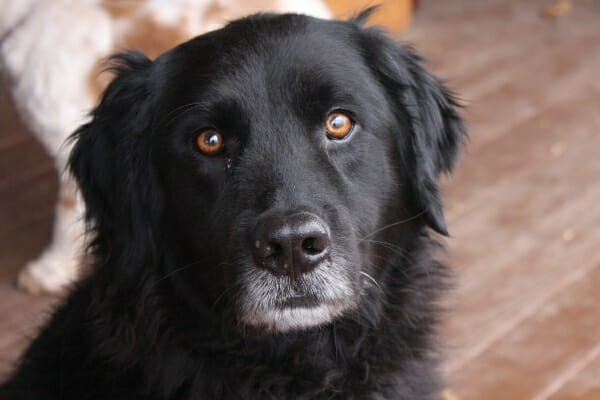
But as time went on, Ella’s mom noticed that her canine companion no longer wanted to go on her once-beloved walks. This was a clear sign to Ella’s mom that her dog’s current medications weren’t relieving the pain. So she brought Ella in to see me.
I performed an orthopedic exam on Ella. And I even repeated her X-rays to see if there were worsening arthritic changes in her joints. But I didn’t find anything that would explain why she was no longer comfortable on her current medications.
This made me suspect Ella’s chronic arthritis pain was causing nervous system changes that made her hypersensitive to pain. So I decided to try adding amantadine to her list of medications.
It took a few weeks to start seeing a difference. But soon enough Ella was jumping out of the car and leading the way down the trail again. She was overjoyed to be back in her favorite place, and her mom was thrilled to see her best friend feeling good again!
Talk to your vet about amantadine for dogs
In the end, even though amantadine may not work as well as it did for Ella for every patient experiencing chronic pain, it can be a great tool in a veterinarian’s toolbox. It has great potential for keeping your furry friend active and enjoying life.
If you have questions about whether amantadine could be helpful for your pup or concerns about your dog who is currently taking amantadine, please don’t hesitate to talk to your vet. Even if your vet doesn’t think amantadine is the right solution for your dog’s situation, chances are he or she will be able to offer some other helpful pain management options.
Together, you and your vet can ensure your dog has the best quality of life possible. For some dogs, amantadine is exactly the solution they need to be able to hit the trail, fetch the ball, go for a swim, or do whatever it is that makes their tail wag.
Has your dog ever taken amantadine?
Please comment to share his or her story.


Hi our dog has been on amantadine along with galliprant and paracetamol for nearly four weeks now. He has improved but isn’t as good as we think he needs to be for a good quality of life. Is there chance the amantadine could kick in some more? Or do you think it’s had its full chance to have its full effect? We want to know if we should hold out for hope or if this is the best he can get?
Dear Miss Donna,
I am sorry your boy is dealing with chronic pain. I would have expected the amantadine to take full effect by now. But of course, there is no way to know for sure if more time would allow for better results. It sounds like you may be facing some difficult decisions about your dog’s quality of life. I understand how difficult it can be to navigate that unknown path. How are things today? Hoping your sweet boy is feeling better and things have improved.
Hi all, sorry posted as a reply by accident earlier.
Reading from england here. This page and these comments are so helpful.
My dog Ami (french for friend) has been prescribed amantadine for his arthritis. He regularly has gut issues if he eats something unusual, in the past he had bloody liquid stools when taking Metacam (dog pain relief). @[ he now has the Librela injection for his arthritis.
I’m really nervous that he will get a really upset stomach with these. has anyone else experienced this? is so, what was the severity? he is still playful when he feels good, enjoys investigation walks and sniffing, but most of all he loves hide and seek!
thanks in advance,
bridey and ami
Hi Bridey,
I am so glad you brought up this topic! I hope other readers will be able to chime in and give you some insight. Librela was just FDA approved in the U.S. this May, so I have no personal experience using it in my patients. From reading the information on the Zoetis website, I would not think GI issues would be a big concern. If you do end up giving Ami this combination of treatments, please let us know what you think. I’d love to get your feedback. Wishing you and your sweet girl nothing but the best. Bless you!
Hi Bridey,
Also reading from UK here.
My boxer dog has been on Amantadine, galliprant and paracetemol for several weeks now and whilst we have seen no improvement of his condition, I can confirm my very senstive stomach’d boy has had no issues with amantadine (he is also not able to take a number of medications such as metacam and previcox for the same reasons as Ami).
Hi Tanya,
Thank you for taking the time to share your experience and offer support to others. Best wishes to you and your sweet boy!
My vet put my 16 year old Jack Russell on 1/2 tablet of 100 mg. He is on Galliprant and Gabapentin as well. Here is my observation and hopefully someone else has this same reaction. My dog can take that little 1/2 tablet and get around it in his food! I have never seen this before. He will eat with his meals, the Galliprant as well as the Gabapentin but will always manage to everything but that 1/2 of a pink pill. When I then try to put it down his throat, he will shake his head like this tablet tastes absolutely horrible and spit it out! This happens every time! It takes me at least 3 times to get it down his throat. I’m not sure this is working enough to put him and I through it. Anyone else’s dog have this problem?
Hi Rebecca,
I am sorry your senior guy doesn’t like the taste of the Amantadine and giving him his medication has become a struggle. Have you thought about hiding the pill in something else he likes such as peanut butter or cheese? Here is a link to an article that addresses this exact issue: Your Dog Won’t Take Pills? 5 Easy Solutions for Uncooperative Pooches
I am certain you will find some great advice in this article and in the comments from other readers. Don’t give up! You’ve got this!
my Shepherd has smelled this med more than his usual prescriptions also. go for stronger smelling hiders- liver worst is great. I buy those prepackaged cheap sandwich meats, roast beef- oh my! the smell will knock you over, but my boy loves it!
I also use liverwurst to mask the pill.
I give my 12 year old guy Gabapentin. Galiprant and Amantadine. I sometimes
just put the 1/2 pill way back and into the side of his mouth and he takes the pills individually fairly well. Other times I can wrap the pills in a bit of deli meat and give him by dropping it into his mouth and he gulps it right down.
He definitely doesn’t like the amantadine taste, I think it’s quite bitter.. He started it as a liquid but changed to the pills and they are way better for him.to take.
Hi Stacy,
Thank you for sharing your experience and offering this great advice. Wishing you and your senior guy all the best. Keep up the good work!
I just slide it down the side of my dogs mouth, no problem
Hide it in a little cream cheese. Works every time. Dogs cannot smell anything but the cream cheese. Works wonders for my old gal who refused anything I put the pill in. Problem solved.
Chewy will compound a liquid form of Amantadine in chicken, marshmallow, or tuna “flavors” that might be easier to administer.
I had this issue as well. I ended up taking a spoonful of soft, sticky, wet canned dogfood (Newman’s Own chicken liver works well for this) rolling it into a small bit sized ball, sticking the pill down into the middle of it so it is completely covered, opening his mouth and then pushing it onto the tongue at the back of his mouth. Because its sticky, he can’t spit is out and because its small and at the back of his mouth, this doesn’t require him to chew and his natural impulse is to swallow it. . . . He actually loves the taste of that dogfood, so he has accepted this method pretty well. He was previously a master of finding it/sensing it in bites of his favorite foods . . . even when I was able to trick him Into taking a bite, he would find a way to spit that pill out.
Get pull pockets
Rebecca, Have you tried a topper for picky eaters ? Stella&chewy magical dinner dust . What’s shaking bac’n recipe. It helps them not to smell the pill. I love it works very well,hope this might help . Debb
My dog does this with any tablets that she can smell. She takes her gabapentin capsules and her galliprant in her food no problem at all. Paracetamol, forget it!
The only way I can get tablets in her (other than her gabapentin and galliprant) is to use grated cheese and totally encase them in it so no part of the tablet is visible, works every time. Wrapping in meat doesn’t work as she knows it’s there!
Hi Victoria,
I am glad the cheese is helping to encourage your pup to take her meds. If you need any other ideas, I recommend you check out the articles linked below. Wishing you all the best for continued success!
1. Your Dog Won’t Take Pills? 5 Easy Solutions for Uncooperative Pooches
2. 11 Best Foods to Hide Dog Pills In: A Vet’s Recommendations
My sweet Chops was run over as a puppy and will forever have hind quarter issues due to that terrible day. he’s 8 now and takes Carpro-plet 150 mg once a day, as well as Dasaquin and fish oil. The day before yesterday, because of obvious distress, I took him to his dr and he prescribed Amantadine 200 mg twice daily. After doing a bit of reading up on it, that seems like an awfully high dose. No? He’s a big boy, 73 lb black lab and on the heavier side at the moment. He usually runs between 65 and 68 but his pain has kept him indoors more this winter vs playing fetch or Frisbee out in the snow. I’ve read that 5 mg per kg is on the high side of a normal dose and that would put him at 165 mg twice a day (I understand it doesn’t just come in any old mg a person might want). Still, will too much hurt my sweet boy? I’ve opted to administer only half for the time being and he does seem to be better, right away. is this the wrong thing to do?
Thank you, you’re wonderful btw. The reading available here has been incredibly informative and helpful!
Becky
Hi Becky,
I am sorry Chops is having so many issues with joint pain! Since I haven’t played a personal role in your dog’s medical care it is hard to know why certain decisions have been made regarding dosages of his pain medications. I will say I looked up the recommended dosage of Amantadine in both drug books I have on hand, and you are correct in what you have researched. I think it would be a good idea to discuss your concerns with your vet. They can let you know why this dose was prescribed and give you some peace of mind about your dog’s treatment regimen. I am glad to hear the half dose has showed some positive results and you are noticing an improvement in Chops’ pain level. As long as it is working and not causing any negative effects, I think you are fine to continue what you are doing. Thank you for the kind words. Keep up the good work!
Our nearly 14 year old yellow lab, Lucy, is on Galliprant and Adequan for her arthritis, and received a PEMF treatment in the fall. She is starting to show new signs of discomfort through the night – getting up abruptly, repositioning, and groaning quite a bit when she lays back down. We actually have Amantadine prescribed and on hand, but I have hesitated because her liver values are not ideal, and she actually has a 4.3 cm tumor in her liver that we are watching. I give her SamE and Milk Thistle to support the liver. I also moisten her food with Dandelion root tea. She went through chemo and radiation 4 years ago for Mast Cell cancer and beat it. But we won’t put her through that again or any more surgeries. She’s been through so much already. At this point, I just want her to be comfortable through the night. As a next step in keeping her comfortable, would you recommend the Amantadine, and must it be given at the same time of day as the NSAID? Because I’m especially concerned about her liver, I’m looking into Meadowsweet and Boswellia as natural alternatives, as well as hiking up her evening intake of CBD. Good sleep is so important. THANK YOU sharing such helpful info with us here!!!
Sorry, it wasn’t PEMF, but rather, shockwave therapy.
Hi Vivian,
I am sorry Lucy is having trouble getting comfortable during the night. I know the article says to be careful when administering Amantadine to dogs with liver problems. This caution is due to the limited information available about Amantadine in dogs. It is generally considered safe, and you are probably ok to give it. There just haven’t been many studies on how this drug affects dogs and their internal organ function. Amantadine works best when paired with an NSAID, but they don’t have to be given at the exact same time of day. I know you have previously mentioned you make a homemade diet for Lucy, and I like the herbal supplements you are using. Here is a link to another article with more natural ways to help with arthritis pain: Natural Pain Relief for Dogs: 13 Methods
Lucy is a very lucky girl to have you advocating for her health and wellbeing. I hope you can find the right combination of therapies to allow her to rest peacefully. Best wishes to you both! ♥
My 9 year old Bernese has plenty of orthopaedic problems; dyplasias, osteoarthritis, spinal stenosi with nerve impingement. Her conditions are non-operable. She was on Metacam for a long time, but one day she just lost all her oomph. She didn’t want to go for walks, and just laid out under a tree all day looking miserable. After a couple days I got her into the vet and they started her on Rymadil, gabapentin and amantadine, and within 24 hours she was back to her happy self! She’s been on it for two years now and we still have really good pain control. We moved recently and our new vet doesn’t know about amatadine, but happily she’s willing to continue prescribing it. We live in a remote area so sadly there aren’t a lot of non-pharmocologic pain control modalities (she’s already on all the supplements). But at least this drug combo has been a miracle for her. Otherwise I wouldn’t have been able to keep her comfortable enough for any quality of life.
Hi Jen,
I am glad you were able to find the right combination of treatments to maintain your senior girl’s quality of life. What a blessing to have gained so much extra time with her. Thank you for sharing your experience with our readers. I am sure this will offer hope to others in a similar situation. Best wishes to you both!
Hi Dr. Buzby,
Thank you so much for having such wonderful blogs for us pet parents to learn from..
My Boy-boy, Romeo was dx about a year ago with bridging Spondylosis Deformans, IVDD (although he has not had an MRI yet)… and general arthritis. He was started on Carprophen, Gabapentin but it was not taking care of all of his pain so my vet just added Amantodine which I started today….out of all of the meds, Romeo gets the most relief from the carprophen so I am hoping the Amantodine will have a potentiating effect and he will get greater relief. His uncontrolled symptoms were fascilations in different limbs and restlessness… when he has gone a day w/o his carprophen he can barely move so that medication is amazing for him… his recent bloodwork did show elevated liver enzymes…but I cannot imagine taking him off the carprophen as he would not have a quality of life.. his vet just prescribed Denamarin for his liver – is there anything else that might help him such as milk thistle? I am planning to add in accupuncture and laser therapy for him and a consult w/ a neurologist although I would be afraid for him to have surgery at his age… thank you for listening… Romeo is my heart.
Hi Mel,
Thank you for the kind words about the articles! I applaud you for taking such an active role in advocating for Romeo’s health and wellbeing. It sounds like you have a good partnership with your vet and are headed in the right direction with what treatments to try next. I hope you will see an improvement in the liver enzymes after starting Denamarin. Denamarin contains milk thistle as one of the main active ingredients so I wouldn’t recommend giving an additional milk thistle supplement. I LOVE that you are considering acupuncture and laser therapy. There are also several other alternative therapies that may be of great benefit for your sweet boy. Here is a link to another article with more information: Natural Pain Relief for Dogs: 13 Methods
I am sure you will find the answers you need to make the best choices for Romeo. Wising you both the best for a long and happy future!
I have just found your site because my “working dog” Sophie was almost crippled by her continual work habits.
She is almost 14 years old..
I started to give her ‘ joint care chew’ by PetLabCo (because I love natural) and noticed a difference in about three weeks. I was about time for the Dr visit. Sophie’s doctor checked her range of motion and first put her on Novox 100 and mentioned to evaluate in about 4 weeks he then put her on Amantadine Hyd 100mg. (which is how I found you.). I have been an advocate for my loved ones for many years. checking out medications, for parents and now an aging pet.
I am hoping to have my happy working pet back in action till the day she goes to doggy heaven.
Hi JoAnn,
I am sorry Sophie is struggling with joint pain. How is she feeling since starting the Novox and Amantadine? I know you mentioned you like natural products. Here is a link to another article that may offer additional information and other ideas to try: Natural Pain Relief for Dogs: 13 Methods
I am hopeful you will find the right combination of therapies to get your sweet girl up and running again. Wishing you and Sophie the best!
Hi Dr. Buzby,
I have a 13 year old golden retriever, Penny with arthritis and hip dysplasia. She is currently on rimadyl 50 mg twice a day, 300 mg gabapentin once a day, fish oil, cosequin and CBD oil. She also gets adequan injections every 14 days. She has been on rimadyl for 4 years. It seems as though her mobility is significantly declining recently with episodes of limping and severe hind end weakness. She usually improves with rest but cannot tolerate much exercise and ends up having another flare up. I worry about her quality of life and when it is the right time to say goodbye. All of her blood work is excellent as of this week and we have recently started acupuncture which I think helps. I’m considering trying hydrotherapy and ESWT. But I’m just now hearing about amantadine. Do you think the addition of this medication could be helpful for Penny at this point in her life and disease progression? Should I ask my vet about it?
Hi Elena,
I am sorry Penny is having so many issues with her arthritis and hip dysplasia. It sounds like you are already doing most everything I usually recommend. You may want to look into PEMF (pulsed electromagnetic field) therapy. They make mats/beds for dogs that include this technology. Here is a link to another article with more information: PEMF Therapy for Dogs: 7 FAQs Answered by a PEMF Expert
I do think Amantadine could be helpful as an addition to Penny’s current medication regimen. And I am always a fan of hydrotherapy and rehabilitation. With all that being said, it sounds like you may be facing some difficult decisions about your sweet girl’s quality of life in the not-so-distant future. Despite our best efforts, sometimes saying goodbye is the only way to truly give a beloved pup relief from their struggles. Without examining your girl, myself, I can’t say for sure how long Penny can keep going with this pain and mobility battle. I will attach links to other articles that offer great advice and comments from other readers. I hope you can find the answers you need to make the best choices for you and your senior pup. Wishing you both happy days ahead.
1. How Long Can a Dog Live with Hip Dysplasia?
2. Medicine for Hip Dysplasia in Dogs: 10 Tips for Treating Hip Dysplasia
3. When to Euthanize a Dog With Arthritis: A Vet’s Heartfelt Advice
4. Using a Quality of Life Scale for Dogs
Our dog Klaus is 15 years old and has OA of the elbow. He doesn’t cope with NSAIDS/corticosteroids at all and is super sensitive to painkillers in general, causing GI issues. We have just started him on amantadine (Sulfate) alone. Currently, he is on 25 mg per day and he weighs actually 21kg. He has been on it for 4 days now and we are wondering if the dosage is too low and if better to combine with gabapentin? There is some indication that his pain is less but not consistently. He is also on CBD and mixtures of herbs with anti-inflammatory properties. Librelia has been suggested for him but our holistic vet is concerned as he is super sensitive and has some indication of liver issues. He is doing physio/hydrotherapy and we also consider acupuncture as a further option
Hi Debra,
I am glad you are taking such an active role in advocating for Klaus’ health and wellbeing. I love that he is getting physical therapy and hydrotherapy in addition to his medications and supplements. In my experience, Amantadine always works better when paired with another pain medication rather than used as a sole treatment. Gabapentin may be a good option and it is worth talking to your vet about this possibility. I think acupuncture could be a great next step. Have you looked into New Zealand Deer Antler Velvet like is found in Encore Mobility? Here is a link to another article with additional information: Deer Antler Velvet: The Science Behind the Supplement
I hope you can find the right combination of things to make your senior boy more comfortable. Wishing you both the best and give Klaus a hug for me!
My Vet mentioned Amantadine to add to my 12 year old dog. He’s on Galliprant and Gabapentin as well as CBD oil. He’s prone to seizures. but we manage them with these medications and some other supplements. He’s got arthritis in his elbows and had knee surgery in both knees when he was 8. The current regimen is no longer enough and he’s limping and restless. I’d like to know if it’s safe to give him Amantadine or will ie cause seizures? We tried Metacam and he got seizure from that. Vet also wants to try Tramadol but I have heard not good things regarding seizures from that drug.
Thanks for your article by the way.
Hi Monika,
I am glad you are taking such an active role in advocating for your dog’s health and wellbeing. It sounds like you are doing everything you can to keep your senior guy comfortable. I am not aware of any issues with amantadine causing seizures or lowering the seizure threshold in dogs. With that being said, there is always a possibility your pup may not respond in the way we normally would expect. I think the amantadine is worth a try. Also, you could look into supplements like Encore Mobility or alternative therapies such as acupuncture, chiropractic adjustments, laser therapy, or PEMF. I will attach some links to other articles with more information. I hope you can find the answers you need to help make your sweet boy’s senior years the best they can possibly be. Bless you both!
1. PEMF Therapy for Dogs: 7 FAQs Answered by a PEMF Expert
2. Natural Pain Relief for Dogs: 13 Methods
3. How to Relieve Arthritis Pain in Dogs: The Ultimate Guide
4. Dog Arthritis Treatment: 8 Ways to Help a Senior Dog at Home
Thank you for your reply and suggestions. I’ll a look at the articles.
My 10 year old german shepherd has hip arthritis. Gabapentin has been years now, but nowadays he needs also previcox every Day.
In Finland, we don’t have amantadin after next february, because of eu.
Should we still try it? And maybe buy all the medicines before february?
Could it really help? And maybe get away from previcox?
What is Best for his stomach, liver, kidneys? Amantadin or previcox?
Hi Susanna,
Sorry for the delayed reply. It might be a good idea to go ahead and acquire the Amantadine if your vet is considering prescribing it for your senior guy. Your vet can evaluate your dog and decide if the Previcox is still a safe option for his arthritis pain control. Usually, Amantadine works best when paired with Previcox or another anti-inflammatory or pain medication instead of being used as a sole therapy. If your vet decides to discontinue the Previcox then they will probably try adding a different medication with which to pair the Amantadine. Previcox is an NSAID, and this class of medications are known to have risks to the GI tract, liver and kidneys with long term use. Any dog taking these medications long term should have routine lab work to evaluate the function of the internal organs to prevent unwanted side effects and complications. I hope this helps! Best wishes and good luck!
Thank you for the answer. How about gabapentin and amantadin together? I just thought, if amantadin would help, and then maybe previcox is not needed?
Is amantadin safer To stomach, liver and kidneys?
Hi Susanna,
Yes, as mentioned in the article, Gabapentin and Amantadine can be given together. The article also points out that Amantadine does not have any anti-inflammatory properties and osteoarthritis has a significant inflammatory component. That is why this medication is usually paired with an NSAID such as Previcox. If your dog’s bloodwork is normal, then there shouldn’t be an issue with continuing the NSAID. These are all concerns that need to be discussed with your veterinarian. Since I haven’t examined your pup myself, I can’t make specific recommendations on what treatment protocols would be best/safest. There is a need for more research on the use of Amantadine in dogs. For now, it is recommended to be used with caution in dogs with liver or kidney disease. The article has the most common side effects listed and one of the potential issues is mild GI upset.