If you heard your vet say “kidney failure in dogs” and everything else he or she said about your senior dog’s diagnosis was a blur after that, this article is for you. Integrative veterinarian Dr. Julie Buzby explains kidney failure in detail—what it is, the types, symptoms, common causes, which tests your vet may run, the various treatment options, and the overall outlook. Armed with this information, you will be ready to navigate kidney disease with your dear dog.

- What is kidney failure in dogs?
- Where are a dog's kidneys? What do they do?
- What are the types of kidney failure in dogs?
- How fast does kidney failure in dogs happen?
- What causes acute kidney failure in dogs?
- What causes chronic kidney failure in dogs?
- What are the signs of kidney failure in dogs?
- How will the vet diagnose kidney disease?
- What is the treatment for acute kidney failure?
- What is the treatment for chronic kidney disease in dogs?
- Is kidney failure in dogs painful?
- How can you comfort a dog with kidney failure?
- What is the prognosis for kidney failure in dogs?
- Lean on your veterinarian's wisdom
- 3 dogs and 3 different approaches to kidney failure
- Have you navigated kidney disease with your beloved dog?
What is kidney failure in dogs?
Kidney failure in dogs is the condition that occurs when the kidneys are not functioning at their normal capacity. But don’t let the word “failure” scare you. Understandably, when you hear the term kidney failure, your mind likely jumps to worst case scenarios and grave prognoses for your dog.
To those in the medical community, however, kidney failure doesn’t necessarily mean end-stage disease. Veterinarians often use the term “kidney failure in dogs” somewhat interchangeably with the term “kidney disease in dogs.”
You also may hear or see terms like “renal failure,” “renal disease,” or “renal insufficiency.” Without additional context, each of these terms alone doesn’t tell you much about how severe the problem might be. However, what they all have in common is that they are various ways to say that the kidneys aren’t working as well as they should.
Where are a dog’s kidneys? What do they do?
In veterinary school we had to learn anatomy and physiology before they would teach us the fun stuff (i.e. all the diseases and how to fix them). Though I didn’t love it at the time, I guess they did have a point.
So, let’s start with a little anatomy and physiology lesson.
Dogs, just like people, have two kidneys, one on the right and one on the left. Your dog’s kidneys are in their upper abdomen tucked up under the ribs near their back.
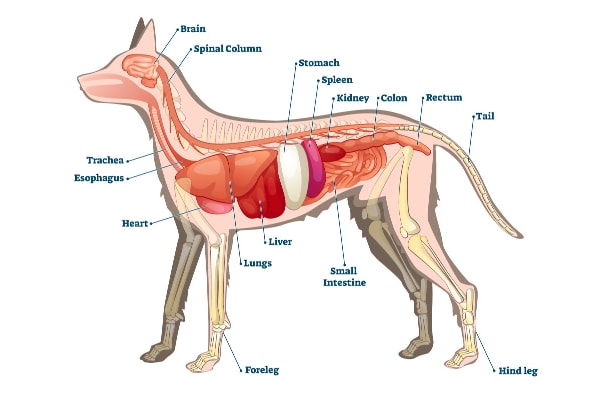
If you have ever potty trained a puppy or rushed home to let your older pup out to potty, then you are all too familiar with the most well-known job of the kidneys—making urine. The urine that the kidneys make, however, is just a by-product of several lesser known but highly vital jobs performed by these powerhouse organs.
What do the kidneys do?
The kidneys are responsible for:
- Filtering toxic waste products from the blood
- Balancing levels of essential electrolytes
- Preserving hydration by conserving just the right amount of water
- Helping regulate calcium and phosphorus levels
- Controlling blood pressure
- Stimulating the bone marrow to produce new red blood cells
One of the more important points to note about the kidneys is that kidney cells can’t grow back or regenerate. Some other organs, like the liver, can regenerate after they are damaged. But when it comes to the kidneys, dogs aren’t going to get any more kidney function than they were born with.
To make up for this fact, the body builds in an impressive reserve capacity. Human kidneys are the same. This explains why you can donate one of your kidneys without experiencing any major long-term health issues or outward signs of decreased kidney function.
However, even with this reserve capacity, it is possible to reach a point where so many kidney cells are lost that the kidneys can no longer do their jobs. Now the dog is in kidney failure.
What are the types of kidney failure in dogs?
There are essentially two main types of kidney failure—acute and chronic. A third type, acute-on-chronic, is a bit of a mixture of the first two types. Acute-on-chronic is when a dog with chronic kidney disease that is stable experiences a sudden worsening of their kidney function.
Each type has different lists of potential causes, different focuses of treatment, and different prognoses. For this article, we will stick to acute and chronic kidney failure in dogs.
How fast does kidney failure in dogs happen?
In the case of acute kidney failure, the kidneys fail very rapidly—potentially in hours or days. But chronic kidney disease and renal failure can be slowly progressive over months or even years. Therefore, there isn’t really one set speed at which kidney failure in dogs occurs.
What causes acute kidney failure in dogs?
As the name implies, acute kidney failure comes on suddenly, usually in a matter of days. It is caused by a major injury to the kidney. There are certainly some well-known causes of acute renal failure, but frustratingly, it is not uncommon for veterinarians to be unable to pinpoint the exact cause of the kidney injury.
Some of the well-known causes of acute kidney failure in dogs include toxicities, medications, foods, infections, anything that decreases blood flowing through the kidneys, and anything that obstructs the flow of urine out of the body. I will dig into each of these causes in more detail below.
What toxins cause kidney failure in dogs?
There are several common household products, medications, or supplements that have the potential to cause acute kidney failure:
- Antifreeze (i.e. ethylene glycol)
- Cholecalciferol rat poison
- Dog eating grapes or raisins
- Non-steroidal anti-inflammatory drugs (NSAIDs)
- Aminoglycoside antibiotics
- Vitamin D
Let’s take a closer look at each of these toxins
Antifreeze
Antifreeze tastes sweet so it is enticing for dogs. However, even small amounts of ethylene glycol, the toxic agent in antifreeze, can be dangerous. When a dog drinks or licks up antifreeze, the body breaks the ethylene glycol down into several toxic substances which can directly and indirectly damage the kidneys.
Cholecalciferol rodenticide
While there are several types of mouse and rat poisons that are toxic to dogs, cholecalciferol-based rodenticides are the ones that target the kidneys. Among other problems, cholecalciferol (Vitamin D3) causes hyperphosphatemia (i.e. increased blood phosphorus) and hypercalcemia in dogs (i.e. increased blood calcium), which in turn can significantly damage the kidneys. The end result is acute kidney failure.
Grapes and raisins
Although the exact mechanism of toxicity is still under investigation, it is well established that eating grapes and raisins can cause acute kidney failure in some dogs. However, other dogs eat grapes and raisins their whole lives with no ill effects.

Non-steroidal anti-inflammatory drugs (NSAIDs)
Over the counter non-steroidal anti-inflammatory pain medications (NSAIDS) like ibuprofen (Motrin or Advil) and Naproxen (Aleve) may be great at relieving your aches and pains. However, you should not give your dog Advil or any of the other medications on that list. These medications, even at modest doses, can cause kidney failure in dogs.
Dog-safe NSAIDS like carprofen for dogs (Rimadyl®) are generally well-tolerated but can occasionally unexpectedly damage the kidneys, even at the correct dosage. This explains why your veterinarian might want to check bloodwork one to two weeks after starting these types of medications.
Also, many doggy NSAIDS are meat flavored. Severe kidney failure can result if a curious pup accidentally gains access to the entire bottle and ingests too many of the tempting tablets.
Aminoglycoside antibiotics
A certain class of antibiotics, aminoglycosides, have a higher potential to cause acute kidney injury when compared with other antibiotics. While this sounds scary, please know that your vet will weigh the risks and benefits carefully before prescribing aminoglycosides to treat bacterial infections.
Vitamin D
If a dog gets into a bottle of vitamin D supplements, licks Vitamin D-containing topical psoriasis medications off a person’s skin, or chews on the tube of psoriasis medication, he or she may develop hypercalcemia and kidney damage.
SAFTEY PSA: It is so important to store all medications and toxins safely away from your dog. Also, it is important to never give your dog any medications without talking to your veterinarian first. If you dog does eat or drink any of the items on this list, you should call a veterinarian immediately. In some cases, quick treatment can prevent severe kidney damage.
Infections
Infections can also cause acute renal failure, typically in one of two ways. The first is when a urinary tract infection (i.e. UTI in dogs) is left untreated. The bacteria can travel up from the bladder to the kidneys, where they set up shop and cause a kidney infection (i.e. pyelonephritis in dogs). The ensuing bacterial infection causes the affected dog to feel ill and can lead to kidney damage.
The second occurs when an infectious disease called Leptospirosis causes acute renal failure. Leptospirosis in dogs is caused by a bacteria that is spread in water contaminated by the urine of infected wild animals or rodents. Luckily, vaccines exist for many, but not all, of the strains of leptospirosis.
If you’re unsure which dog vaccines are necessary for your pooch, talk to your veterinarian. He or she can suggest a vaccination plan based on your dog’s age, lifestyle, and risk factors.
Decreased blood flow to the kidneys
Anything that causes decreased blood flow to the kidneys can lead to acute kidney failure. Low blood pressure deprives the kidneys of vital oxygen and nutrients. If that low blood pressure is sustained for long enough, the kidneys can incur permanent damage. Some specific causes of low blood pressure that might lead to acute renal failure are:
- Severe dehydration
- Sepsis
- Heat stroke in dogs
- Congestive heart failure in dogs as a result of heart disease in dogs
- General anesthesia
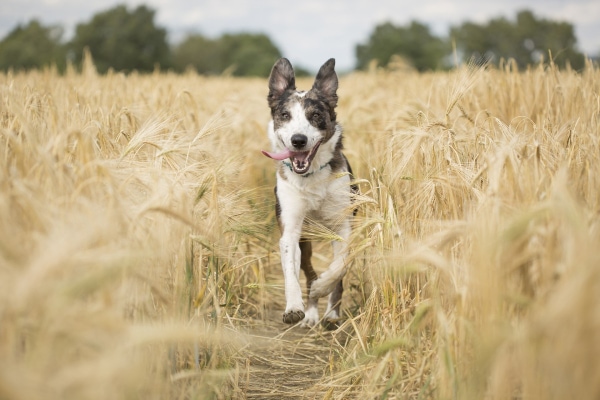
It is important to note that these conditions will not always lead to kidney failure. The thought of your dog going under general anesthesia can be nerve-wracking enough without having to worry about kidney failure, so I want to take a moment to specifically address this potential cause.
Anesthesia and kidney failure in dogs
Veterinarians generally take extra precautions to protect the blood flow to the kidneys during anesthesia. They do this by using the lowest possible doses of anesthetic medications and by giving IV fluids and monitoring blood pressure closely during anesthesia. The vast majority of dogs who undergo general anesthesia recover uneventfully.
So if you are wondering “Is my dog too old for anesthesia?” or “Is my dog too old for surgery?” don’t let the fear of kidney failure get in the way. Instead, have a conversation with your vet about it.
Urinary obstruction
Urinary blockages can also cause acute kidney failure because the kidneys continue to make urine even if a blockage is present. This urine backs up within the kidneys, which have a relatively inelastic outer membrane. The pressure from this buildup can lead to cell death.
The longer the blockage is present, the more permanent damage occurs. Blockages can be caused by kidney stones (i.e. nephroliths and ureteroliths), bladder stones (i.e. cystoliths), or tumors within the urinary tract.
What causes chronic kidney failure in dogs?
Based on the name, you can infer that chronic kidney failure refers to a much more gradual process where the kidney function declines slowly over a long period of time. Unfortunately, a specific cause tends to be more difficult to pin down than with acute kidney failure.
In some cases, the loss of kidney function is due solely to age-related degenerative changes. Basically, more and more kidney cells wear out over time, leading to decreased overall kidney function. In other cases, genetics, immune-mediated disease, or chronic non-kidney related illnesses (like high blood pressure or diabetes in dogs) can play a role in kidney problems.
Remember I mentioned earlier that every dog is born with extra kidney function? Well, this means that chronic kidney disease (CKD) can be present for quite a long time before any obvious signs of decreased kidney function become outwardly apparent.
What are the signs of kidney failure in dogs?
As the kidneys continue to fail, the dog will reach the point where he or she does begin to show some of the following symptoms of kidney failure:
- Increased thirst and increased urination (or decreased urination in severe acute kidney failure)
- Decreased energy
- Weakness
- Decreased appetite
- Weight loss
- Nausea
- Vomiting and diarrhea
- Hypersalivation
- Ulcers in the mouth
- Black tarry stools
- Bad breath
- Pale gums
- Blood in the urine
Let’s take a closer look at each of these symptoms.
Increased thirst and increased urination (or decreased urination in severe acute kidney failure)
Increased thirst in dogs and increased urination is often one of the first signs of chronic kidney disease. The kidneys help maintain hydration by making concentrated urine. With kidney disease, this concentrating ability is the first thing to go, leading to the production of copious volumes of dilute urine. To make up for all this urine, dogs with kidney disease must drink more water.
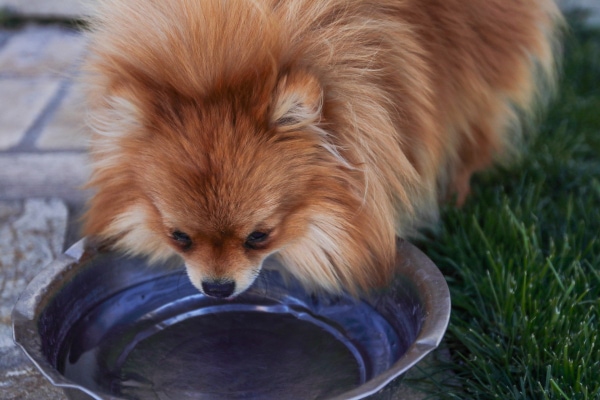
NOTE: In severe acute kidney failure in dogs, the kidneys might be damaged to the point that they are making very little urine (i.e. oliguria) or no urine at all (i.e. anuria). In this case, you would actually see decreased urination rather than increased urination.
Decreased energy
You might notice your dog laying around or sleeping more, not wanting to participate in normal daily activities, and just generally being a lethargic dog.
Weakness
It may seem like your dog is struggling a little more to get up and move about or do the things (e.g. jumping up on the couch) that he or she once did with ease. Sometimes your dog’s legs might tremble or he or she will need to lie down and rest frequently.
Decreased appetite
Especially as kidney failure progresses, the toxins that build up in the blood can make your dog feel sick and be less likely to want to eat. Your dog may turn up his or her nose at dog food but still eat treats, or he or she may not want to eat at all.
Weight loss
As time goes on, your dog might also start to lose weight. His or her bones may look more prominent or he or she may seem to have less muscle mass.
Nausea
The toxins that build up due to the kidney’s inability to remove waste products from the blood can make your dog feel very nauseous. You might notice your dog keeps licking his or her lips or is drooling excessively.
Vomiting and diarrhea
In addition to feeling nauseous, your dog might also start vomiting. Or he or she could have diarrhea too.
Hypersalivation
One of the indicators of nausea is increased salivation. Therefore, you might notice a dog with kidney failure starts drooling more than normal.
Ulcers in the mouth
In severe cases of kidney failure, the dog may develop ulcerations on the tongue or elsewhere in the mouth. These are known as uremic ulcers.
Black tarry stools (i.e. melena)
Sometimes you might notice your dog’s poop looks dark and sticky or has a coffee-ground appearance. This is an indicator of GI bleeding.
Bad breath
Dogs with severe kidney failure may develop a specific type of bad breath in dogs known as uremic breath. They may have an ammonia or urine smell to their breath. (This is not to be confused with the bad breath from dental disease in dogs.)
Pale gums
Because the kidneys play a vital role in stimulating red blood cell production, dogs with kidney failure may develop anemia in dogs (i.e. low red blood cell numbers). One of the main signs of anemia is pale gums.
Blood in the urine
If your dog has a concurrent urinary tract infection, (either as a cause of acute kidney failure or as a consequence of chronic kidney disease) you might notice bloody urine, straining to urinate, or increased frequency of urination. However, in a study of 201 dogs with chronic kidney disease, while 32% of them had evidence of a UTI on a urine culture, most were asymptomatic.
Signs can vary depending on the severity of the kidney failure
Early in chronic kidney failure, your dog might just have increased thirst or increased urination (or no symptoms at all). But with acute kidney failure, or with the later stages of chronic kidney disease, your dog is more likely to feel outwardly ill. He or she may experience any combination of the symptoms above.
If you think your dog might be showing signs of kidney failure, please make an appointment with your veterinarian promptly. Early diagnosis can help slow the progression of chronic kidney disease. And it is important to be able to start treatment as soon as possible for acute kidney disease.
How will the vet diagnose kidney disease?
If you or your veterinarian are concerned that your dog may have kidney disease, the first step is a complete physical exam and blood and urine tests.
Bloodwork
Your veterinarian will want to perform a chemistry panel, which includes the two main markers of kidney function, BUN and creatinine. That blood test for dogs can also check the levels of electrolytes like phosphorus and potassium. Sometimes those levels are altered in dogs with more significant kidney failure.
Urinalysis
To accurately interpret the BUN and creatinine levels, your veterinarian will also need a urine sample from your dog. It is important to note that the BUN and creatinine can be high in dogs who are dehydrated from non-kidney related illness. In these dogs, their urine will be concentrated, and their urine specific gravity will be high. On the other hand, a dog in kidney failure will have high BUN and creatinine levels with dilute urine.
Low urine specific gravity (i.e. very dilute urine) is actually the first indicator of chronic kidney failure. The urine becomes dilute before the BUN and creatinine levels rise.
Correlation between test results and kidney function
By the time the kidneys lose their concentrating ability, 66% of your dog’s kidney function has already been lost. This explains why it often seems like kidney disease has snuck up on you and your furry family member. BUN and creatinine levels finally begin to rise when more than three-fourths of your dog’s kidney function has been lost.
Put another way, by the time your veterinarian is able to pick up kidney disease with a standard blood panel, only 25% of your dog’s kidney function would remain. Your dog must lose even more kidney function before he or she would show outward signs of feeling sick from the elevated BUN and creatinine (i.e. waste products in the blood).
This explains why it is so important to consider yearly screening lab work for your senior dog and why this lab work should ideally also include a urinalysis. Knowledge is power in this case. Finding chronic kidney disease as soon as it becomes detectable on bloodwork and urinalysis means being able to take steps to slow its progression sooner.
Additional testing
If your vet has diagnosed your dog with kidney failure, he or she may also recommend additional testing such as:
- Blood pressure measurement—uncontrolled high blood pressure (i.e. hypertension in dogs) can worsen kidney failure.
- Urine culture—to check for evidence of a urinary tract infection.
- Abdominal ultrasound—to assess for masses or blockages within the urinary tract and/or look for visual changes to the kidneys that might suggest either an acute kidney injury or more chronic degenerative kidney disease.
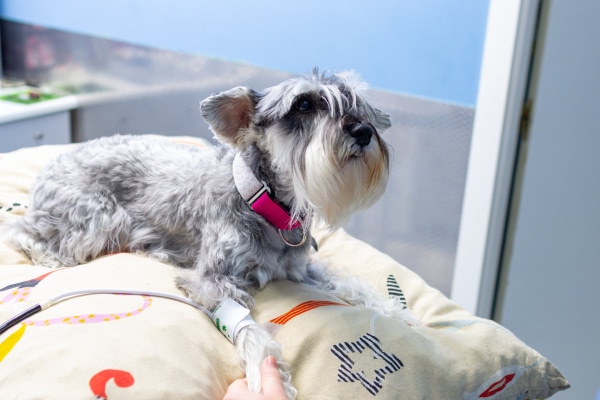
Based on the results of the lab work, additional testing, and your dog’s history, the veterinarian will determine if your dog most likely has acute kidney failure, chronic kidney failure, or acute-on-chronic kidney disease, and start treatment accordingly.
What is the treatment for acute kidney failure?
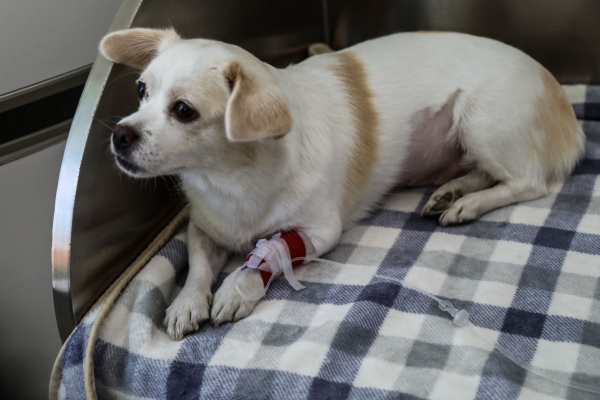
Intravenous fluids are the main treatment for acute kidney failure. The elevated BUN and creatinine levels that tell your veterinarian that your dog is in kidney failure also make your dog feel sick. This is because BUN and creatinine are toxic waste products that the kidney normally eliminates. Ideally, IV fluids help flush out the kidneys and bring these levels down.
If you find yourself in this situation with your dear dog, it is best to expect an inpatient hospitalization with multiple days of IV fluids. Each day, your veterinarian will recheck your dog’s kidney values to see if they are improving. Once the improvement slows, your veterinarian will attempt to gradually wean your dog off IV fluids to see if the improvements persist.
If your dog is hospitalized for acute kidney failure, your veterinarian will likely consider adding in some other treatments in addition to the IV fluid therapy. He or she may often administer IV antibiotics in case the acute kidney failure could be due to pyelonephritis (i.e. kidney infection) or leptospirosis.
Most other treatments fall into the supportive care category and are aimed at helping dogs feel better during their stay. These might include anti-nausea medications (e.g. Cerenia for dogs), antacid medications (e.g. omeprazole for dogs), pain medications, and appetite stimulants for dogs.
Response to treatment
One of the most difficult parts of trying to counsel dog parents through this particular diagnosis is that it’s impossible to tell at the outset of treatment how a dog might respond. In some cases, the kidney values will slowly return to normal. In other cases, the values might initially improve but stabilize at a level that is still above the normal range.
And, unfortunately, some dogs do not improve despite appropriate and aggressive treatment. In those cases, dog parents and veterinarians face a difficult choice. Many decide that euthanasia, while heartbreaking, is the right choice to prevent their beloved dog from suffering.
While deciding when to euthanize a dog with kidney failure, some dog parents may take advantage of hospice care for dogs. This can help keep their dog comfortable while giving them time to prepare for their dog’s euthanasia.
Other dog parents in that situation may decide to pursue dialysis, which can allow extra time for the kidneys to recover from an acute injury. Dialysis requires intensive care and monitoring and is only available at certain veterinary specialists. The requisite intense level of care and lengthy hospitalization can make dialysis cost-prohibitive for many dog parents.
What is the treatment for chronic kidney disease in dogs?
While both types of kidney disease involve a loss of kidney function, veterinarians treat chronic kidney disease quite differently than acute kidney disease. Unfortunately, chronic kidney disease is incurable and progressive. No medication or treatment can stop the ongoing loss of kidney function.
The good news is that treatment can slow down the rate of progression in many dogs. The even better news is that a significant proportion of dogs with chronic kidney disease can have a good quality of life for many months to years with proper management and close monitoring.
Your veterinarian will tailor the treatment for chronic kidney disease to your individual dog. Official guidelines exist that lay out the stages of kidney disease in dogs. These same guidelines offer treatment recommendations unique to each stage.
Chronic kidney disease treatment may include:
Kidney diets for dogs
Prescription kidney-friendly diets are an important part of the management of chronic kidney disease. These diets have lower protein and phosphorus levels and put less strain on the kidneys.
Blood pressure medications
You veterinarian will also want to closely monitor your dog’s blood pressure. If your dog develops high blood pressure, your dog’s doctor will likely recommend oral blood pressure medications. We already talked about the fact that high blood pressure can contribute to chronic kidney disease.
But chronic kidney disease in dogs can also lead to the development of high blood pressure. Uncontrolled high blood pressure, in turn, can then hasten the loss of kidney function. And so the cycle continues.
Medications to manage proteinuria
Protein loss in the urine (i.e. proteinuria) is a similar chicken and egg phenomenon to high blood pressure causing kidney disease and kidney disease causing high blood pressure. Consequently, vets also try to monitor and address urine protein levels in dogs with chronic kidney disease.
As the kidneys degenerate, the filter portion (i.e. glomerulus) of the kidneys can become leaky. Proteins that the kidney should keep within the bloodstream are then able to leak out into the urine. So, protein in the urine is a sign of kidney disease in dogs, but that leakage of protein through the kidneys can also hasten kidney damage.
Your vet may prescribe oral medication like enalapril for dogs to help decrease this protein loss.
Potassium supplements
Some dogs with chronic kidney disease will have low potassium levels, which can make them feel weak and tired. Your vet can easily monitor your dog’s potassium levels with routine bloodwork. If levels are low, the vet may recommend oral potassium supplementation.
Red blood cell support
The kidneys make a hormone called erythropoietin that helps tell the bone marrow to make new red blood cells. In some cases, late-stage kidney disease can cause anemia in dogs due to decreased production of this hormone.
If your pup is in this situation, your veterinarian may discuss injections of a synthetic version of this hormone to try to improve the anemia. Depending on the severity of the anemia, your dog may also need a blood transfusion. This can be a way to boost red cell numbers while waiting to see if the synthetic hormone injection will work.
Subcutaneous fluids
Administering fluids under the skin (i.e. subcutaneous fluids for dogs) can be a great way to help dogs with later stage kidney disease stay hydrated and feel better for a longer period of time. This can help improve their quality of life. Plus, it can keep them out of the hospital so they may enjoy their time at home with their loving family.
The idea of giving your dog fluids might sound scary. However, many dogs tolerate having this done at home, even on a daily basis, surprisingly well. If your dog has late-stage kidney disease and would benefit from subcutaneous fluids, your veterinarian or veterinary nurse can show you exactly how to give the fluids. The veterinary team can also give you some tips to ensure you and your dear dog are as comfortable as possible with this process.

Is kidney failure in dogs painful?
While end-stage kidney disease is not necessarily painful, it can make affected dogs feel pretty icky. Your veterinarian will work with you to tailor a specific treatment plan to allow your dog to feel well for as long as possible.
As part of this treatment plan, your veterinarian might recommend medications to bind phosphorous in the intestinal tract, medication to help regulate calcium levels, anti-nausea medications, antacid medications, pain medications, or appetite stimulant medications. All of these can help manage the signs of kidney disease.
How can you comfort a dog with kidney failure?
In addition to giving your dog all recommended medications, there are also several other great ways to comfort a dog with kidney failure. First, a bit of TLC goes a long way. Sometimes just spending time with your dog or taking a few extra minutes to snuggle can really help him or her feel loved.
Plus, since kidney disease makes dogs urinate more and drink more, it is important to always have a bowl of fresh clean water easily accessible for your dog. And you should take him or her out for lots of potty trips so he or she can urinate when necessary. Should your dog have an accident in the house, clean it up without making a big deal out of it. Chances are your dog just couldn’t hold it any longer.
What is the prognosis for kidney failure in dogs?
As you have probably gathered from the different treatment options, the term “kidney failure” encompasses a wide range of situations—from a dog with non-symptomatic mild elevations in kidney values to the severely sick dog whose kidney values are off the chart.
Overall, the prognosis for acute kidney failure is somewhat guarded. Unfortunately, roughly 50% of dogs in this situation either die or are euthanized because of their condition. The response to treatment in the first few days can help determine how likely your dog is to recover. Your veterinarian can help counsel you through this challenging situation to determine the next best steps based on your dog’s unique situation.
For chronic kidney failure, the prognosis is highly variable and depends in large part on the stage of disease at the time of diagnosis. Dogs with early-stage kidney disease can live for years with stable disease and a good quality of life. On the other hand, dogs with late-stage renal failure may only feel well for a period of weeks or months.
Lean on your veterinarian’s wisdom
A diagnosis of kidney failure can be scary. Especially when you hear it is acute kidney failure or late-stage kidney disease, both of which tend to have a more bleak outlook. Being blindsided by a diagnosis of kidney disease after a routine senior dog physical exam isn’t easy either. All of these situations may leave you feeling worried and alone.
But you are not alone. Your veterinarian knows you and your pup well and is on your side. He or she will play an integral role in providing support and advice as you work together to give your dog the best life possible for as long as possible.
Granted, the treatment options are a bit more limited with acute kidney failure. But with chronic kidney failure, there are many ways to help keep your pup feeling good. In either situation, the best advice I can give is to take heart and talk with your veterinarian.
3 dogs and 3 different approaches to kidney failure
Before we wrap up, I’d like to share what prompted me to write this article. Recently, in the space of just a few days, I treated three dogs with kidney failure. Their names are Toby, Stella, and Oscar, and they were the inspiration for this article. Allow me to briefly share their stories.
Toby: A Dachshund who suffered from acute kidney failure
First there was Toby, a handsome older Dachshund. He had a bad bout of pancreatitis in dogs and became dehydrated. The combination of dehydration and pancreatitis led to acute kidney failure. Happily, Toby recovered after being hospitalized for five days.

Stella: A Toy Poodle with high kidney values
The very same day I discharged Toby, I saw Stella for her six-month check-up. Stella, a perfectly coiffed 12-year-old Toy Poodle, had borderline elevated kidney values last year. Though Stella was feeling great, her bloodwork from her visit that day revealed that her kidney values were higher than before. I called her parents and let them know it was time to switch her to a kidney-friendly diet.
Oscar: A Frenchie with a history of chronic kidney disease
Then, the very next day, I saw Oscar, a grey-muzzled Frenchie, for the first time, and was immediately smitten. Oscar had a history of chronic kidney disease that had been well-managed for years with a prescription diet. So elevated kidney values weren’t a surprise on his bloodwork. But Oscar’s testing that day revealed two new problems—protein in his urine and high blood pressure.
I am lucky to care for patients like Oscar (who is doing well on his new medications by the way), but I must admit that after his appointment I was ready for a few days respite from kidney issues.
I can take a hint though, and the universe was obviously trying to tell me something, so out of their stories, this article was born.
Have you navigated kidney disease with your beloved dog?
Please comment below.


My dog will be 5 in May and we found out about his chronic kidney disease about 6 months ago when he had some kind of infection in his neck which was unrelated. All the vets were completely stumped that he could look and act so healthy with creatinine levels between 5 and 6. They did multiple ultrasounds on his kidneys and said they were so unrecognizable they were second guessing they were even his kidneys- obviously they were. He’s like a lab/boxer mix and eats just about anything, runs and walks all the time and has never shown signs of the disease.
Unfortunately this week he got super lethargic and while still eating he stopped drinking water. Today we put him on sub-q liquids at home, Pepcid, and phosphorus binders. He perked up pretty good this afternoon and drank quite a bit of water on his own. We’ll see how it goes with this plan but we know that most dogs are only likely to live 4-6 years so if for any reason he seems like he’s in pain or his quality of life deteriorates we’ll make him comfortable so he can die with dignity.
Dear Val,
I am sorry you are facing this difficult situation with your young dog. I am glad he has been feeling so well until recently and has had a life full of joy and love. I hope the medications and treatments will continue to improve his quality of life and gift you with some extra time together. Thank you for sharing your experience with us. Wishing you continued strength to navigate this tough road ahead. Bless you both.
Our Chihuahua/Terrior mix has Cushings. She has been treated for it and has been doing well. However, while we were visiting with a relative out of town, she got into a hidden bag of Nutramax Dasuquin with MSM Soft Chews for 60-100lb dogs. She began acting lethargic and someone found the empty bag. She then vomited a LOT! There was no poison or overdose information on the bag! I looked online for similar scenarios and most vets advised that a dig might have diarrhea and vomit but that it was a supplement so it should be okay. We called a local vet hospital there and they told us to call Poison Control. She ended up being poisoned from the overdose and was in the hospital for 6 days with kidney failure.. We had to get back home so they gave us bags and needles to do subcutaneous fluids at home. We also have to give her a low fat, low protein diet… basically the opposite diet of what she was on for Cushings. We’ve been doing them for about a week now. We saw the local vet and her BUN levels are really high. They want us to continue with the fluids. She hasn’t had her medication for Cushings for about 2 weeks and that’s really concerning us. She’s losing weigh big time. We tried the prescription diets and she won’t eat them, so we make her a diet of rice, spinach, carrots, broccoli, cauliflower and a small amount of chicken. For treats, we give her dehydrated zucchini and apples. Can you recommend a diet that will help her gain weight that is okay with both kidney disease and Cushings? We are at a loss. We don’t know if we can wean her off the fluids and are concerned that her body will get used to having them so her kidneys won’t function properly. So far, we are $9,000 in for hospitalization, so we want to be sure that she’s comfortable and do all that we can for her. She is a fighter and is doing great! We just need to get some weight on her and don’t know how to do that. I keep forgetting to ask the vet about this and vet appointments are tough to come by locally.
No doubt, we are sending a letter along with all the medical records in a plea to Nutramax to get poison/overdose information on their bag!!!!!
Thank you for any help that you can provide. You article has been a blessing in understanding what is going on with our Nahla!!!
Dear Kelly,
I am so sorry Nahla is fighting these two difficult diagnoses at once. I wish I had some great advice about her diet but with a complicated case like this, I would highly recommend you speak to a specialist. A veterinary nutritionist will be the best source of information for creating a diet that works with Cushing’s and kidney disease. You should be able to find a nutritionist that can prescribe a diet for Nahla based on her specific needs and medical details. I hope your sweet girl can keep fighting and pray she has many happy years ahead. Wishing you all the best of luck. Feel free to leave an update as things progress!
My Rat terrier turn 16 in November2022. It was in August or September I learn she was in Kidney failure. I did not change her diet instead I am treating like a hospice case. Let her eat what she will eat. Giving her kidney meds from her Doctor twice a day. Once she stops eating or drinking then it will be time to say goodbye. Or if she’s in pain. She’s still eating and drinking. Gets around well even blind and deaf. I may get more labs tomorrow to see where her kidneys are now. I do not want to put her down until I know it’s best for her. I think this is the hardest to decide. I see no signs of distress from pain except for today. She was running through the house running into things and when you pick her up she cries and tries to get down. Luckily I had liquid pain killers for her. In about twenty minutes she calm down and has been doing fine since. That’s been hours ago.
Dear Linda,
I am sorry your little pup is nearing the end of her life. I am glad you are able to provide hospice care and keep her at home where she is most comfortable. She is a lucky girl to have spent 16 years making wonderful memories with you. I hope when her time comes, she will pass peacefully. Wishing you strength and courage to face each new day. Bless you both.
. Hi.. i also have a 16 yr old Chihuahua mix with a rat terrier. the vet. suspects early renal disease back in jan. shes on a kidney diet. she likes tbe wet food more than the dry. and take renal supplement twice a day. i was just curious about what pain medication you use? i dont want to use a pain medication thats going to put stress kn her kidneys. she is a ederly dog and does have some joint and arthritis issues
Hi Ally,
I am sorry your senior girl has received this difficult diagnosis. I am glad she will eat the wet food and seems to be doing well with her current treatment regimen. I don’t have a specific pain medication that I use for kidney failure cases. But you are correct you have to avoid certain drugs that can have negative effects on the kidneys. Most vets will probably use some type of opiate or controlled substance to offer very strong pain relief for dogs in end stage kidney failure. If you are looking for safe ways to help with arthritis pain, there are many good options. I will attach links to other articles with more information. Wishing you the best and praying your sweet girl has many happy days ahead.
1. Natural Pain Relief for Dogs: 13 Methods
2. Dog Arthritis Treatment: 8 Ways to Help a Senior Dog at Home
3. How to Relieve Arthritis Pain in Dogs: The Ultimate Guide
Mam, My dog got snake bite on July 15 th nyt…..we didn’t know it was a snake bite….on July 16 th we given him treatment…..that day it self his creatine is 6.6 ……what we have to do !
Hi Vysali,
I am sorry your dog was bit by a snake and now is having issues with his kidneys. Without playing a personal role in his medical care, I can’t offer specific advice or recommendations. Your vet should be able to guide you through this process and let you know what treatment is needed. Hoping for quick answers and a positive outcome for your pup.
Hi Julie, we are currently in the grips of kidney failure with our terrier girl Peach, who is only 4 years old. The vet is stumped as to what caused it but he thinks it could be congenital given her age and that we don’t think she ate anything toxic.
We are on week 5 of IV fluids and a range of different medications. She goes for fluids every 2-3 days. It’s been a rough and intense journey so far going back and forth to the vet and we are drained. She had some really good days where she is bright and wants to eat, then lots of really flat days where we have to spoon food into her. It’s soul destroying and we’re coming to a point where we might have to make a heartbreaking decision… it’s frustrating though because her SDMA test shows she went from a rating of 29 down to 18 which is nearly within normal range. Her BUN is 14 and creatinine is 1.7 so not the worst but still no real improvement in her mood. We aren’t sure what to do next and whether we are fighting a losing battle… any advice so appreciated
Dear Katie,
My heart goes out to you with this difficult and emotional situation you are in with Peach. It sounds like you have a good partnership with your vet and you both are trying everything you can to help restore your pup’s quality of life. Since I haven’t examined your dog myself, it is hard to make specific recommendations. My best advice would be to schedule a consult with an internal medicine specialist. They have a great deal of experience with complicated cases and might know of other testing or treatments to try that can sometimes be cost prohibitive in general practice. I hope you can find some answers that offer a positive outcome for you and your sweet girl. I will attach links to other articles that deal with making tough decisions about when to “let go”. I pray it doesn’t come to this but want you to be prepared just in case. Feel free to leave an update as things progress. Bless you both.
1. Dog Kidney Failure: When to Euthanize Your Dear Dog
2. Using a Quality of Life Scale for Dogs
3. Kidney Disease in Dogs: Stages and What They Mean For Your Dog
My standard poodle Samson was diagnosed with Juvenile Kidney Disease at five months. after his breeder had called to let me know that one of his littermates had died of JKD. Samson is now three years seven months and last week his creatinine and phosphorus levels had dramatically increased. He is in stage three of kidney disease and has begun the subcutaneous hydration treatments and aluminum hydroxide doses in addition to the medication he has been on since diagnosis.
Your article was very helpful even though you don’t discuss JKD . I like your style of writing and clear definitions. I’m curious as to why you did not include or mention the congenital form of kidney disease.
Thank you for your response.
Hi Jill,
I am sorry your sweet boy has struggled with the symptoms of kidney disease his entire life and now it seems to be progressing rather quickly. Juvenile Kidney Disease or congenital kidney dysfunction was not mentioned in the article because this website and the blog articles are all about senior dogs and issues associated with dogs in their senior years. Luckily, most conditions that we write about are applicable for all life stages. I hope the new treatments that have been added to Samson’s daily routine will allow him to have many more happy days ahead. Praying for more time to continue making memories and a good quality of life. Bless you both!
Hi. My 15-pound rescue terrier mix Penny was diagnosed with Stage 3 kidney failure the end of July 2021. I was devastated! SOMA was 21, Creatinine was 4.7 and Bun was 73. She was drinking 32 ounces of water a day. On the recommendation of my vet – I started feeding her Royal Canin renal support (a combo of wet and dry) and giving her Azodyl – (1) in the afternoon and (2) in the middle of the night as she has to wake up every 5 hours to pee. My little bug is still with me over 300 days later although I do see signs of her slowing down. I feel blessed to have this extra time with her.
Hi Dianne,
What a blessing to still be making memories together 300 days later! I am so glad your girl responded to the medications and new diet. Thank you for sharing your experience with our readers as it may help someone else in a similar situation. Praying Penny continues to thrive and is enjoying life. Bless you both!
Maggie is a 8 yr old lab. A 1 1/2 years ago noticed blood in her urine. She was treated with 2 rounds of antibiotics and blood was still present. After MRI she was diag with a tumor on her L kidney. She had surgery to remove the tumor (which was cancerous) and the kidney. She is getting half mature food and half Hills kidney care ( expensive) Due to arthritis she is getting 100 mg vetprofen daily for hips. Also using toe grips to help with slipping on the floor. Her kidney numbers are good. She is active and happy.
Hi Sonia,
I am glad to hear that Maggie is stable and enjoying life! I hope she will continue to thrive and have many happy days ahead. Thank you for sharing your experience with us. Best wishes!
This was informative.
I’ve looked in to kidney disease several times after our girl ate raisins in 2019 that were given to her by a little boy. She was with my husband and he didn’t know they were toxic to dogs. Once he told me (which was hours later), we called the animal poison control, followed their protocol, and then took her to the ER. She received care but was allowed to go home since we weren’t sure exactly how many raisins she’d had (we thought maybe 5 at most). The next day we found 16 raisin in her stool. We took her to her regular vet, where elevated BUN and creatinine levels were determined along with decreased platelets and RDW. Our vet recommended taking her to a 24 hour ER so that she could receive care without having to constantly transport her from our vet’s to the night-only ER and then back again. She got great care including IV fluids, more activated charcoal, and more antiemetics. After about 24 hours we were given the good news that her blood levels had stabilized (at least the BUN and creatinine) – thank you Jesus!
I still closely monitor her blood work. I realize that the “insult” to her kidneys can’t be reversed so I am vigilant about having at least yearly bloodwork.
Hi Amy,
I am happy to hear your girl was able to recover and has been stable for the last few years. You did a wonderful job making sure she received appropriate care quickly after the incident. Routine annual blood work is such a great idea and I wish more dog owners knew how valuable of a tool it can be. Thank you for sharing your experience with us. I hope your sweet pup continues to thrive and I wish you both the best!
My 13 yr old mostly Black Lab stopped eating. Took her to my vet, where her blood work showed elevated kidney numbers…he said he’d seen much worse. He kept her two nights and gave fluids. Her numbers came down some, but are still over the normal range. She was so weak, could not get up from a lying position on her own. I got her to start eating and she is stronger and getting up now., but still a bit weak. She did not have a history of kidney disease before this. Bloodwork a couple years ago was normal.
Hi Janice,
I am glad you were able to get your girl to the vet and treatment started quickly. What a blessing that she is showing improvement and gaining strength! I pray she has a complete recovery and can get back to living her best life. Thank you for sharing your experience with us. Best wishes to you both.
Thank you Dr Julie, once again you have, step by clear step, clarified what we need to understand about our senior Norfolk’s chronic kidney disease diagnosed last summer with bloodwork at her senior exam. It was worrisome after a her pre-dental bloodwork 4 months earlier had been normal. We’d thought her lack of activity was reaction to the recent loss of her lifelong hunting companion, which we all felt deeply. After that diagnosis we immediately started her on low protein diet prepared at home (we’re retired with time for that extra step) and tested her blood monthly for 3-4 months to reassure that she was doing well with the diet. Values didn’t show much change, but she did have an episode of pancreatitis, quickly cleared with meds. We give her sub-q fluids at home, but she can’t appreciate that we’re helping her and we sometimes are tense and she senses that, so we will take her in and vet techs will give the fluids for a small fee when we bring her equipment/fluids with her. The fluids are just extra support right now, she gets 4 small meals a day with equal portion of water on food, and now homemade diet is mixed each meal with equal portion commercial prescription kidney diet. She’s a small gal, so it’s no trouble to mix 3-4 weeks of homemade diet & freeze in small meal size portions. It’s been 6 months since last bloodwork, if this next one is stable I’ll possibly go exclusively to commercial prescription diet. The homemade just gave me the feeling that we were more in control of her care, a necessary illusion when told there’s no magic fix for this, only good maintenance & love.
She naps a lot now, tho her invisible clock is still very accurate about telling us loudly when it’s time to eat, transitioning easily from 2 meals to 4 smaller meals daily, still maintaining her normal healthy 9# weight. She’d like it if we would do out to dig up the yard with her more often as her missing companion would do, but then she sighs & goes back to her nap.
Dear Ani,
Thank you for the kind words and I am glad you found the article helpful. Your little girl is lucky to have such attentive people in her life to advocate for her wellbeing and love her. I pray she continues to do well with the fluids and special diet. I appreciate you taking the time to share your story as it may help someone else in a similar situation. I wish you many more happy days together and fond memories.