Is your middle-aged or senior dog drinking and urinating more than usual? Does your dog have a pot-bellied appearance? These are just a few signs of Cushing’s disease in dogs (also known as hyperadrenocorticism). Integrative veterinarian Dr. Julie Buzby shares symptoms, diagnosis, medications, prognosis, and life-expectancy for Cushing’s disease in dogs.

“Have you ever heard of Cushing’s disease in dogs?” I asked my new veterinary client, the loving parent of a 15-year-old Labrador Retriever, Jake. I knew it was important that we discuss Cushing’s disease at that appointment because Jake’s symptoms were textbook for the condition.
My client had mentioned noticing Jake’s thirst, urination, and panting were increased. These are three cardinal symptoms of Cushing’s disease in dogs. Also, while we were talking, I sat rubbing the thin skin of Jake’s pot belly. (Yes, thin skin and a pot belly are two more cardinal symptoms.)
By the end of our conversation, my client had a good idea of what Cushing’s disease was, tests for Cushing’s, and what the diagnosis could mean for his dog. And I hope you come away from this article on Cushing’s disease with a better understanding of the condition, too.
What is Cushing’s disease in dogs?
Cushing’s disease in dogs (i.e. hyperadrenocorticism) occurs when an older dog’s adrenal glands produce too much cortisol, a stress hormone. Cortisol is the body’s natural steroid and is absolutely essential for day-to-day life. Normally, the body regulates cortisol levels very carefully. But if the amount of cortisol gets out of whack, as occurs in Cushing’s syndrome in dogs, bad things can happen!
What causes Cushing’s disease?
This increase in cortisol levels can occur for three main reasons—a pituitary tumor, an adrenal tumor, or the administration of steroids. Let’s take a look at each of these three types of Cushing’s disease in dogs.
Pituitary-dependent Cushing’s disease in dogs
Approximately 80% of dogs with Cushing’s disease will have pituitary-dependent Cushing’s disease. This type occurs when the dog develops a tumor in the pituitary gland. The pituitary gland is a tiny structure located at the base of the brain that controls the secretion of various hormones.
One of the many hormones that comes from the pituitary gland is adrenocorticotropic hormone (ACTH). This particular hormone, ACTH, is what tells the adrenal glands (paired bean-shaped glands located near the kidneys) to produce cortisol. When a pituitary tumor releases more ACTH than normal, the adrenal glands obediently make more cortisol. And the end result is pituitary-dependent Cushing’s disease.
Do not fear, though! While the phrase “brain tumor” is frightening when used in the same sentence with our beloved dogs, these tumors are usually small and do not spread. Only occasionally does a dog have a larger tumor.
Overall, smaller breed dogs (e.g. Bichon Frises, Miniature Schnauzers, Yorkshire Terriers, Lhasa Apsos, or Jack Russell Terriers) are more likely to have pituitary-dependent Cushing’s disease. And they tend to be middle-aged or older (at least 7 years of age).
Adrenal-dependent Cushing’s disease
In the other 20% of dogs, a cortisol-secreting tumor grows on the adrenal gland instead. This tumor can be benign or malignant (i.e. cancerous). Since the adrenal glands make cortisol, functional adrenal tumors also lead to elevated levels of cortisol in the body. The official name for this form of Cushing’s disease is adrenal-dependent Cushing’s disease.
Unlike pituitary-dependent Cushing’s, adrenal-dependent Cushing’s is more common in medium or large breed dogs. And the average age at the time of diagnosis is 11 years.
Iatrogenic Cushing’s disease
While the pituitary-dependent and adrenal-dependent forms of Cushing’s disease are the two naturally-occurring varieties, there is also a third reason dogs can have Cushing’s disease—iatrogenic Cushing’s disease. The term “iatrogenic” indicates that a medical treatment or procedure accidentally caused the condition.
In the case of iatrogenic Cushing’s disease, the administration of prednisone for dogs or other corticosteroids causes the Cushing’s disease. These drugs mimic the action of cortisol in the body, so they can cause identical symptoms to adrenal or pituitary tumors. However, this is not to say that every dog who takes steroids will develop iatrogenic Cushing’s disease.
What are the symptoms of Cushing’s disease in dogs?
If you have ever taken a steroid (for example, prednisone) for a medical condition, or your dog has been on steroids in the past, you may have some idea of the symptoms of Cushing’s disease in dogs. They tend to be very similar to the side effects that humans and dogs may experience while on steroids.
Changes in thirst, urination, appetite, and behavior
Dogs with Cushing’s disease may change their normal habits or behavior. Some common signs include:
- Increased thirst in dogs (i.e. polydipsia)—occurs in 80-90% of dogs
- Increased urination (i.e. polyuria)—occurs in 80-90% of dogs
- Leaking urine
- Increased appetite (i.e. polyphagia)
- Restlessness, which may include senior dog anxiety at night
- Panting
- Circling, seizures in dogs or other neurologic signs (mostly seen if the dog has a larger pituitary tumor)
- Being a lethargic dog

Affects of Cushing’s syndrome on a dog’s back legs
Since Cushing’s disease can cause muscle wasting or lack of muscle mass, you may notice that your dog’s back legs are collapsing or your dog looks weak. Additionally, due to loss of muscle mass, dogs with osteoarthritis in dogs who develop Cushing’s disease may suddenly have an worsening of the signs of arthritis in dogs.
Senior dogs with Cushing’s disease may have trouble getting up from lying down, be more prone to slipping on the floor, or generally look more wobbly than normal. Additionally, these changes in the muscle mass, especially of the back legs, can make dogs reluctant or unable to continue their normal activity levels.
Changes in skin or abdominal contour
Additionally, you may notice Cushing’s symptoms related to your dog’s appearance, including:
- Weight gain
- Pot-bellied dog appearance
- Thinning skin
- Hair loss
- Dark pigmentation of the skin
- Comedones (i.e. blackheads)
- Poor hair regrowth (may be more noticeable if your dog was shaved for some reason)
- Firm areas of the skin (i.e. calcinosis cutis in dogs)
Increase in conditions related to poor immune system function
Since steroids suppress the immune system, dogs with Cushing’s disease may be more prone to various infections. Skin infections (i.e. pyoderma in dogs) and urinary tract infections (UTI in dogs) seem to be the most common. In fact, about 50% of dogs with Cushing’s syndrome have a UTI at the time of diagnosis, although they may not be symptomatic.
What are the stages of Cushing’s disease in dogs?
While there aren’t well-defined stages of Cushing’s disease in dogs, more and more symptoms may appear the longer a dog has Cushing’s disease. In the early stages of Cushing’s disease, you may notice that your dog is drinking more, urinating more, and eating more but otherwise looks fairly normal.
However, over time the excessive cortisol from Cushing’s disease may weaken the abdominal muscles, cause more fat to accumulate in the abdomen, and increase the size of the liver. Together, those changes can lead to the pot-bellied appearance.
Additionally, as Cushing’s disease progresses, you may notice changes to your dog’s skin and haircoat, increased panting, or more obvious muscle weakness. And your dog may be more prone to infections or show some changes in behavior.
In the final stages of Cushing’s disease, the dog’s symptoms may be severe and greatly impacting his or her quality of life. Your dog may be extremely thirst and hungry all the time or having accidents in the house from producing so much urine. Other symptoms of advanced Cushing’s disease in dogs include struggling to get around due to muscle weakness, painful, inflamed skin, or frequent infections.
How is Cushing’s disease diagnosed?
Sometimes you may see symptoms of Cushing’s disease and schedule a vet appointment. Other times, your vet may suspect Cushing’s disease after talking with you at an appointment. In either situation, the vet will select the diagnostic testing that he or she feels is right for your dog.
Testing to rule OUT Cushing’s disease
Sometimes, I recommend that my client starts with a simple and relatively inexpensive test called a urine cortisol creatinine ratio (UCCR). The UCCR test measures the ratio of cortisol (the hormone overproduced in Cushing’s syndrome) to creatinine (a normal component of urine).
Since cortisol is normally secreted in times of stress, for best results, the client should collect the dog’s urine sample at home, at least two days after a vet visit. This way, the dog doesn’t get anxious from a visit to the veterinary clinic, secrete a bunch of cortisol, and skew the results. Additionally, the first urine sample of the morning seems to provide the best results.
Before I run the test, I always want my clients to understand that the UCCR test rules OUT the diagnosis. But does not definitively rule it IN. In other words, an elevated UCCR doesn’t prove that a dog has Cushing’s syndrome. But a dog with a normal UCCR has a very low chance of having Cushing’s disease. Thus, the UCCR does a very good job of ruling OUT the diagnosis.
This may seem counterintuitive, but it’s actually quite valuable. If the UCCR is normal, we can cross Cushing’s off the list as a possible diagnosis. Then we can move on to figuring out what else could be causing your dog’s symptoms.
And if the dog has an elevated UCCR, this is an indication that we should perform more specific tests to confirm the diagnosis.
Testing to confirm Cushing’s disease
Tests to rule IN Cushing’s (i.e. confirm the diagnosis) are blood tests for dogs. There are three main tests—the ACTH stimulation test, a low dose dexamethasone suppression test, or a high dose dexamethasone suppression test.
ACTH stimulation test
The ACTH stimulation test involves drawing a blood sample to determine a baseline cortisol level. Then the vet will administer synthetic ACTH, which should stimulate the adrenal glands to release cortisol. In dogs with Cushing’s disease, post ACTH blood cortisol levels are usually elevated above what would be expected for a “normal” response to ACTH.
This test is positive in around 80-85% of dogs with pituitary-dependent Cushing’s disease and 60% of dogs with adrenal-dependent Cushing’s. It cannot distinguish between the two types. The ACTH stimulation test is, however, the test of choice for diagnosing iatrogenic Cushing’s disease.
Low-dose dexamethasone suppression test
For the low-dose dexamethasone suppression test (LDDST), the vet will draw a blood sample to obtain a baseline cortisol level. Then he or she will give the dog a low dose of the steroid dexamethasone. In a normal dog, the dexamethasone should tell the body to make less cortisol. However, in dogs with Cushing’s disease, a low dose of dexamethasone will not suppress cortisol production.
The test is positive in about 90% of dogs with Cushing’s disease. And about 50% of the time, it can distinguish between pituitary-dependent and adrenal-dependent Cushing’s disease.
High-dose dexamethasone suppression test
The high-dose dexamethasone suppression test is performed in the same basic way as the LDDST, except it uses a higher amount of dexamethasone. The goal of this test is not to determine if the dog has Cushing’s disease but to attempt to distinguish between the adrenal-dependent and pituitary-dependent forms. Sometimes it is able to do so, but not always.
Each of these three tests has some pros and cons. Your vet will select the one that he or she thinks is right for your dog. In some situations, your vet may recommend more than one of these tests. This is especially likely to be the case if he or she is trying to differentiate between the three types of Cushing’s disease.
Some dogs require further diagnostic testing
Occasionally, the results are still not conclusive. In order to nail the diagnosis, the vet may recommend an abdominal ultrasound to assess the adrenal glands. Or she or she may suggest an MRI or CT, further bloodwork, or other tests.
In addition to tests to rule out or confirm Cushing’s disease, your veterinarian may also recommend a urinalysis and/or urine culture. These tests look for evidence of urinary tract infections, which can be “silent” and accompany Cushing’s disease, especially in female dogs.
How is Cushing’s disease in dogs treated?
In most cases, Cushing’s is a lifelong disease that often requires daily treatment and careful monitoring by your veterinarian. It is a commitment and it can be daunting. However, the good news is that there are several treatment options to help your dog feel better.
Medical treatment for dogs with Cushing’s disease
Often, medications to control cortisol levels are the treatment of choice for managing a dogs with adrenal or pituitary-dependent Cushing’s syndrome long-term. (Treatment for iatrogenic Cushing’s disease just involves carefully weaning the dog off of steroids.)
Common medications used to treat pituitary or adrenal dependent Cushing’s disease in dogs include:
Vetoryl
Vetoryl® (trilostane for dogs) is currently the only veterinary-approved product on the market that treats both the pituitary and adrenal-dependent forms of the disease. It blocks the production of cortisol to bring cortisol levels back to normal.
While side effects of Vetoryl are fairly common, they are thankfully usually mild and only last for a few days. Some of the potential side effects include nausea (which can be decreased by giving Vetoryl with food), vomiting, decreased appetite, lethargy, diarrhea, or weakness.
Lysodren
Another treatment option is a drug called Lysodren® (mitotane). It targets the adrenal glands, which are over-producing cortisol. This medication keeps the glands from producing as much cortisol by selectively killing some of the cortisol-producing cells.
Typically, but not always, the vet will use a two-phased approach to treatment. The first phase, induction, uses higher doses of Lysodren. It is important to watch your dog carefully, especially during this phase. If your dog isn’t eating as much, has vomiting or diarrhea, becomes lethargic, or isn’t drinking enough water, promptly contact your vet. Those symptoms indicate it may be time to switch to the maintenance phase, which uses lower doses of mitotane long-term.
Overall, dogs in either phase may experience side effects such as decreased appetite, lethargy, weakness, vomiting, or ataxia (i.e. unsteady gait). If you see these side effects, it is best to check in with your vet.
Selegiline, ketoconazole or melatonin
Selegiline for dogs, a drug used to manage canine cognitive dysfunction, is also approved to treat the pituitary-dependent form of Cushing’s disease. Also, there are some off-label medication options for Cushing’s disease such as ketoconazole and melatonin for dogs.
However, melatonin and ketoconazole are not approved to treat Cushing’s disease. So they must be used with care and with the understanding that they may not be effective. Plus, if you choose to try melatonin for your dog with Cushing’s disease, please be aware that some products, especially melatonin gummies, may contain xylitol, which is toxic for dogs. Always check the label for xylitol (i.e. birch sugar) before giving melatonin to your dog.
Surgical treatment for adrenal-dependent Cushing’s disease
Additionally, if an adrenal tumor is the cause of the Cushing’s, the affected gland can be surgically removed. This is not a simple surgery and is ideally performed by a board-certified surgeon. Risk of hemorrhage from surgical removal of the gland is significant, as is the risk of other post-operative complications.
Depending on the study you look at, between 10% and 25% of patients may not survive surgery and post-op period. Thus, many pet parents opt to treat their dogs with medical management to avoid the cost and risk of surgery.
What sort of monitoring do dogs with Cushing’s disease require?
It is important to know from the outset that dogs taking medications such as Vetoryl or Lysodren require close monitoring with frequent lab work.
Sometimes these medications can work TOO well and cause the opposite condition—hypoadrenocorticism (i.e. Addison’s disease in dogs). If you notice signs of Addison’s disease such as vomiting, diarrhea, lethargy, tremors, or loss of appetite, contact your veterinarian immediately. Addison’s disease can be life threatening, so it is critical your dog gets veterinary attention right away.
On the other hand, if it seems like your dog’s Cushing’s symptoms aren’t resolving, or if they go away and then come back, you should also give your vet a call. This may be an indication that the Vetoryl or Lysodren dose isn’t sufficiently controlling your dog’s Cushing’s disease. Or it could mean that your dog has developed a concurrent condition with similar symptoms, such as diabetes in dogs.
In addition to monitoring your dog’s symptoms, you will need to bring your dog back to the vet periodically for an examination and follow-up bloodwork. This is important so the vet can determine how well the medications are working.
In the interest of full disclosure, these vet visits can represent a significant financial and time commitment. When initially starting therapy and when making dose adjustments, your vet may need to examine your dog and run bloodwork as often as every few weeks or months.
How can I help comfort a dog with Cushing’s disease?
In addition to treating your dog’s Cushing’s disease and keeping up with the necessary monitoring, here are five more things you can do to be vigilant in managing your dog’s condition.

1. Keep your dog’s water bowl full of fresh clean water
Always have fresh water available. As I mentioned, Cushing’s causes increased thirst and urination, so your dog will want to drink more and need to go out frequently for potty breaks. Make sure you refill the water bowl often and give your dog plenty of opportunities to go potty.
2. Be on the lookout for signs of skin problems
Keep a sharp eye on your dog’s skin. If you notice signs of skin infection such as bumps, crusts, hair loss, or red irritated skin, speak with your vet. It is important that skin infections are addressed promptly. In some cases, your vet may also prescribe antifungal and antibacterial shampoos and wipes to proactively help combat skin infections.
3. Know how to recognize the signs of a UTI
Watch for signs of urinary issues such as increased frequency of urination, foul odor to the urine, straining to urinate, and/or blood in the urine. If you observe any of these signs, take your dog to your veterinarian. For dogs with Cushing’s, urinary tract infections are nearly impossible to prevent. However, you can help your dog by seeking treatment promptly.
4. Partner with your veterinarian
Keep in close contact with your veterinarian about any changes in your dog’s symptoms. You see your dog every day and know your dog better than anyone else. So you are in the perfect position to spot signs that may signal you dog has flipped over to having Addison’s disease or indicate the medications aren’t working. Trust your instincts and reach out to your vet if you have any concerns.
5. Address mobility issues due to Cushing’s disease
If your dog is having mobility issues due to muscle wasting, look for options to minimize discomfort and falling. I recommend the following to many of my clients:
- Keep your dog on carpet
- Avoid slick floors
- Learn how to relieve arthritis pain in dogs
- Choose a soft bed for your dog’s comfort (Consider a memory foam dog bed)
- If possible, avoid stairs
- Consider laser therapy for dogs and physical therapy
- Teach your dog to use ramps
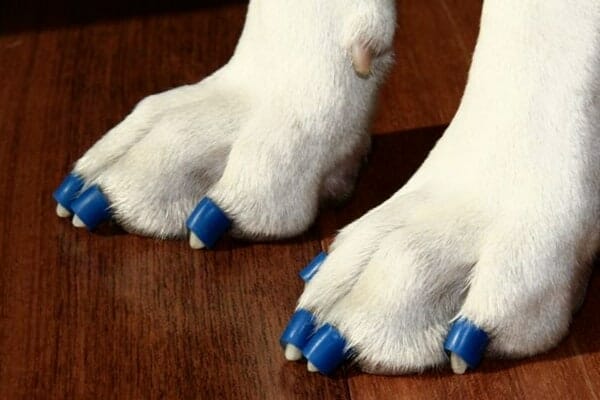
- Additionally, I’ve had many patients with muscle wasting due to Cushing’s syndrome thrive using ToeGrips® dog nail grips. The non-slip grips fit on dogs’ toenails to improve traction on hardwood floors, preventing sliding and falling.
Is my dog in pain with Cushing’s syndrome?
While you are thinking about how to keep your dog with Cushing’s disease comfortable, it is understandable to wonder if Cushing’s syndrome is painful. Thankfully, Cushing’s disease doesn’t cause pain in dogs in the traditional sense of the word. It isn’t like a torn ACL in dogs or intervertebral disc disease (IVDD) in dogs. However, I would argue that it can negatively impact quality of life. Hear me out.
Dogs with uncontrolled Cushing’s disease are thirsty all the time and need to urinate frequently. Sometimes they may have accidents in the house if they can’t make it outside in time. That can be hard on a dog’s dignity. It may also be more difficult for them to rest peacefully since they are prone to panting and pacing.
We can’t know for sure the emotional impact those changes have on a dog. And I’ve seen hundreds of “untreated” Cushing’s patients over the years who seemed fine. However, living with symptoms of Cushing’s is not ideal for the dog nor their family. The good news, though, is that treating your dog’s Cushing’s disease will help get those symptoms under control. This can greatly improve your dog’s quality of life.
What is the prognosis for dogs diagnosed with Cushing’s disease?
The prognosis and life expectancy for dogs with Cushing’s disease can vary depending on which form of Cushing’s disease they have and how well they respond to therapy.
Life expectancy for pituitary-dependent Cushing’s disease in dogs
With pituitary-dependent Cushing’s disease, the moderate-term prognosis is good with treatment. Median survival time (i.e. the point at which 50% of dogs with the condition are still alive) is 2 – 2.5 years. Most of the time, the majority of the clinical signs will go away quickly after starting medication. But it may take about three months for the skin-related signs to resolve. And sometimes symptoms like calcinosis cutis don’t fully disappear.
Unfortunately though, there is a small number of dogs with pituitary-dependent Cushing’s who don’t respond as expected to treatment. Thus, their prognosis may be worse. Additionally, if the dog has a large pituitary tumor rather than the more common tiny tumor, the prognosis is also worse. This is especially the case if the dog is showing any neurological abnormalities.
Life-expectancy for adrenal-dependent Cushing’s disease in dogs
For adrenal-dependent Cushing’s, the method of treatment and whether the tumor was benign or malignant (i.e. cancerous) both impact prognosis and life expectancy. Benign tumors and those that are small and less invasive usually carry a better prognosis. Overall, the median survival time is 1.5 – 4 years (depending on the study) with surgical removal of the tumor. But average life expectancy is closer to one year with Lysodren or Vetoryl therapy.
Concurrent conditions may impact quality of life
Additionally, your dog’s prognosis for either form of Cushing’s disease will also depend on any other conditions your dog may have. If your dog has concurrent medical problems such as diabetes or arthritis, the symptoms from those problems can compound with the symptoms of Cushing’s or make Cushing’s harder to manage. This can contribute to a decline in quality of life.
Knowing when it is time to say goodbye
Despite the fact that dogs with Cushing’s disease have a reasonably high chance of having a good year or several good years, the time may eventually come when you need to consider when to euthanize your dog with Cushing’s disease.
Some dog parents may start preparing for their dog’s euthanasia when they begin to see symptoms of advanced Cushing’s disease that are not controlled by medication. Others may decide to say goodbye because their dog is no longer taking pills well or tolerating the frequent vet visits. Or dog parents may know it is time when the financial toll or pet caregiver fatigue become too much to bear.
Sometimes it may also be a different medical problem, not the final stages of Cushing’s disease, that ultimately mean setting your dog free is the kindest course of action.
There isn’t one universally right time or right reason to make that decision. But your trusted veterinarian and your close friends or family members can help you determine what is right for your dog and your family. And they can help support you as you grieve the loss of your dog.
Don’t lose hope
I know that these statistics and the discussion of the final stages of Cushing’s disease and when to say goodbye may seem grim. But I want you to know that Cushing’s disease in dogs is not a hopeless diagnosis. Yes, your dog may need a risky surgery or daily medication and frequent rechecks with the vet. But once Cushing’s disease is under control, your dog can often have an excellent quality of life for years. And that is huge.
Let me remind you too that you can play an important role in your dog’s health. Watching him or her carefully for symptoms, keeping up with all medication monitoring appointments, and working closely with your vet can all help your dog feel his or her best despite having Cushing’s disease.
This is exactly the pep talk I gave to Jake’s mom when I diagnosed my sweet senior Lab patient with Cushing’s disease. I’m optimistic that he has several happy years ahead. And I look forward to partnering with his mom to provide him the longest, healthiest life possible. The same may be true of your dog too. So don’t lose hope!
What questions do you have about Cushing’s disease in dogs?
Please comment below.


My 15 year old lhasa apso/shih tzu mix was diagnosed with Cushing’s a year ago. We kept doing the stim tests and upping the dose because Vetoryl was barely working. He’s on the max dose now (he weighs 19 pounds, 30mg twice daily). The drinking and peeing has improved somewhat at the max dose. Before that, I don’t think it worked. The vet won’t refill his prescription without another stim test. Does that make sense? What are we going to learn if he’s on the max dose, which is the only dosage that made a difference? Is there any possibility a lower dose would now work? Thank you!
Hi Heidi,
I am sorry your pup has not responded as hoped to the Vetoryl. Without playing a personal role in your boy’s medical care, it is hard to make assumptions as to why certain choices are being made. It could be that your vet is trying to ensure this high dose isn’t causing more harm than good. If you need an expert opinion, I would recommend a consultation with an internal medicine specialist. They can offer guidance on how to proceed and let you know if the medication dosage should be adjusted. Hoping you can find a way to maintain your dog’s health and quality of life. Wishing you all the best as you navigate this unknown path.
Hi Dr. Buzby,
Thanks for your response. This is part of the mystery! We have seen the internal medicine specialist. He did all the diagnostic tests. The regular vet did the stim tests till we were at the second to highest dosage. My dog was still drinking and peeing a lot. The internal medicine specialist said given that, it’s worth just going ahead and trying the 30mg/twice daily. The other vet in the practice agreed. The owner of the practice is the one now saying he needs another stim test. This dosage has made a difference. I don’t recall hearing or reading that once the right dosage is found, you may end up subsequently reducing it, so that’s really what I”m trying to figure out. It could be that the owner just didn’t look carefully at the records and see the email from the specialist, and then didn’t realize it’s the max dosage so it’s not like raising it is even an option like it was earlier. I’ve spent way more than I can afford on this, and am just trying to not throw good money after bad! Anyway, thank you very much!
Hi Heidi,
I agree this may just be a lack of communication. I would encourage you to have an honest conversation with this vet and make your concerns clear. I would want to know if the results of the stim test will change the course of action moving forward. Because if the results have no impact on decisions being made, there is no reason to run the test. You always have the final say on what medical procedures and testing are performed. Trust your intuition. You are doing a great job advocating for your pup’s health and well-being. Wishing you all the best and keep up the good work!
Thank you!!!
Hi My lab mix had blood work done recently. His ALP is 2000. He did have elevated ALP a year ago of 1200 and his urine cortisol test was normal. Vet is thinking Cushing’s disease. He doesn’t have any of the symptoms such as thirst, appetite etc. he is a bit sluggish. I’m trying to get a first AM urine sample for the cortisol test again. Not an easy task. What else could this high ALP be related to if not Cushing’s ?
Hi Sue,
I understand your concern for your pup and think it is good you are searching for answers. Here is a link to an article that may offer the information you are looking for: What Does a High ALP in Dogs Mean?
Hoping your vet can get a diagnosis and help you navigate this unknown path. Best of luck to you and your sweet boy!
Hi Thank you for the response. My dog’s urine test for cortisol/creatin ratio was normal. His protein is 3+. The vet is thinking the issue isn’t Cushing’s. He has requested 3 consecutive AM urine samples for testing and most likely an ultrasound when the results come back. I forgot to add info about my dog in my last comment. He is lab/doberman, 7 years old and 122 lbs.
I assume this is a kidney issue?
Thank you
Hi Sue,
I am glad your pup may have avoided a Cushing’s diagnosis, but I understand that still leaves you with more questions than answers. A kidney problem is a possibility, but it sounds like the liver may be playing a role in this as well. There are so many different diseases and conditions that could be the culprit and narrowing down an exact cause can be tricky. It sounds like your vet has a great plan and is being very proactive and thorough with testing. I am hopeful you will get to the bottom of this soon. Feel free to keep us updated on how things are going. Praying for a positive outcome for your big boy.
Hi The results of the 3 day urine test showed protein. The vet did another urine test called Electrophoresis. That test came back with protein. He did mention he was looking for Myeloma. Nothing like that was present. He prescribed Enalapril Maleate 20mg tabs ,2 tabs twice a day. After reading about this medication that is apparently used for blood pressure and the side effects, I’m a bit reluctant to give it to him. Unfortunately the vet isn’t available due to vacation. Is this medication safe? Thank you.
Hi Sue,
I understand your worry with this new treatment, but this is exactly what I would have prescribed in a similar case. All medications have risks and possible negative side effects, but often the benefits outweigh the risks. Here is a link to an article that discusses enalapril in more detail: Can Enalapril for Dogs Help Your Senior Dog?
Of course, if you have unanswered questions or lingering concerns, you should talk to your vet. If you feel better about waiting to start the enalapril until after you discuss things with your vet, then that would be ok. I just wouldn’t want to hold off your pup’s treatment for too long! Praying for comfort and clarity. Best wishes to you and your sweet boy.
Thank you for your response and the article to read. It was helpful. I know there are many more issues that are concerning. I would just like to find out the underlying issue instead of treating issues that come up before we know what exactly we are treating. I’m sorry if I’m confusing but I am confused. Thank you again
My 11year old Maltese has been diagnosed with cd, I have been prescribed vetoryl but as she showing no symptoms not sure wether to start them please help
Hi Linda,
I understand your concern and see why you are conflicted about starting this medication. If your girl doesn’t have any symptoms, what made your vet want to test for Cushing’s? I feel like this may be an instance where a lack of communication is causing some confusion. I encourage you to reach out to your vet and see if you can get some clarification. Best wishes to you and your little pup.
My dog Bandit is 11yrs old. He has a mass blocking 80%of his gull bladder. This was diagnosed about 3 yrs ago. He also has Cushing disease for 1 yr now. His liver counts are so high they won’t put him under anymore for dental cleaning as of 3 yrs ago. He has knee bone on bone and hip pops out. He is very slow moving. For about 3 months he drinks a lot and pees a lot. He had accidents in the house. He started just hiding under our bed and not coming out when he hears us come home. We go find him and he rolls over to scratch his belly. He always looks bloated. He has so many skin tags that stink and black and break open. He sleeps all the time. We have to help him up onto/off furniture and up the stairs. Is it time to let him go? I don’t want to give up on him.
Dear Michelle,
Goodness, it sounds like Bandit is dealing with so much at once. I understand how hard it can be to evaluate the situation and truly assess quality of life. When the changes are slow and the decline is gradual, it is easy to overlook how desperate things may be. From what you describe, it sounds like your boy is dealing with pain, stress, and anxiety every day and no longer finds joy in his daily routine and activities. Saying goodbye may be the most loving option at this point. Don’t hesitate to reach out to your vet and ask them for a quality-of-life assessment. I will also attach links to other articles with more information and great advice from other readers. Praying for clarity and comfort as you navigate this difficult path. Bless you and your senior boy.
Hi Dr. Buzby- My 11 year old Lab mix recently started losing all feeling in his hind legs, seemingly overnight! I have him in therapy at a rehabilitation vet. We don’t know if it’s working yet as we just started. He is receiving home laser treatments and massage. I have also purchased a wheelchair so we can get him walking better. He also recently had a high (extremely) blood glucose of 500+ and has elevated liver enzymes. My question is with Cushings Disease do the dogs have elevated blood glucose?
He has been with me through some of the roughest times of my life, and I don’t want to put him down, but I am also a former medical professional and realize when it is time to say “when” and let him be at peace if his quality of life decreases. Currently, he seems willing to hang in there so I am waiting to see if we can restore some of the wasting in his muscles and get him back on his feet. Thank you for your time.
Hi Trina,
I am sorry your senior Lab is experiencing this strange issue with his rear legs. I am glad you have him established with a rehab professional and hope you will begin to see some improvement. Cushing’s should not cause blood glucose to increase to that level. But many dogs with Cushing’s also end up developing diabetes and this is what I would suspect in this case. If your boy has not had his urine checked, that would be my next recommendation. If there is glucose in his urine, then you would have your answer. Hoping you can find the answers you need to maintain your boy’s health and happiness. Wishing you all the best of luck. Bless you both!
Hello! Our 8.5 yr old rat terrier has had UTI sx monthly X 4. No Rx 4th time as UA was neg. Vet suspects possible CD. Referral to state vet school was offered. Unfortunately, we are financially at the end of our resources. (Older couple, fixed income, now difficult to manage acute care and checkups, but it is our priority.) We absolutely cannot afford CD tests or treatment; vet school is 4 HR away. Presently our Gabe appears more vigilant; drinks more, voids every hour, no incontinence. Sleeps 6-7 HR nightly. We are to have frequent UA’s. Rx diet for UTIs ) Vet is excellent, informative and kind. This dog is my heart. I feel such guilt that he is not with affluent ‘parents’, but he is loved and cared for every moment. (Our beloved 16 yr old cat was compassionately euthanized 3 days ago for illness; we are still reeling from that pain. My 2 dogs seem to be searching for their ‘cat brother’.) My Question: what does the future of an untreated CD dog look like? His comfort outweighs our pain by far.
Thank you,
Gayle
Dear Gayle,
My heart goes out to you as you face this difficult situation with your senior pup. It is clear that you want to do everything you can, but I understand how finances can sometimes limit the options. Dogs with untreated CD can get along ok for a while as long as their symptoms are not severe. But at some point (there is no way to know when) he will begin a steady decline and you will be faced with tough decisions. If you think your boy is managing decently and your vet agrees he is not in pain or suffering, it is fine to take things day by day and give him more time. Here is a link to an article with more information on what to expect as CD progresses to an end stage: When To Euthanize A Dog With Cushing’s Disease: A Vet’s Advice
Hoping you can find the advice you need to feel confident with your choices moving forward. Wishing you and Gabe all the best.
Hello. Thank you for your article.
My Pomeranian/ Shih Tzu (about to be 13 years old in October) was diagnosed with Cushings Disease about 2 years ago. He has been doing amazing, with the medication Vetoryl.
Within the past month, he has been having problems with his anal glands. He isn’t able to express them himself. The vet told me that this is partly due to him losing muscle mass on his back legs, straining while trying to go #2. He has now started biting at his tail to the point that it’s bleeding. We now have to cone him while we’re gone and watch him relentlessly when we’re home. The vet has put him on an antibiotic and pain medication while the tail is healing.
I feel like I am going to have to get his anal glands expressed weekly now. He constantly is panting again, drinking more water, and going to the bathroom constantly. I did recently have a conversation with my vet about the near future. I am just struggling with the fact that he still has ALL his personality, still runs around like crazy, plays with his toys, eats normally, and everything. I don’t see how I could even consider euthanizing him when he’s still full of life! Any advice would be great.
Thank you!
HI Kait,
I am sorry your senior guy is having these worrisome issues with his anal glands. Without examining him myself, it is hard to make specific conclusions and recommendations. Sometimes it is possible to improve normal anal gland expression by adding a bit of fiber to the diet. Canned pumpkin can be a great option, but you would need to talk to your vet to ensure this addition to your dog’s diet would not cause an issue for your boy. I will attach links to other articles with more information. Hoping you can find a solution that is easy for you and offers your pup some relief. Best wishes and good luck!
1. Dog Anal Glands: Everything Your Vet Wants You To Know
2. 4 Dog Anal Gland Issues: Impaction, Infection, Rupture, & Cancer
3. Canned Pumpkin For Dogs: A Veterinarian’s Guide
My little Bichon had trouble with her anal glands as well. I read up about it and started adding fresh veg, especially green veg like brocholi to her diet every day. This seems to have done the trick and she doesn’t need to have them expressed by the vet any more.
Hello,
Our 10 year old Samoyed has been diagnosed with a Cushing disease, has bladder stones, and hypothyroidism. She refuses to eat all the medical foods prescribed and we don’t know what to feed her with. Could you please give some more information about (people’s) foods that are good for dogs with Cushing disease and bladder stones?Is it ok to give her fish, eggs, yogurt?
Thank you!
Hi Magdalena,
I understand your concern for your Samoyed as she is dealing with so many issues at once. Without playing a personal role in her medical care, it is hard to make specific recommendations about her diet. While fish, eggs, and yogurt are healthy and safe for dogs to eat, I am not sure if they will achieve the desired result your vet is hoping for with the prescription diet they have prescribed. When dealing with bladder stones, it is common to try and achieve a specific pH of the urine to help dissolve the stones. Reaching this pH is usually done by feeding a prescription diet that is formulated to change the acidity of the urine in specific ways. If you want to pursue a home cooked diet for your pup, then I highly encourage you to ask about a referral to a veterinary nutritionist. They can help design a home cooked diet for your girl that will be compatible with all the dietary goals your vet has in mind to help treat the Cushing’s, hypothyroidism, and bladder stones. A nutritionist will also ensure the diet is complete and not lacking in any essential nutrients. Hoping this offers some guidance and ideas about how to start a conversation with your vet. Wishing you all the best of luck and keep up the good work!
Hello Dr. Buzby – I commented on another Cushings post when I was in Oregon visiting and Bear began to do ‘I’m stressed and there’s another dog in this house to boot’ kinds of behavior – like Pica, which led to him eating what was an eye-popping piece of the other dog’s cloth toy – he had surgery to remove it. He also had some pancreatitis attacks, since it was difficult to keep him from eating some found dog food (other dog) or other things he found on the floor. The Vet in Oregon and the surgeons there said he could have cushings as there were some markers.
Fast forward I got him home and here my house is very calm and quiet, and we returned to his routine, and there isn’t anything on the floor (he doesn’t chew or tear up his own cloth toys – likely because they don’t have the other dog’s saliva on them). When I first got him home, he was drinking a lot of water still and had some accidents–he’s had a ravenous appetite for some time.
I had him tested – the shorter one that’s maybe 2-3 hours that requires blood drawn. His numbers were in a “not sure” spot – I can’t remember them now but let’s say Not Having Cushings is 12; having Cushings is 16 – Bear had 14, right in the middle (using those numbers as examples or approx). So pretty much inconclusive. The vet and I decided no treatment and a ‘wait and see’ – the night of his test he urinated a lot on the floor, but I attributed that to stress and elevated cortisol levels.
he does have a pot belly but has for many years. He’s around 11-13 years old long haired chihuahua mix–I got him full grown.
He has not had an accident since then and that was February 20 – over a month ago! He’s not drinking a lot of water any more either. He’s still ravenous. His coat looks great. I take him for daily walks. He eats a pancreatitis low-fat diet and no people food other than carrots, pumpkin, apple without the skin.
So I am flummoxed. I am considering myself lucky though after reading these comments and this post. However, it’s like I’m waiting for things to change and the bottom to drop out of my good luck – accidents, drinking water again. I’m not sure what to think.
So, can dogs have stress-related cushings? Like when they are in a stressful (for them) environment or stressed about something out of their normal routine, etc, can the cushings symptoms increase and then abate once they are not stressed any longer?
I know this is long, but I’ve been doing so much reading and research and I am not sure what the future brings for sweet Bear. I likely should just relax and enjoy my little guy as long as he’s doing well!
Hi Kat,
I understand your concern for Bear and know you just want to make sure you are doing what is best for him. It is possible that a stressful situation could make a dog’s Cushing’s disease a bit worse. Stress causes the body to release more cortisol and Cushing’s is a disease of too much cortisol in the body. I can only imagine how hard it must be to just wait and watch for signs that things could be declining. But I think your vet is right to wait and not start treatment yet. Treatment is usually geared toward decreasing symptoms. So, if Bear’s symptoms are mild or non-existent, then I would say the benefits of the medication definitely do not outweigh the risks of the side effects. You are doing a great job taking care of your sweet boy. I wish you both nothing but the best and look forward to updates in the future! Keep up the good work!
What are the neurological abnormalities that present in the pituitary dependent cushings? Our dog 9 year old English bulldog was recently diagnosed and has been having some type of vestibular symptoms (acting drunk, head leaning to one side, off balance..etc) which is why we took her to get checked out. She’s had the blood work, tests and US. Her adrenal glands and pituitary are affected. We started her on Vetoryl Sunday and take her back to the vet on the 12th for ACTH stimulation test to check her levels. Our vet wasn’t sure how the vestibular symptoms were related or had never experienced another patient with these symptoms.
Hi Rachel,
I understand your concern for your Bulldog with these severe neurological symptoms he is exhibiting. I too have never had a Cushing’s patient that had neurological signs due to a pituitary tumor. I did some research and found that the most common abnormalities seen are wobbling, ataxia, lethargy or acting “dull”, and circling. What you describe definitely fits as a possibility. It is also possible that your boy has Cushing’s but also has suffered a vestibular episode and the two may not necessarily be related. Here is a link to another article with more information on vestibular disease: Vestibular Disease in Dogs: Doggy Vertigo
My best advice is to ask for a referral to a specialist. They can offer ideas about testing and treatment that may not be readily available in general practice. I am hopeful you can find the answers you need to restore your boy’s quality of life. He is very lucky to have you advocating for his health and well-being. Wishing you all the best and keep up the good work!
Hi there! My 5/6 year old rescue (small breed mutt — mostly chihuahua/shih tsu/poodle/yorkie). She’s generally very happy with no big issues, but this past year, she’s gone through periodic bouts of being unwell (becomes very sad/scared, shaky, vomiting, starts peeing inside) — last time, her normal vet did tests and thought she might have diabetes, but ended up being ruled out when her fasting blood glucose was normal a week later. She became unwell again this morning, which led me to the emergency vet. Of course by the time we got there, she magically started acting like her normal self. Nothing was found on exam, but I went ahead with some testing. Her only blood test concern was a high ALP — the vet thinks she might be developing Cushing’s but isn’t clinical yet. The only thing I can really associate from these symptoms is skin problems (has always had itchy paws and one side of her mouth — vet previously called it atopic dermatitis). I suppose in these bouts of illness she also gets weakness and urination issues (not excessive, but accidents)… Is this a common early presentation of Cushing’s? It’s tricky, I’m so worried for her when she’s like this… but every time, things seem to resolve on their own!
Hi Ella,
I understand your concern for your pup and think it is good you are searching for answers. These “bouts of being unwell”… are they taking place over several days or is this all happening within minutes to hours? The reason I ask is because being scared, shaky and losing control of urination can all be symptoms of seizure activity. Is there any chance you can catch this behavior on video for your vet to review? It is common for dogs that develop epilepsy to do so in middle age and to have completely normal lab work. Of course, without examining your girl myself I can’t make specific conclusions, but I am highly suspicious! If the Cushing’s testing is negative, then it may be time to consult with a specialist. Hoping you can get some answers and ensure your girl has many happy years ahead. Wishing you all the best of luck!