A lethargic dog should stop devoted dog owners in their tracks—lethargy in dogs is often one of the earliest clues that something isn’t quite right. Integrative veterinarian Dr. Julie Buzby explains how to recognize a lethargic dog and shares 19 medical reasons why your dog may be lethargic. Then she explains when you should take a lethargic dog to the vet.

From a wagging tail to pleading eyes, your healthy dog is skilled at telling you how he or she feels without using a single word. But did you know your dog is also communicating with you when he or she is acting lethargic?
It turns out that sluggishness, listlessness, and loss of energy are your dog’s ways of telling you that he or she may need a trip to your vet—not just a nap. Let’s take a closer look at lethargy in dogs and what it could mean for your precious pup.
- What is lethargy in dogs?
- How do you tell if your dog is lethargic or just tired?
- What are the symptoms of a lethargic dog?
- Why is your dog acting lethargic? 19 possible causes
- 1. Kidney disease
- 2. Liver disease
- 3. Pain
- 4. Anemia
- 5. Heart disease
- 6. Diabetes mellitus
- 7. Infectious diseases
- 8. Medications
- 9. Pneumonia or other respiratory infections
- 10. Cancer
- 11. Endocrine diseases
- 12. Toxins
- 13. Parasites
- 14. Dehydration
- 15. Neurologic disorders
- 16. Bites or stings
- 17. Trauma
- 18. Anxiety
- 19. Allergies
- When do you need to take a lethargic dog to the vet?
- If your dog is lethargic, call your vet
- How do you tell the difference between your dog having a sluggish day and something more concerning?
What is lethargy in dogs?
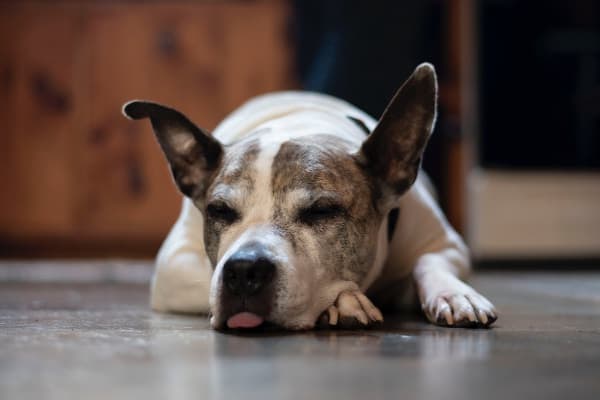
The term “lethargy in dogs” refers to a lack of energy, loss of interest in doing daily activities, or reluctance to get up and move about. Lethargic dogs may seem to suddenly lay around all day. They may not want to play, or they might generally seem a bit tired and depressed.
However, it is also possible for a dog to have a decreased activity level if he or she is just tuckered out from a busy day. So how do you know if what you are seeing is a sign of lethargy?
How do you tell if your dog is lethargic or just tired?
When trying to recognize lethargy in dogs, it can be helpful to think through the events of the past few days. Did your dog have a doggie play date with his or her friends? Did you take your normally sedentary pup on a long run or walk?
In these situations, your dog might understandably be more tired than normal. But typically even a tired dog will still get excited about a favorite treat or the doorbell ringing. And after about 24 hours, your dog should be back to his or her normal self.
On the other hand, if you can’t think of anything that might have worn your dog out, or he or she doesn’t quickly bounce back after some rest and relaxation, your dog might be lethargic.
What are the symptoms of a lethargic dog?
In order to determine if your dog is tired or lethargic, it can also be helpful to know the symptoms of lethargy in dogs. Since lethargy in dogs is a general lack of energy or a feeling of sluggishness, you may notice:
- Your senior dog hesitates to go for his or her usual walk.
- He or she stays in one place for a prolonged time.
- Your dog ignores his or her favorite toys and has no desire to play.
- When you call him or her, your dog fails to come.
- Your dog sleeps more than usual.
- Your dog may stand up and move around but quickly wants to go lay back down again.
- The things that normally excite your dog (e.g. visitors, favorite treats, etc.) get a lackluster response.
- Your dog wears out faster than normal from activity.
Is your dog showing other symptoms?
In addition to watching for these signs of lethargy, it can be helpful to pay attention to any other signs that something might be wrong. Sometimes all you notice is that your dog seems low on energy. But often, a lethargic dog will have other symptoms. For example, you might notice:
- Your dog is lethargic and wobbly
- Your dog is lethargic and not eating (however, it’s also possible for your dog to be lethargic but eating and drinking)
- Your dog is lethargic and shaking
- Your dog is vomiting and lethargic
- Your dog is drooling and lethargic
- Your dog is lethargic and drinking a lot of water
- Your dog is lethargic and breathing hard or lethargic and panting
- Your dog has pale gums and lethargy
- Your dog has diarrhea and lethargy
Especially if your dog becomes suddenly lethargic for no obvious reason and/or is showing some of the symptoms above, you should call your vet. (We’ll talk more about how to decide if you need the regular vet or vet ER in a bit). Lethargy is a common symptom of many different medical conditions, so it is nothing to be ignored.
Why is your dog acting lethargic? 19 possible causes
When thinking through the causes of lethargy in dogs (and there are a lot!), the following 19 medical problems come to mind as being some of the top contenders. However, be aware that this is far from an exhaustive list.
1. Kidney disease
In kidney failure in dogs the kidneys are functioning poorly and cannot excrete as many toxins and waste products as they normally would. When these compounds build up in your dog’s bloodstream, he or she often begins to feel sick and lethargic. And your dog may experience other signs like weight loss, vomiting, diarrhea, and loss of appetite. These signs may become especially prominent as he or she progresses through the stages of kidney disease in dogs.
2. Liver disease
When a dog’s liver is damaged, it can’t do its jobs as well, including storing energy for later use. This can lead to lethargy. Plus, dogs with liver disease may experience vomiting, diarrhea, and a lack of appetite. So they can be lethargic simply because they don’t feel good.
Liver disease in dogs can be caused by infection, chronic inflammation, toxin ingestion, congenital diseases, and tumors. To diagnose liver disease, your vet will use blood tests for dogs to look for high liver enzymes in dogs such as high ALP in dogs.
3. Pain
A reluctance to participate in normal activities or sleeping more than normal can be a sign your dog is in pain. And so can withdrawing from the family, being more irritable, altering the posture or gait, or eating less than normal.
Since pain is one of the common causes of lethargy, let’s take a look at some of the potential sources of pain:
Orthopedic problems such as arthritis
Osteoarthritis in dogs, a torn ACL in dogs, hip dysplasia in dogs, or other orthopedic conditions can all cause joint pain and poor mobility. As a result, your dog may prefer to lay in one place, not want to take walks, struggle to get up and down, or avoid stairs or jumping.
The good news is that there are many options for natural pain relief in dogs, as well as a variety of pain medications (e.g. carprofen for dogs or gabapentin for dogs) to relieve arthritis pain in dogs (or manage other causes of joint pain). And you can take steps to help your senior dog with arthritis at home and comfort a dog who is in pain.
Eye problems
Some eye conditions such as glaucoma in dogs, uveitis in dogs, or corneal ulcers in dogs, may cause significant ocular pain. This pain, especially when it persists for a long time, like in glaucoma, can cause a dog to be lethargic.
Dental disease
Sometimes dogs with dental disease in dogs or a dog tooth abscess may be lethargic because their mouth hurts. Thankfully, a dog tooth extraction and dental cleaning often help them feel better in no time.
Pain from internal organs
Pancreatitis in dogs (i.e. inflammation of the pancreas) can cause severe abdominal pain as well as vomiting, diarrhea, and lethargy. And so can other conditions like a gall bladder mucocele in dogs.
4. Anemia
Anemia in dogs (i.e. a low red blood cell count) can lead to lethargy. This is the case because red blood cells carry oxygen to the rest of the body. So when a dog has fewer red blood cells, his or her body may not be getting the oxygen it needs to function optimally.

The causes of anemia in dogs are numerous. But some of the most common include:
- Blood loss (due to parasites, trauma, GI bleeding, or cancer such as hemangiosarcoma in dogs)
- Kidney disease or other chronic conditions
- Immune mediated hemolytic anemia (IMHA in dogs) and immune-mediated thrombocytopenia (ITP in dogs)
- Toxins
- Bone marrow diseases or cancer
5. Heart disease
When a dog develops heart problems like heartworm disease in dogs, dilated cardiomyopathy in dogs, mitral valve disease in dogs, or congestive heart failure, the heart cannot pump blood through the body as effectively as it should. This results in lower levels of oxygen throughout the body and backup of blood in the vessels.
Over time, heart disease in dogs may cause signs such as weakness, coughing, exercise intolerance, lethargy, collapse, and difficulty breathing.
6. Diabetes mellitus
In diabetes in dogs, the glucose (i.e. sugar) molecules can’t get into the cells to be used for energy due to a lack of insulin (i.e. the hormone that lets glucose into cells). This lack of cellular energy and the high blood sugar levels lead to lethargy, increased thirst in dogs, increased urination, a dog who is losing weight but eating well, and other symptoms.
In severe cases, diabetic dogs can go into diabetic ketoacidosis (i.e. DKA in dogs) which can be life-threatening. Dogs with DKA tend to have more severe signs such as vomiting, diarrhea, collapse, or weakness in addition to the typical signs of diabetes.
7. Infectious diseases
Often when a dog has an infectious disease like leptospirosis (lepto in dogs), distemper in dogs, or parvovirus, he or she may be lethargic. Additionally, depending on the disease, you may notice signs such as fever, vomiting, diarrhea, weakness, nasal discharge, coughing, dehydration, etc.
8. Medications
Sometimes lethargy can be a side effect of certain medications. This is especially common with medications used to manage seizures in dogs, decrease anxiety, or control pain. For example, one of the most common gabapentin side effects in dogs is severe lethargy that usually decreases after a few days on the medication.
9. Pneumonia or other respiratory infections
Kennel cough and canine influenza are two of the most common causes of respiratory infections in dogs. Both are highly contagious but typically remain mild. However, they can occasionally lead to pneumonia in dogs, which tends to make dogs much sicker and more lethargic. Plus, a variety of other bacteria, viruses, and fungi, as well as aspiration of food, water, or vomit, can cause pneumonia.
In general, lethargy plus coughing and sneezing, nasal discharge, and/or your dog breathing fast could be signs your dog has a respiratory infection.
10. Cancer
A variety of different cancers (e.g. liver cancer in dogs, osteosarcoma in dogs, prostate cancer in dogs, bladder cancer in dogs, lymphoma in dogs, etc.) can affect dogs. As a result of the toll cancer takes on their bodies, dogs with cancer won’t have as much energy as they used to. And they tend to sleep more.
11. Endocrine diseases
The endocrine system produces and secretes hormones through the body to control various processes. When there are too few or too many hormones being secreted, it can lead to diseases like:
- Hypothyroidism in dogs (i.e. low thyroid hormone levels)—May lead to weight gain, lethargy, and a poor hair coat
- Cushing’s disease in dogs (i.e. high levels of the steroid hormone cortisol)—Symptoms include increased thirst, urination, and appetite plus changes in hair coat, a pot bellied dog appearance, and lethargy.
- Addison’s disease in dogs. (i.e. a deficiency in cortisol and/or mineralocorticoids)—May cause vague signs like lethargy, weakness, collapse, vomiting, or diarrhea.

12. Toxins
Ingesting toxins (e.g. your dog eats a grape or raisin or your dog gets into Advil) can sometimes cause lethargy. Plus, you may see other symptoms such as vomiting, diarrhea, weakness, collapse, tremors, seizures, etc.
Important note: Time is of the essence when it comes to toxins. So if you ever think your dog may have gotten into something toxic, please call your vet, ASPCA Animal Poison Control Center, or Pet Poison Helpline immediately. (There is a fee associated with calling both pet toxicology services but it is well worth it.)
13. Parasites
Some internal and external parasites (e.g. hook worms, fleas, and ticks), feed on your dog’s blood. This can cause lethargy due to anemia. Plus, dogs (especially puppies) who have a heavy burden of roundworms could potentially be lethargic because the parasites are stealing so many nutrients from the GI tract.
14. Dehydration
If a dog becomes dehydrated from profuse vomiting and/or diarrhea, fever, significantly decreased water intake, or an underlying medical condition (e.g. diabetes, kidney disease, etc.), he or she may be lethargic.
15. Neurologic disorders
Lethargy, decreased response to stimuli, or depressed mentation can also occur with some neurologic disorders. For example, if a dog is in the post-ictal phase (i.e. time directly after a seizure), he or she may be confused, disoriented, or more tired than normal. These changes may clue you into a seizure even if you didn’t see it happen.
16. Bites or stings
A snake bite on a dog can cause a dog to become weak and collapse. Plus, you may notice a wound on your dog, difficulty breathing, excessive drooling, swelling, or other symptoms.
Additionally, dogs who are having a severe reaction to an insect bite or sting may also show similar signs.
17. Trauma
Trauma, such as occurs after a fall, dog fight, or being hit by a car, can cause lethargy in dogs. Some dogs have primarily external injuries (e.g. fractures, wounds, etc.). But other dogs may suffer significant internal injuries (e.g. air in the chest cavity, bruised lungs, internal bleeding, brain bleeding or swelling, etc.).
18. Anxiety
While it might sound counterintuitive, anxiety is another cause of lethargy in dogs. Dogs who are anxious may pace and engage in destructive behaviors. Plus, worried dogs might be panting and restless for a good part of the day. Heart beating rapidly, anxious dogs are in a permanent state of “fight or flight,” which expends a lot of energy.
This is especially true for dogs with separation anxiety because they experience these feelings all day long. Anxiety can wear dogs out and may explain why your dog seems tired once you’ve come home.
19. Allergies
Allergic dogs are constantly itchy, which can make them mildly lethargic. And they may suffer from secondary infections such as otitis in dogs (i.e. ear infections), pyoderma in dogs (i.e. bacterial skin infection), or dog paw yeast infection. These problems can make them feel even worse.
Thankfully, whether your dog is allergic to something in the environment, fleas, or dog food, there are a myriad of allergy medicines for dogs that can help give your dog some relief.
When do you need to take a lethargic dog to the vet?
It isn’t always a cause for alarm if your dog is a bit more tired than normal. But as you have learned, lethargy can be a sign of many different problems—some more serious than others.
If your dog is just mildly lethargic (perhaps slightly less interested in doing daily activities or a bit more subdued), you have more leeway to observe your dog. It is possible that he or she may perk up in a day or two. But if not, it is a good idea to make a vet appointment.

Signs your dog needs veterinary care
On the other hand, if you have noticed a significant change in your dog’s energy level and/or your dog is showing other symptoms, now is the time to seek veterinary attention. Some symptoms of concern include:
- Vomiting
- Diarrhea
- Change in water consumption
- Increased or decreased appetite
- Sudden weight loss or gain
- Limping or other signs of injury
- Coughing or sneezing
- Trouble breathing
- Seizures or disorientation
- Weakness or collapse
- Signs of pain
- Pale gums
This is far from an exhaustive list. So keep in mind that if you are worried about your dog, the best thing you can do is contact your vet.
Do you need to go to the ER or your regular vet?
If your dog is experiencing severe symptoms (e.g. profuse vomiting and diarrhea, seizures, collapse, extreme weakness, difficulty breathing, etc.), you may need to make an emergency vet visit. Otherwise, you are probably fine to make an appointment with your regular vet within a day or two.
Resources to help you make a decision
I know figuring out if you should take your dog to the vet can be stressful. So I want to remind you that you don’t have to sort this out alone. If you’re unsure whether you should head to the ER or to your regular vet, you can always call your vet for advice. The veterinary team would be happy to direct you to the place that is right for your dog. Plus, my article “How to tell if your dog sick” can also provide some helpful guidance.
If your dog is lethargic, call your vet
There are so many causes of lethargy in dogs (far more than we have time or space to talk about here). With that in mind, the best advice I can give you is that if you aren’t sure if your dog is lethargic or just tired, call your vet for advice. And if you know your dog is lethargic and you have concerns about his or her health, make an appointment with your vet or seek emergency veterinary care.
In the end, it is better to be proactive and get your dog checked out. If you are worried about your dog, make an appointment with your vet and share your observations. That way you can ensure you are doing all you can to keep your dog happy and healthy for as long as possible.
How do you tell the difference between your dog having a sluggish day and something more concerning?
Please share your experience in the comments below.


I think reactions to medications should be added to this list to consider.. I believe that the tick preventive medication is causing lethargy in one of my dogs and now I have to weigh the pros and cons of continuing to medicate.
Hi JMarie,
I am sorry you are facing this difficult situation with your pup. You are correct that certain medications can cause lethargy as a side effect even at the recommended doses. Hoping you can partner with your vet to make the best decision moving forward. Praying for clarity.
im really worried about my 6 year old chihuahua, she is usually full of energy but today she didn’t come to greet me when I entered my home, she didn’t run to the kitchen when the oven alarm went off. she has hardly been toilet and when I call her she doesnt move her head to look at me, doesn’t wag her tail or more her ears around. when I was eating my dinner she didn’t stare at me. Also when someone knocked at the dog when she barked it was a yelping bark. I phoned vet but they said its not an emergency as she ate and is not vomiting. usually I would be ok with that response. But I know in my gut something isn’t right. I don’t recognise her at this moment its similar to after she had her C-section and was neutered. im feel im 20% overreacting and the over 80% is telling me to listen to my gut. I feel so helpless right now.
Dear Alisha,
I am so sorry you are in this difficult situation with your little pup. I agree that her condition is concerning, and I definitely don’t think you were overreacting by contacting your vet. Anytime you notice a sudden behavior chance it warrants investigation. I would probably consider taking your girl to the vet anyway or calling an emergency facility in your area to see if they are willing to examine her. Always trust your intuition as you know your girl better than anyone. And I would rather err on the side of caution than be caught off guard by something serious. Hoping all is well. Feel free to leave an update if you have a chance.
I am having the same concern since someone told me that his dog had liver problem due to the medication so dos his lethargy caused by the medication or caused by liver problem caused by the medication!?
Hi Johany,
I understand your confusion and agree it can be tricky to determine the cause of certain symptoms. The answer really depends on what medication your dog is taking and what condition it is treating. If you have lingering concerns about your dog’s health, please don’t hesitate to reach out to your vet. They will know more details about your dog’s medical care and can offer better information and advice.
My 2 year old carin terrier Benjamin had diarrhea around three today just once it’s now 8:30pm he’s very active but he has not barked today at all and all he wants is to sit in my lap hasn’t eaten or drank anything today some days he doesn’t eat but what concerns me is he didn’t bark at my neighbors who were right at my back door he doesn’t even follow me to the back room he is usually right on my heals just wants to lay on me his gums are still pink we spent the night at my sisters house night before last maybe he ate something over there that didn’t agree with him how long should i wait before calling his vet or taking him to the er i love this little guy please help
Hi Sharon,
I am sorry Benjamin is not acting like himself and understand your concern. Without examining him myself it is hard to determine if this is an emergency or if you can continue to monitor things at home. I would go ahead and call your vet. They are there to offer guidance and advice. It is better to err on the side of caution and be proactive anytime you notice a sudden change in your dog’s behavior. Hoping all is well and feel free to leave an update if you have a chance.
My Pug is somewhere between 11 and 13 years old. I adopted him in 2017 from a NC shelter. He was purported to be between 4 and 5 at the time; He went deaf a few years ago due to an ear medication for a stubborn infection. Deafness was a “possible” side effect, usually temporary, but he never regained his hearing. Several months ago, he was diagnosed with SARDS after losing his sight in a matter of a couple of days. I personally think he may still see shadows but for all intents and purposes, he’s blind. He has adapted well to getting around in our home.. His appetite is great.. He knows where everything is and has no trouble finding his food and water bowls and lets me know if his meals are a few minutes late. He naps a lot during the day, a lot more than I would like, but still follows me throughout the day when he’s awake. He still sleeps well at night. He no longer enjoys going for long walks, but then if I couldn’t see or hear, neither would I. So I walk him around in his “Puggy Buggy” and he sits up high, taking in all the neighborhood smells, and “looking around.” and If you didn’t know he is blind, you’d never guess. So, yes, I would describe him as being lethargic if he had the symptoms you list in this article, were it not for his advanced age and “handicaps.” and the fact that his vet says he’s in great shape, just old.
Hi Sandie,
I am so impressed with your pup and how well he has adjusted to life without his hearing or sight. He sounds like the most amazing little guy, and I can tell he is dearly loved. Thank you for sharing his story with us! Wishing you both continued success and many happy days ahead. Keep up the good work!
I adopted a rescued Great Pyrenees a couple of years ago. We think she’s about 5 or 6 now. She’s always been pretty low energy, but she stopped eating a couple of weeks ago. Took her to the vet last week and was prescribed Amoxicillin for a UTI. Finished the prescription, but saw zero improvement. Took her back again yesterday for blood work. They ended up giving her some fluids for dehydration. Absolutely nothing showed up from the blood tests. She is still not eating and still very lethargic. Drinking and urinating fine and a few, very small, bile poops, but no food interest at all – even her favorites like grilled chicken.
I fear she’s depressed. She acts like she’s given up. : (
Hi Beth,
I am so sorry your girl isn’t feeling well. I understand your concern especially when testing has not offered any definitive answers at this point. It may be time for more in-depth testing such as x-rays or abdominal ultrasound. Has she been tested for tick borne diseases? Hoping you can get the answers you need to offer your girl relief and healing. Feel free to keep us updated on how things go. Praying for a positive outcome.
My adopted shepherd had her heat from Feb. 2nd to March 1st. She’s scheduled to get fixed TOMORROW MORNING (already had to reschedule once due to lack of funds) and she is now incredibly lethargic and feverish. She was fine earlier, and took a healthy bowel movement, but before dinner, I noticed she wasn’t begging like normal and was laying down. I went to a meeting with my sister and my son texted me saying she was really sick. She has thrown up twice, and now is breathing heavy, VERY lethargic and has had crusty lips and bad breath for about a week or so now. The vet is aware of that and they told me it’s probably a tooth infection. Well, I’m worried she’s going septic for as sudden as this changed. I have been putting water on my fingers to get into her mouth and she’s even refusing that. I’m very concerned. I called the vet and left a message that she is too sick to be fixed tomorrow, but I will still bring her in to be seen. Just commenting and don’t expect an answer, but very worried about my poor girl. She just got over whipworm (and yes, been treating the yard with diamatatious earth after cleaning it up, which I have done since finding out how long whipworm lives in the ground). I’m just really worried because she’s having labored breathing, Left message for vet though, so praying they call me back.
Dear Diane,
I am so sorry you were faced with this worrisome situation with your Shepherd. I agree, her condition sounds critical and hope you were able to get her the medical attention she needed. What did you find out from your vet? Were they able to get her stabilized? Hoping all is well and feel free to leave an update if you have a chance.
Hi Beth, The same symptoms are happening to my girl Pepper, she is 12 years old. I hope your fur baby is feeling better.
Did you ever get a definitive diagnosis?
Hi there, I have a three-year-old cava poo who is recently at the vet in the emergency vet Saturday and Sunday and then again on Tuesday. He did end up passing a piece of plastic on Sunday and seemed fine but then all of a sudden, Tuesday he had a temperature we took him to our regular vet and they recommended going to the emergency vet. The emergency vet kept him overnight and said everything everything was fine. X-rays are clear they did an ultrasound and those are clear. They did bloodwork and there was nothing concerning in the blood work. He is currently on gabapentin right now and just seems really really really tired and I’m just overall worried. The vets weren’t able to distinguish what’s wrong or what happened with him. I’m just terrified that he’s gonna die.
Hi Izzy,
What a scary and stressful few days you have had with your pup. I’m so sorry to hear that he has been in and out of the emergency clinic several times this week. It sounds like they did a thorough work up on him with the X-rays, ultrasounds, and bloodwork, and it is great news that everything was looking good. Did he just recently start the gabapentin? It can definitely cause fairly significant sedation or lethargy the first few days, and sometimes dogs can have a bit of a wobbly gait too. I’ll link a blog about gabapentin side effects below. However, I don’t want to assume that the gabapentin is the cause of his lethargy, especially since I can’t examine him myself. I think the best thing would be for you to either make a follow up appointment with your regular vet or give the vet or the veterinary ER a call to discuss his symptoms. That way they can evaluate him again if needed and give you more specific advice based on what they know about him. You know him well, and if you are worried, then don’t be afraid to keep advocating for him and pushing for answers.
I hope your pup feels better soon!
Here is that article on gabapentin: Gabapentin Side Effects in Dogs? A Veterinarian’s Answers
How is the dog?
Hello my three year old female Shepard mix just got done with her heat and she’s still very sluggish and when she gets up she’s very slow and wobbly. She doesn’t seem to want to get up much except for food. She will play for a bit when I initiate it but will lose interest and go right back to laying down like it took a lot out of her.
Hi Dani,
I understand your concern for your girl and from what you mentioned I am concerned too. I definitely think this warrants a visit to your vet sooner rather than later. Without examining her myself, I can’t make specific conclusions. But with any behavior change after a recent heat cycle I am always on high alert for pyometra. Here is a link to another article with more information: Pyometra in Dogs: Signs, Diagnosis, Treatment, and Prevention
Hoping you can get the answers you need to ensure your girl remains healthy and happy. Best wishes and take care!
Hello, I have a 12 year old Maltese. He is normally out and about waking around the house all day (especially if he hears or smells food). However a few days ago I fed him a larger portion of food than normal. Since then he’s been super sluggish and tired. He sleeps most of the day away, walks very little, and eats either nothing or a tiny bit. He doesn’t get excited for food anymore. What should I do?
Hi Amber,
I am sorry your senior pup is experiencing these worrisome symptoms. With any sudden behavior change I strongly recommend having your vet do a thorough exam. Without playing a personal role in your dog’s medical care, it is hard to say if there is truly something wrong with your boy. But I would rather err on the side of caution and have him evaluated. Hoping all is well and wishing you both the best.
We recently rescued a senior dog (likely black lab/burnese mt dog mix, possibly newfie) after he had been pretty neglected for the entirety of his life. We can’t say for certain, but he likely never saw a vet in his first 11 years of life until we took him in. We made the decision to neuter him to mitigate the chances of testicular cancer; however, since his operation, he has had diarhea for 6 days. By day 5& 6, there was mucusy casing around his stool as well as blood. He has also been more lethargic than he should be by this point. He will be going to the vet tomorrow to check for complications, but wondering if you could offer any insight as to what to look for/ask during his appointment? We are happy he’s maintained his appetite, but even after swithcing him to chicken and rice because of the diarrhea, his stools have been watery/mucusy/bloody. Very concerned– specifically about possible blood clotting issues as well as anemia.
Hi Elena,
Bless you for taking in this deserving senior boy and offering him happiness in his final years. I understand your concern with these new GI issues that started after his neuter surgery. I agree that taking him to the vet is your best course of action. This could easily be a reaction to the anti-inflammatory medicine that he was given after surgery or a stress response. Here is a link to another article with more information: Dog Diarrhea With Blood: 10 Causes and What To Do About It
Hoping your vet can get some answers and find a clear path forward with treatment. Feel free to leave an update as new information comes to light. Wishing your sweet boy all the best.
My boy 4 year old Labrador, usually very active, went for his usual long walk on Friday. He started slowing down and wimping occasionally on Friday. Since then he hardly moves. He moves a few feet then stops. He didn’t move all night. He sleeps on my bed but he can’t get up. He is eating but very little water intake but some. He wimps every now and then but not constantly. I can’t see anything obvious. In two days he has vomited once. Have rung emergency vet hospital but they didn’t want to see him. My vet doesn’t open till tomorrow. I am getting worried.
Hi Stephen,
I understand your concern for your young dog and think it is good you are searching for advice. I am a bit shocked that the emergency vet turned you away as this definitely sounds like an urgent matter to me! While it may be nothing to worry about, these are symptoms that can be associated with several life-threatening conditions. I hope you were able to get ahold of your regular vet and ensure your boy received the medical attention he needed. How are things today? Hoping all is well. Feel free to leave an update if you have a chance.
Hello! My 13 year old beagle/chihuahua has been acting lethargic for the last few days. She has been keeping her head bowed down and hasn’t been as excited about her treats (which is very abnormal for her). She has been a bit unstable while walking and has been moving around a lot slower then normal as well. She has also been having some troubles with going down stairs and will no longer jump off the bed. She is still eating and drinking normally, no vomiting or diarrhea, and her nose is wet and cold. I was hoping to get some advice on if I should bring her into the vet or if she might just be showing her age?
Dear Charlie,
I am very concerned about what you are describing with your senior girl. I definitely think she needs to be evaluated by your vet right away. While this may turn out to be nothing to worry about, these can also be signs of some very serious life-threatening conditions. Hoping you were able to get some answers and praying all is well with your pup. Feel free to leave an update if you have a chance.